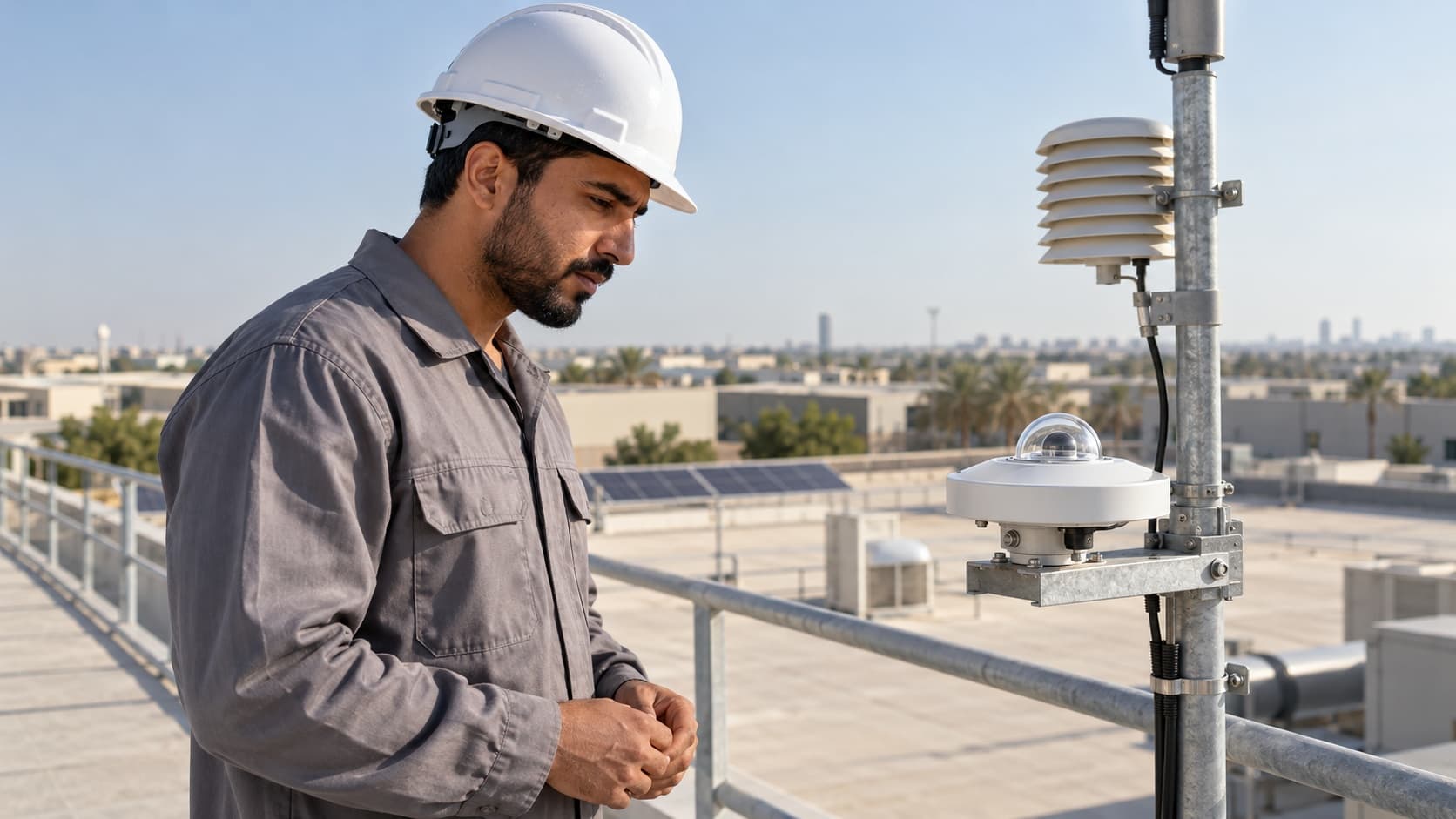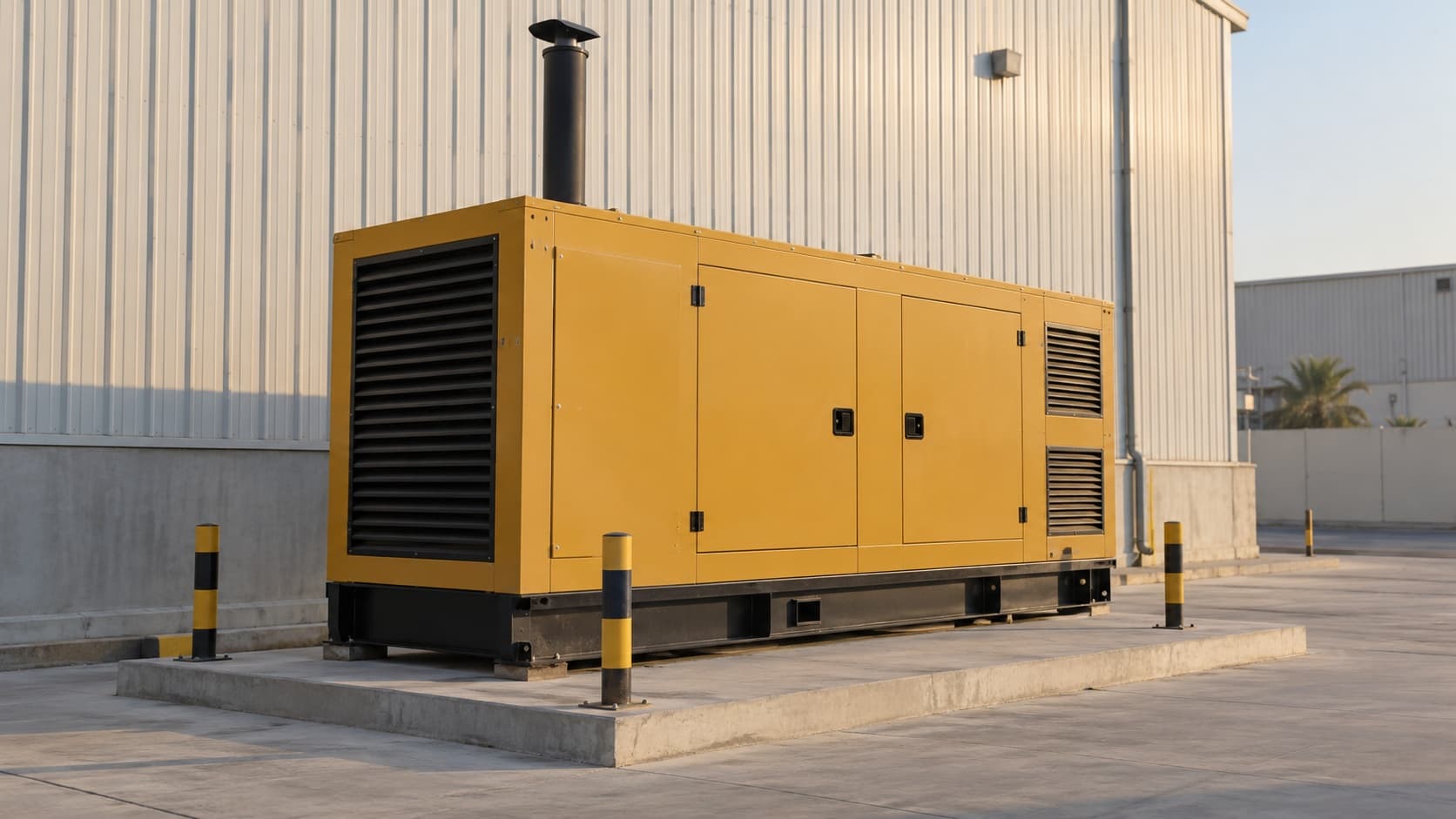
AI-generated illustration of an enclosed standby generator at a generic industrial property, not a real Dubai installation or an approved electrical design.
An existing diesel generator does not automatically make rooftop solar a backup-power system. For a Dubai warehouse or factory, the first quotation question is whether the solar plant will stop during generator operation, or whether the supplier is proposing a separately engineered arrangement in which both can operate together. Those are different scopes, costs and acceptance tests.
If your objective is lower electricity bills while retaining the existing standby provision, ask for that as the base proposal. If you also want solar to reduce diesel use during outages, request a distinct option with a documented operating sequence, equipment compatibility, protection and approval basis. Do not let the word “hybrid” stand in for those answers.
Start with what happens when the DEWA supply fails
DEWA's solar PV FAQs describe interface protection that stops the PV plant when a network problem requires disconnection or when supply has been switched off for safety. A standard grid-connected solar quotation is therefore not evidence that the warehouse will receive solar power during an outage.
The complication is the equipment you already own. A standby generator and its changeover arrangement can supply selected circuits after loss of mains. The solar designer needs to establish where the proposed PV connection sits relative to that equipment and how it is prevented from operating in an unintended mode. A roof photograph and the generator's headline rating do not answer that.
Give the bidder the existing single-line diagram, generator and controller details, transfer-switch information and the list of circuits backed up. Ask your electrical adviser to check the records against the installation. Do not open switchboards, operate changeovers or simulate an outage yourself to collect this information.
The wider warehouse rooftop feasibility checklist covers the roof, ownership, load and access pack. The additional task here is to describe the existing sources of electricity and the operating modes the new system must respect.
Compare two scopes before comparing prices
Proposal | What the owner is buying | What must be demonstrated |
|---|---|---|
Grid-connected solar, with PV kept out of generator operation | Solar bill reduction during permitted grid-connected operation; the existing standby system remains a separate function. | How the design keeps PV from operating with the generator where that is not intended, how normal operation resumes, and what changes to existing equipment are included. |
Engineered solar and generator operation together | A site-specific option intended to use PV while a generator supplies the isolated site network, if the design and relevant approvals permit it. | Compatibility, power control, generator protection, response to changing loads and sunlight, safe transfer and return to mains, testing and responsibility for the combined system. |
These are procurement alternatives, not two universally approved wiring arrangements. The appointed DEWA-enrolled consultant or contractor must confirm the applicable requirements with the relevant authorities and equipment manufacturers. Do not assume that a configuration accepted elsewhere is accepted for your Dubai connection.
Ask bidders to state explicitly if the second option is outside their proposed scope. “PV disabled while on generator” can be a perfectly clear answer to a bill-savings brief. “Generator compatible” without an operating description is not a comparable answer.
Why an automatic transfer switch is not the whole answer
A transfer arrangement addresses movement between supplies. The separate question is whether, and under what controls, the PV equipment may operate while the generator is supplying the building. Have the designer explain both functions rather than treating the presence of an ATS, an automatic transfer switch, as proof of complete solar integration.
SMA's manufacturer-published Fuel Save Controller functional description illustrates the additional work involved in a designed PV-diesel system. It describes monitoring generators and loads, adjusting inverter output, minimum generator loading, reverse-power protection and reserve capacity. Its optional backup-grid mode also discusses the return of mains supply and warns that generator-parallel inverter settings may require the local network operator's permission.
This is a dated Version 1.0 technical document carrying a 2013 copyright, not a current UAE product recommendation, a universal design rule or DEWA approval. It is useful evidence of why controlled coexistence is a system-engineering task. Its product-specific timings, power ratios and settings should not be copied into a warehouse tender as generic requirements.
For the owner, the practical consequence is to ask who verifies the existing generator, transfer equipment, inverter and controls together. Buying a new inverter with a “hybrid” label does not establish that the rest of the installation is suitable.
Six answers to require in the proposal
Operating sequence: request a plain-English account of normal mains operation, loss of mains, generator start and transfer, generator running, and return to mains. For each stage, identify whether PV is enabled, limited or stopped. Have the design team supply the supporting drawings.
Load boundary: identify which circuits the generator actually supplies and whether those differ from the whole-building loads used in the solar model. Ask how refrigeration, motors, UPS equipment and other important loads affect the assessment.
Equipment compatibility: name the existing generator, controller and changeover equipment and the proposed solar equipment. Request the relevant manufacturer confirmations and identify any replacement, communications or control hardware needed.
Protection and failure response: ask the qualified designer how unintended backfeed, unsuitable generator loading and loss of control communications are addressed. Require a documented safe response to faults, not instructions for staff to defeat protection.
Approvals and changes: state who confirms the authority route, prepares submissions and obtains acceptance for the actual design. Separate solar connection work from alterations to the existing standby installation and any building-specific permissions.
Testing and ongoing service: name the party responsible for integrated commissioning, the agreed witnessed tests, the handover records and later changes. Clarify who attends if the solar contractor and generator maintainer disagree about a fault.
Read these responses alongside the solar quotation line-item checklist. Control equipment, switchboard work, attendance by the generator specialist and agreed testing should be visibly included, excluded or provisional, rather than hidden behind one installed-price figure.
Keep electricity-bill savings and diesel savings separate
For the base grid-connected proposal, evaluate the solar energy that can be generated during the permitted operating periods and its value under the applicable DEWA billing arrangement. DEWA's FAQ describes surplus credits against future consumption, not a cash payment for exports.
For an additional generator-running option, ask for a separate model using actual generator operating hours, daytime overlap, measured loads and fuel records. A generator installed for occasional standby duty is a different investment case from one that runs regularly. Neither the generator rating nor the roof's annual solar forecast establishes annual fuel savings.
Require the supplier to explain any PV output limitation needed during generator operation and the fuel-consumption evidence used. Do not convert every proposed solar kilowatt-hour directly into a fixed number of saved litres without a supported operating model. Keep avoided diesel purchases separate from DEWA bill reductions so the same energy is not counted twice.
Then compare the additional option's full cost: design, equipment, modifications, specialist commissioning, maintenance and any planned interruption to the business. Ask whether the forecast already excludes periods when PV will be unavailable. Our warehouse solar performance-guarantee guide explains why a generation forecast, operating exclusions and a contractual remedy need separate treatment.
If the evidenced incremental benefit does not justify the additional scope, retain the simpler bill-savings proposal for consideration. There is no verified universal integration price, fuel-saving percentage or payback period in this guide.
Agree the test plan without experimenting on a live warehouse
Before signing, ask the electrical design team and generator service provider to agree how the intended modes will be demonstrated safely. The plan should identify authorisation, affected operations, attendance, acceptance criteria, records and the response if a test fails. Do not accept a casual demonstration that risks stored goods or occupied operations.
Ask for evidence of the specified PV behaviour during transfer, stable operation in any permitted combined mode, response to the agreed failure scenarios and controlled return to normal supply. The professionals must determine the actual tests and conditions. A solar production reading on an ordinary sunny day does not demonstrate all of those functions.
Require the final drawings, operating description, test results and contact responsibilities in the solar installation handover pack. Record how future generator replacement, controller changes or solar expansion will be reviewed, rather than assuming compatibility lasts unchanged.
A brief to send to commercial solar bidders
We are considering rooftop solar at a Dubai warehouse with an existing standby diesel generator. Please price a base grid-connected proposal that clearly states PV behaviour during generator operation. If you propose simultaneous solar and generator operation, provide a separately priced option with its operating sequence, equipment compatibility, controls, protection, authority-approval basis, testing and maintenance responsibilities. Identify required changes to our existing installation and model any diesel savings separately from DEWA bill savings. Do not assume that our existing transfer equipment makes the solar plant generator-compatible.
Attach the property location, ownership or landlord authority, electricity bills, available electrical drawings, generator and transfer-equipment records, operating hours and important-load requirements. Let the appointed professionals identify missing information and survey needs before treating the proposal as final.
Decision takeaway: having a generator is a reason to disclose more about the site, not a reason to assume solar backup is included. First choose the required operating behaviour; then compare the complete, accepted scope and its evidenced financial benefit.
To compare suitable site-specific offers, request commercial solar quotations through SolarQuote, subject to project suitability and installer availability. Mention the existing generator in the enquiry so bidders can address the same scope. SolarQuote is a comparison and installer-matching platform, not the designer of your standby-power system.
Primary utility and manufacturer sources checked on 23 October 2026. This is an owner procurement guide, not an electrical design, switching instruction, resilience guarantee or project approval. The international manufacturer document illustrates engineering considerations; the appointed professionals must confirm current local requirements and equipment-specific limits.