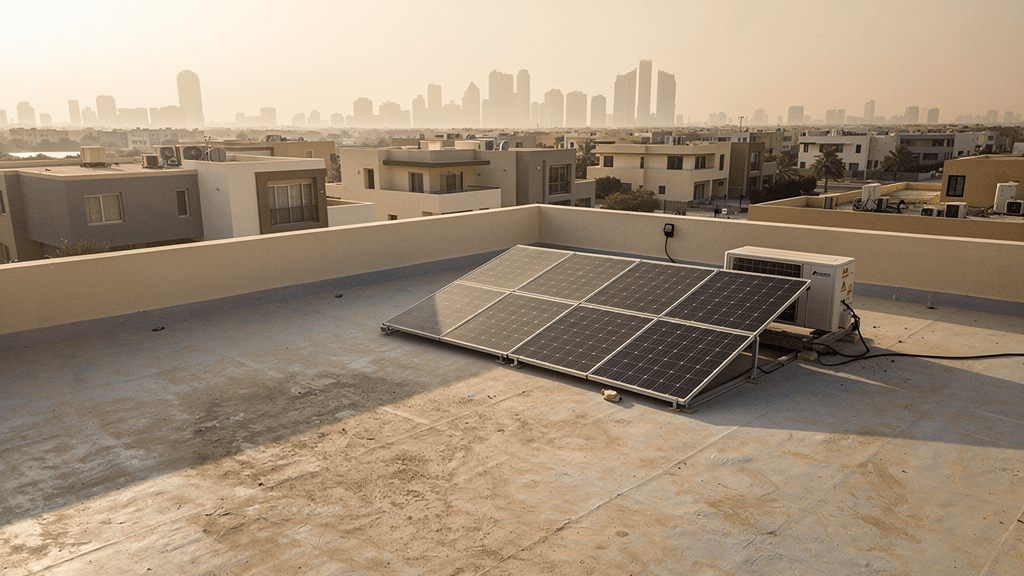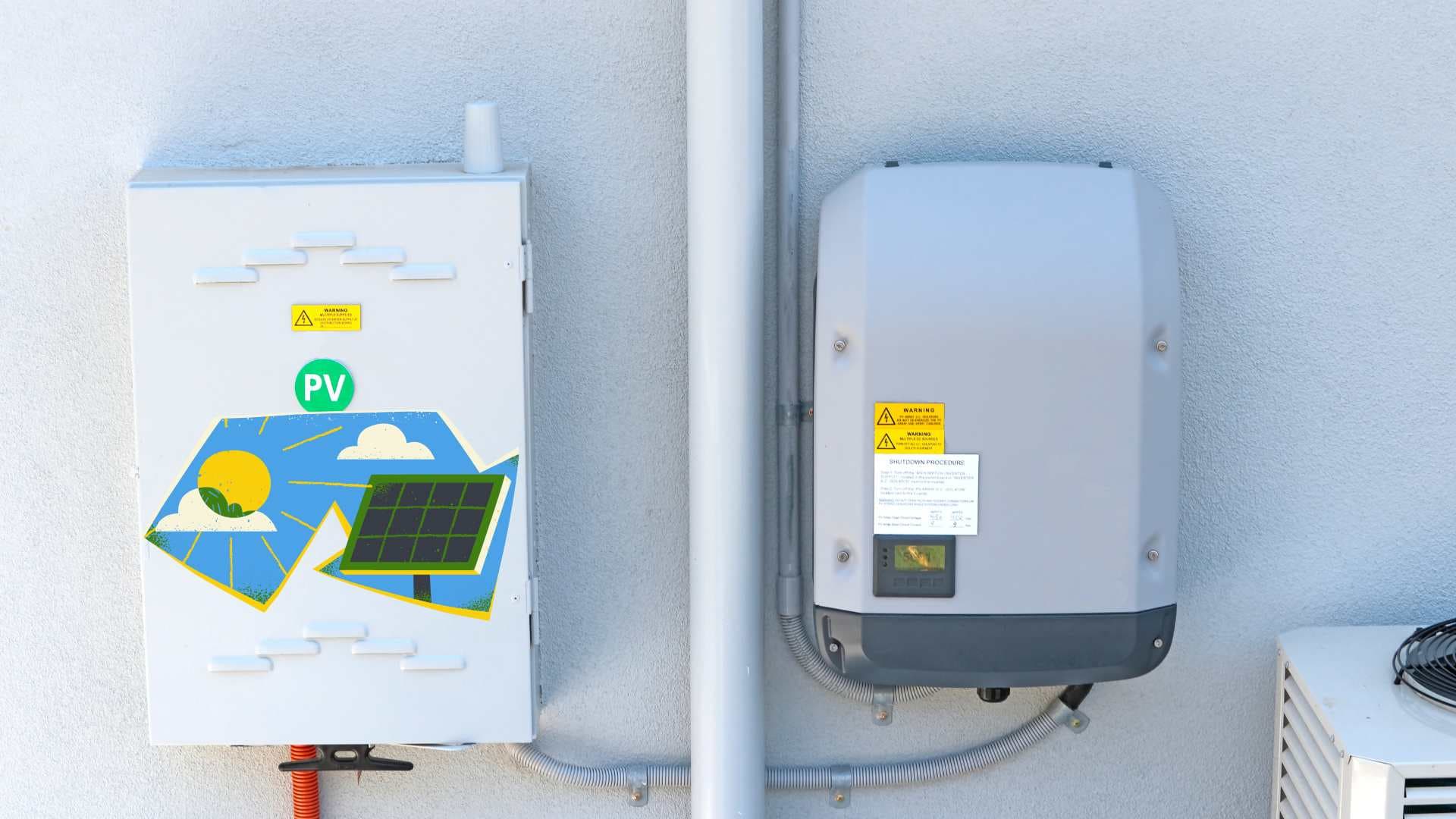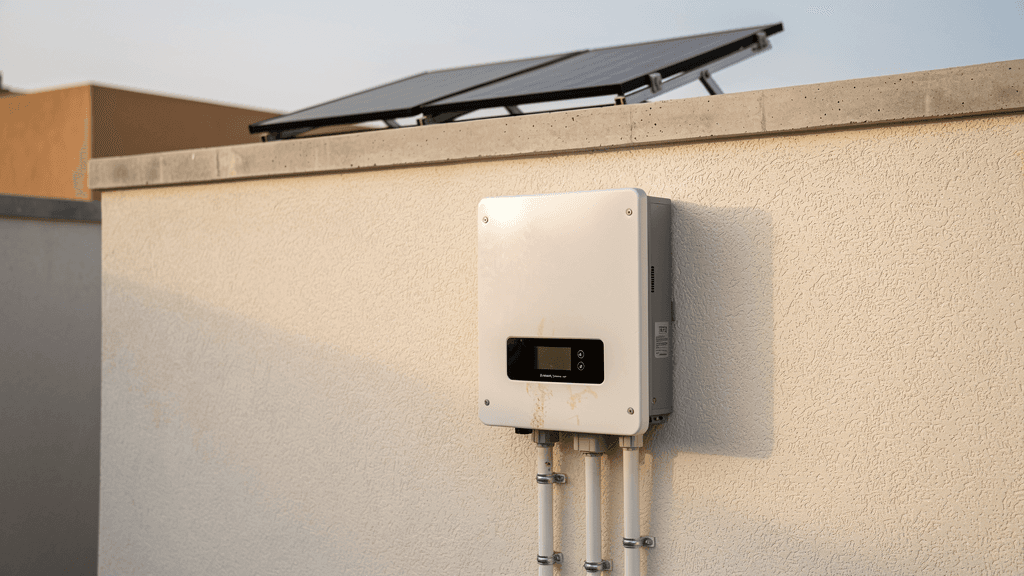
Illustration: a villa-style solar inverter and rooftop array, not a documented installation.
A Dubai solar installation is not ready for a useful owner handover just because panels are on the roof. Ask for the connection and inspection records, the final system drawings, equipment identities and warranties, a working owner monitoring login, and a named maintenance provider. Put that pack into the agreed scope before signing, then check it against the actual installation.
This solar installation handover checklist is for a DEWA-connected Dubai villa. It separates the utility's connection process from the practical records an owner should retain. It is not a new DEWA-mandated document list, an electrical testing guide or permission to withhold a payment that your contract says is due.
What does “finished” mean for a Dubai solar system?
There are three different milestones: the contractor finishes the physical work; the utility completes the relevant inspection, metering and connection steps; and you receive the information needed to own and maintain the system. Do not collapse them into one vague “completion” line.
DEWA's Getting Solar Permits & Connections service distinguishes an application reference from approval, an inspection result from snag rectification, and meter installation from solar connection activation. A reference number or a design approval is not evidence that all subsequent stages have finished. Our Shams Dubai approval walkthrough covers the earlier application journey.
Before ordering, define what your contract means by installation completion, commissioning and owner handover. If the final payment is tied to a milestone, state the evidence for that milestone. If you have already signed, request the missing records and agree a close-out plan rather than inventing a new payment condition afterwards.
The seven-part owner handover pack
1. Approval, inspection and connection evidence
Request copies of the applicable Solar NOC and design approval, the final inspection outcome, the connection agreement and the meter or connection activation notification. Keep the project reference and the property/account details with them. If there was a snag list, ask for the record showing how it was closed, not merely an assurance that somebody visited.
Have the contractor identify any outstanding authority or community completion item separately. The documents must relate to your property and this installation. A generic example certificate from another project tells you nothing about your own status.
2. Drawings that describe what was actually installed
DEWA's service lists a proposed single-line diagram, site layout, production details, installation details and wiring layout among its application attachments. For your own handover file, ask the contractor for a final, dated drawing set reflecting the installed system and any approved changes. This is an owner close-out recommendation, not a claim that DEWA's public attachment list is an as-built handover specification.
The set should identify the array layout, inverter location, electrical connection point and the relevant equipment and cable routes. Ask the contractor to confirm that it matches the accepted installation. Do not try to verify concealed wiring yourself.
For a flat roof, retain the mounting and waterproofing interface details, installation photos and roof-related scope or guarantees. Our flat-roof waterproofing checklist explains why panel warranties and roof responsibility need separate treatment.
3. Equipment schedule and commissioning records
Collect the exact module and inverter make/model, module count, installed DC array capacity, inverter AC rating and equipment serial-number records. Include monitoring hardware and any other supplied equipment. Ask the installer to record serial numbers during installation; do not climb onto the roof or remove covers to collect them.
Keep the dated commissioning report and the relevant test results supplied by the qualified contractor, with the test engineer or responsible company identified. An owner does not need to interpret every electrical reading. The purpose is to preserve the baseline and give a future service provider a traceable record.
Compare the schedule with the signed proposal and any agreed substitutions. If something changed, request the revised specification and written agreement. An invoice saying only “solar system” is a poor equipment register.
4. Warranty documents, not just warranty years
Keep separate documents for module product cover, module performance cover, the inverter and installer workmanship. Record the party handling a claim, the start date, any registration or extension confirmation, and the applicable exclusions. Ask specifically who pays for diagnosis, labour, access and transport if a covered component fails.
There is a concrete reason to preserve the paperwork: SMA's Home & Business factory warranty requires a commissioning report containing the defective device's serial number when assessing coverage, and says it may also request the purchasing invoice. That is an example from one manufacturer's terms, not a universal warranty rule or a promise about every SMA product. Obtain the terms applicable to the exact model, purchase and country.
5. Owner monitoring access that works on your own device
Have the installer invite you to the system's monitoring platform with the appropriate owner access. Log in yourself, confirm that the correct property and equipment appear, check that the timestamp is current, and locate daily and monthly energy production. A screenshot from the installer's phone is not a transferred account.
Confirm account recovery uses an email you control, who else retains access, whether data can be exported, and any subscription or connectivity costs. Use platform invitations rather than asking somebody to send a shared password. Keep Wi-Fi/router information separate from the public equipment record.
Ask for the original annual generation estimate, preferably a monthly breakdown, and its shading, soiling and temperature assumptions. The estimate is a comparison baseline, not automatically a performance guarantee. Our safe solar monitoring guide explains why production and the DEWA bill answer different questions.
6. Operating information and a live maintenance contact
The DEWA Shams Dubai FAQ makes maintenance the customer's responsibility and requires a signed operation and maintenance contract with an enrolled provider as part of connection. Save your signed contract, provider details, covered tasks, renewal date and fault-reporting route. Check who receives alerts and what response commitment, if any, has actually been agreed.
Ask for the equipment manuals and a contractor-led explanation of the normal display, warning messages, safe access restrictions and the documented emergency procedure. Do not open an inverter, disconnect PV plugs, change protection settings or practise switching equipment to test the handover. Electrical diagnosis and repairs belong with the qualified, appropriately enrolled contractor.
7. A dated close-out list
Record what has been delivered, what remains open, who is responsible and the agreed completion date for each item. Separate missing paperwork, a monitoring-access issue and a physical defect; they need different remedies. Read any acceptance form before signing and record reservations rather than signing an unqualified statement that everything is complete when it is not.
A handover check you can do without touching the system
Property match: the approval records and monitoring account identify your installation.
Status match: the contractor shows the inspection and connection outcomes, not only the original application.
Equipment match: the supplied schedule matches the proposal and recorded substitutions.
Access match: you can log in independently and recover the account.
Responsibility match: warranty contacts, maintenance scope and open items are named in writing.
Backup: save the pack somewhere you control, not only in a messaging thread or the installer's portal.
What to ask for before accepting a quote
Please include an owner handover pack in the scope: applicable approval, inspection and connection records; final drawings reflecting the installed system; equipment models and serial records; commissioning documentation; model-specific warranties and registration confirmations; my own monitoring access and generation forecast; operating information; the signed maintenance arrangement; and a dated list of any outstanding items. Please define the completion and payment milestones separately.
The 12-line-item solar quote checklist helps you put those requirements alongside the hardware, exclusions and commercial terms. If you are still choosing an installer, request Dubai solar quotes with the handover pack explicitly included. Compare the scope before comparing the headline price.
Official utility guidance and the cited manufacturer document checked on 2 October 2026. The owner checklist is editorial advice; confirm project-specific requirements with your enrolled contractor. Hero image is AI-generated and illustrative.