Your DEWA bill has risen, but is your solar system actually underperforming? The bill alone cannot tell you. A Dubai grid-connected system has electricity flowing in both directions, while your building's demand changes with AC use, occupancy and the season. Start with generation data, then investigate the causes in a safe order.
This guide is for owners and facilities managers with an existing Shams Dubai installation. It deals with spotting a performance problem, not the price of a maintenance contract or how often to wash panels. Official sources checked September 2026.
First, separate generation from the electricity bill
DEWA's main bidirectional meter measures electricity imported from and exported to the grid. A separate generation check-meter usually measures what the PV system produces, although DEWA says it may be waived for certain systems below 10 kW. Your inverter or monitoring portal may also show production. These figures answer different questions: a low export reading does not by itself mean low generation, because the building may have used most of the solar power on site. Equally, a higher bill may reflect higher consumption rather than a fault. See the DEWA Shams Dubai FAQ for the metering arrangement and our net-metering explainer for bill credits.
A five-step check you can do without opening electrical equipment
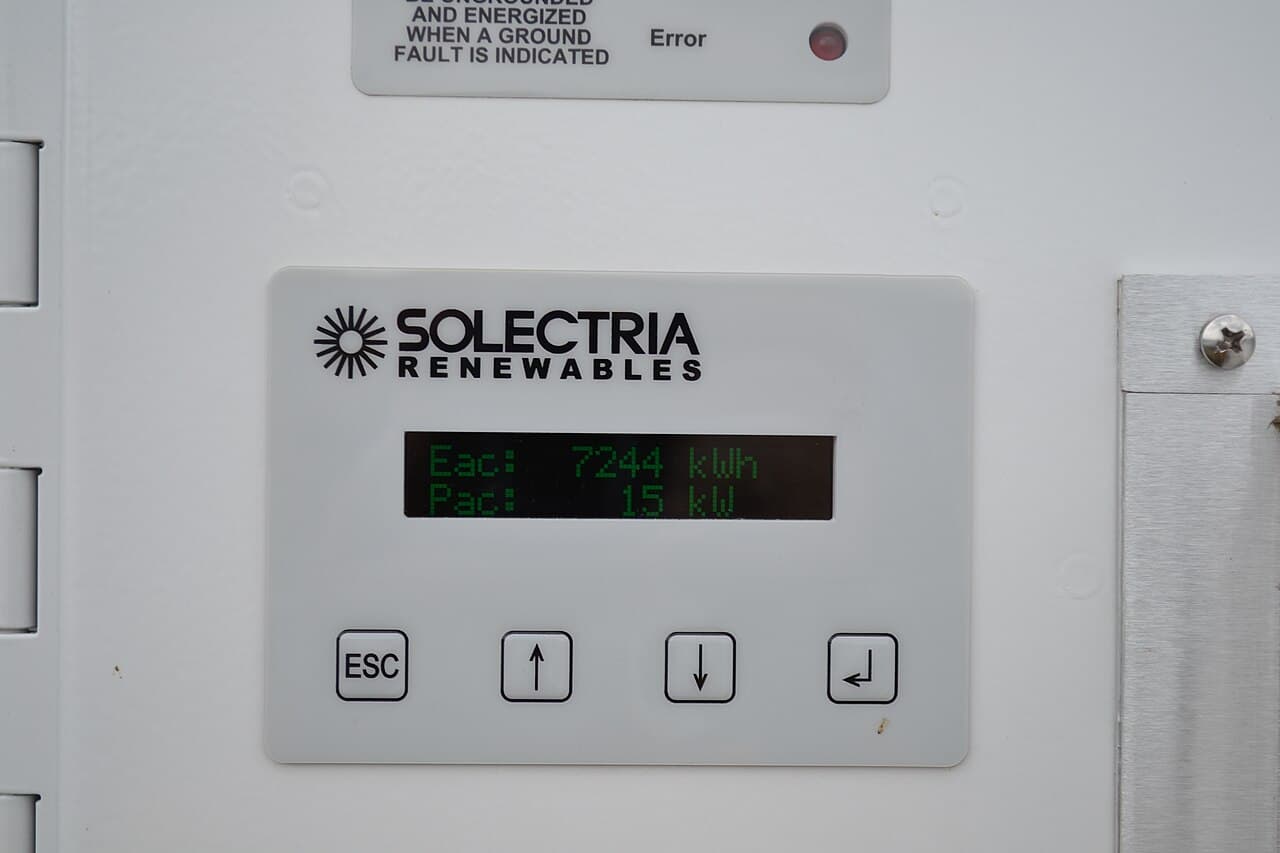
Confirm the system is reporting. Open the inverter's owner app or portal. Check the timestamp and whether data is current. “No data” may mean an internet or monitoring connection problem, not necessarily stopped generation. Note any visible fault message or error code without opening a cabinet.
Record energy, not just peak power. Instantaneous power in kW fluctuates through the day; energy produced over a day or month is measured in kWh. Compare complete periods, not a midday snapshot with a monthly quote forecast.
Use the original model as a baseline. Find the installer's expected monthly production, commissioning report and warranty. Compare the same calendar month, then account for unusually dusty or cloudy periods, new shading and planned outages. The US Department of Energy notes that performance varies with solar availability, age and weather; it recommends tracking hourly, daily, monthly and annual output.
Look for a pattern. A sharp drop to zero during daylight, repeated inverter fault codes or one inverter producing much less than comparable neighbours warrants a service call. A gradual change can have other causes, including soiling, shade or sensor errors. A single low day is not proof of a defective panel.
Escalate with evidence. Send the installer dates, screenshots, the inverter make and model, fault codes, recent generation, the original forecast and any relevant DEWA meter readings. Ask for the reason for the variance and the test they will use to confirm the repair.
The US Department of Energy's PV operations guide recommends checking production meters and inverter messages and warns against simply resetting an inverter that repeatedly trips: the underlying electrical fault needs inspection. In Dubai, DEWA says only enrolled electrical and solar PV consultants and contractors are authorised to install, operate and maintain grid-connected systems. Keep diagnosis and repairs with the appropriate professional.
What can cause low output in Dubai?
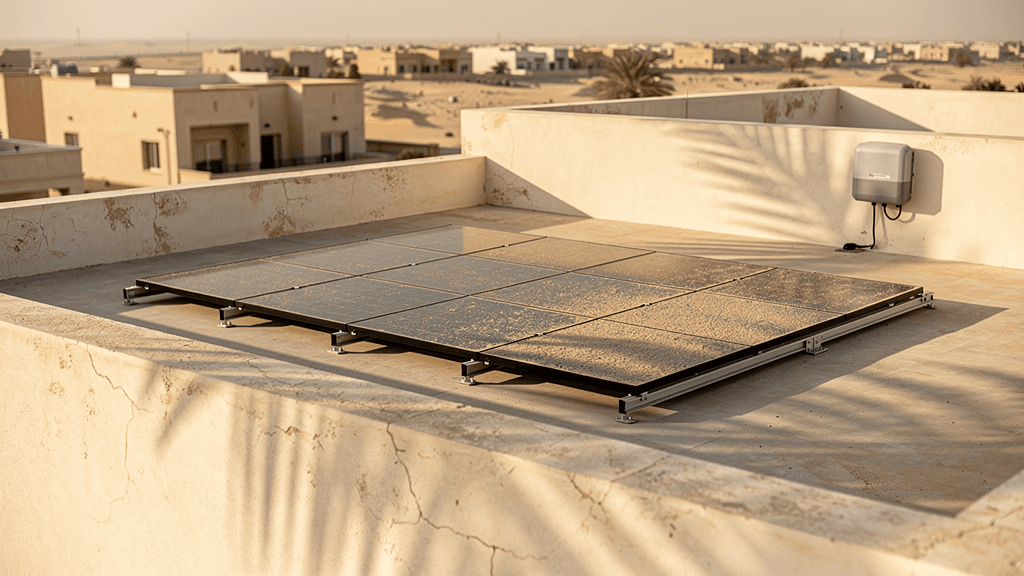
Dust and new shade: DEWA's connection guidance calls out desert dust and partial shading as threats to production. Ask whether a newly installed rooftop unit, parapet change or another building now shades the array. Our Dubai panel-cleaning guide covers soiling and cleaning separately.
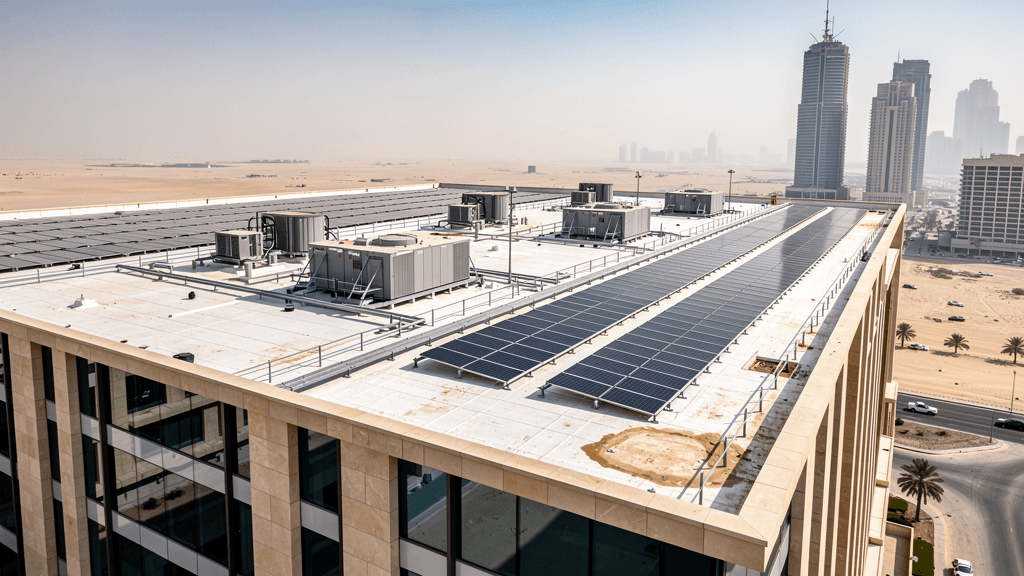
Heat and inverter derating: DEWA specifically warns that high temperatures and direct sun can cause inverters to reduce power to protect themselves. A technician should review siting, ventilation and any logged derating, rather than assuming the panels are at fault.
Equipment or monitoring failure: An offline portal, a failed sensor and a tripped inverter are different events. Compare the portal with the inverter's local readings or available generation meter before concluding that no electricity was produced. Do not touch DC connectors, switches or exposed wiring to “test” a theory.
Set a monitoring routine that actually catches problems
At handover, ask the installer to transfer owner access to the monitoring account and supply the monthly generation forecast. Save a copy of the commissioning report and the equipment serial numbers. Then check a completed month's output against that month's forecast and the same month in previous years. If the difference is material, ask the contractor to adjust for weather and investigate availability and faults. Avoid treating an unsourced “normal output” percentage as a guaranteed Dubai threshold: the US federal performance figures relate to particular portfolios, not every villa roof.
For a commercial site, agree alert recipients and response times in the operations contract. Keep a simple log: date, generation, fault message, action and whether production recovered. That makes warranty discussions much less theatrical. Our maintenance-cost guide explains how to budget for servicing; this checklist tells you when to call for it.
Bottom line: compare measured generation with a relevant baseline before blaming the bill. If you have a persistent zero-output period or repeated fault alerts, contact your enrolled contractor promptly. If you are planning a system, ask every bidder to include owner monitoring access, a monthly forecast and fault-response terms in the quote. Compare solar quotes with those items specified.
Sources and image credit
DEWA: connection guidelines, dust, shading and inverter siting.
US Department of Energy: operating and maintaining an existing PV system (general O&M guidance, not Dubai regulation).
Hero photograph: SunGen Sharon Solar inverter display, SayCheeeeeese, Wikimedia Commons, CC0. Illustrative image from Vermont, not a Dubai installation.