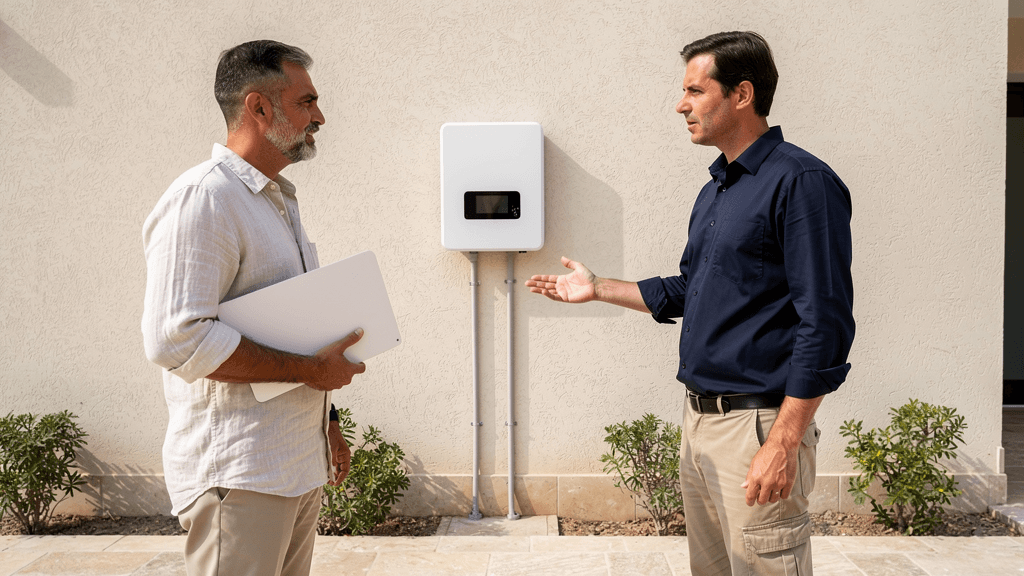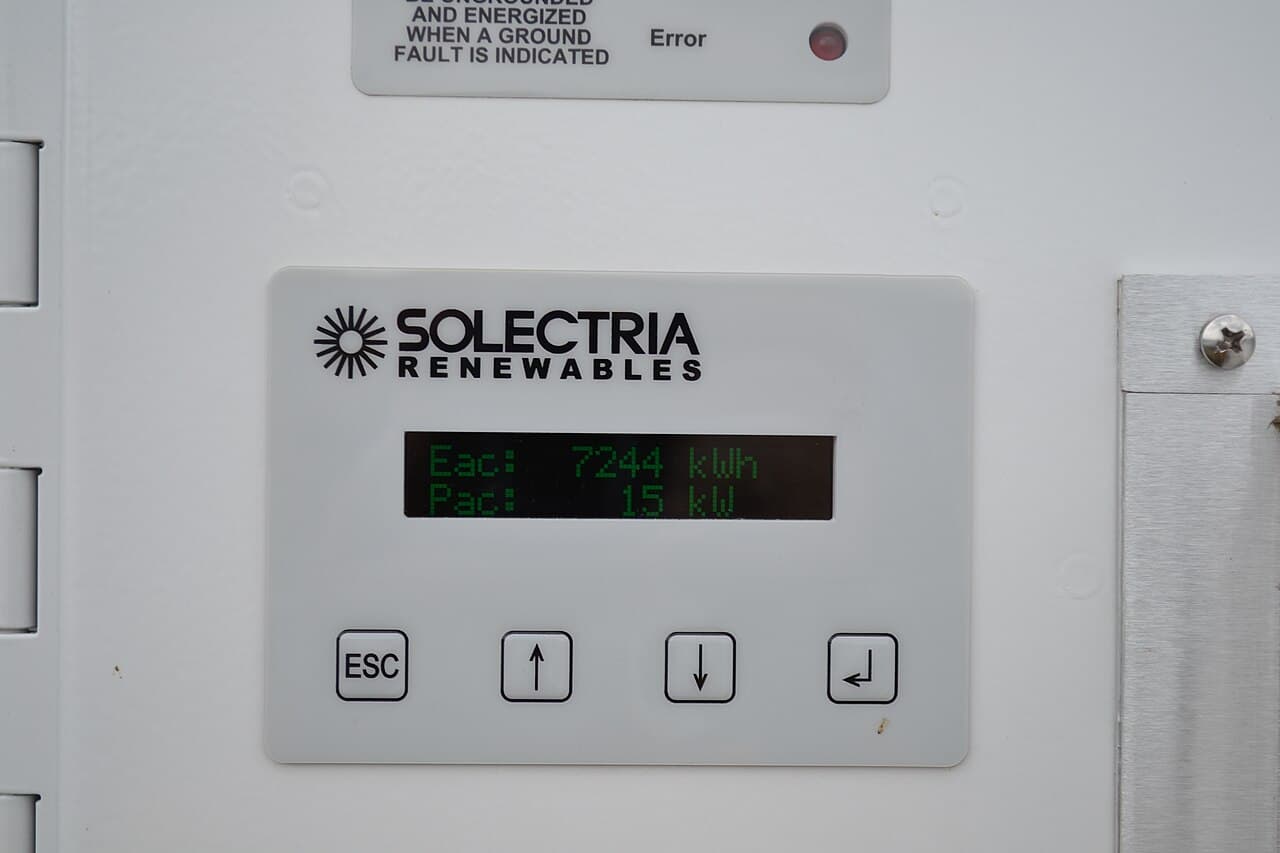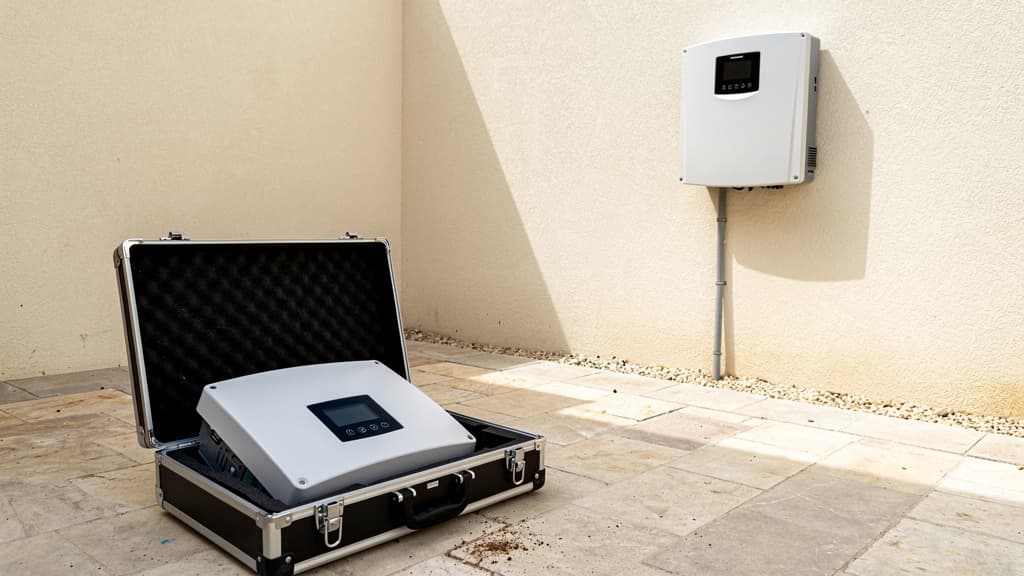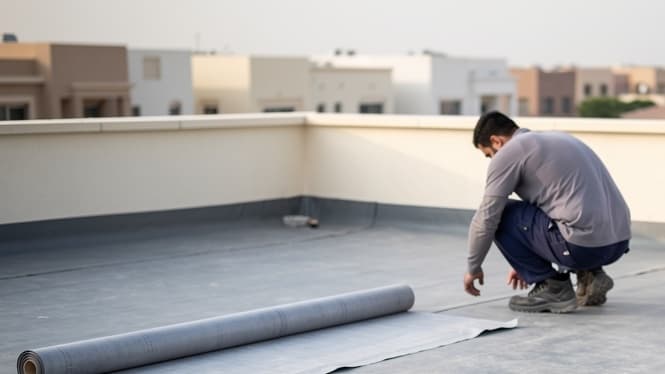
AI-generated illustration: roof-refurbishment planning at a Dubai-style property, not a documented solar removal or an installation method.
Before repairing a Dubai villa roof beneath an existing solar array, arrange a joint roof-and-solar assessment, not a roofer-only start date. The repair may need a few modules moved, a larger section cleared, or the whole array temporarily removed. The answer depends on the roof work and safe access. Agree who removes and stores the equipment, who accepts the repaired roof, and who tests and returns the system to service before work begins.
This guide is for owners of existing DEWA-connected villa systems needing roof repairs or waterproofing renewal. It is not a removal procedure, a quotation for repair services, or permission to change the installation. If you are still buying your first system, the separate pre-installation waterproofing checks address that earlier decision.
Must all the solar panels come off?
Do not accept either blanket answer: “everything must go” or “we can paint around it”. Ask the roof contractor to mark the area needing treatment and explain what access the proposed repair requires. Then have the solar contractor identify the equipment that obstructs that work and the safe, practical removal scope.
A local repair away from the array: ask whether the roof team can reach and complete it without disturbing solar equipment, cables or supports. Confirm how adjacent equipment will be protected.
A repair beneath modules or their supports: ask which modules, rails or attachments must be removed to expose the actual defect and complete the roof detail. Moving only a panel may not clear the support beneath it.
Broader waterproofing renewal: ask how the contractor will treat the roof continuously, including covered areas, drains and upstands. A cheaper scope that leaves inaccessible old material untouched is not the same proposal.
A changed roof build-up or layout: require a fresh assessment of the solar mounting interface and any design changes before refitting. Do not assume the old supports suit the new roof.
Sika's roof-refurbishment guidance distinguishes different refurbishment systems and identifies roof condition, structural loading and complexity as selection factors. It is manufacturer guidance from Ireland, not a Dubai specification or evidence that an array can stay in place. Your roof contractor should identify the actual membrane and proposed treatment for your property.
Use a solar contractor, not an informal favour
DEWA's Shams Dubai FAQ says only enrolled Electrical and DRRG Solar PV consultants and contractors are authorised to install, operate and maintain the system. It also places maintenance responsibility on the customer. Ask your enrolled maintenance provider to coordinate the solar work with the roof contractor.
Switching off an app or an ordinary household switch is not a reason for a homeowner or roofing crew to unplug panels. REC's installation manual warns that solar panels generate DC electricity in light and that breaking a current-carrying connection can cause a dangerous electrical arc. Leave isolation, disconnection, electrical testing and reconnection to qualified personnel. Do not climb onto the roof to collect serial numbers yourself.
Agree the four handovers before booking
Owner to solar contractor: supply the existing layout, equipment schedule, connection records, maintenance contact and monitoring history. Ask for a dated condition record and a map linking module identities to positions before removal.
Solar contractor to roof contractor: agree which roof area will be clear, which equipment remains, how it is protected and when the area is ready for roof work. Name the person coordinating both firms.
Roof contractor to solar contractor: require written acceptance that the specified roof work is complete and ready for the proposed mounting interface. Ask about the product-specific curing or waiting period, inspections and warranty conditions. Do not copy an overseas waiting period into a Dubai schedule.
Solar contractor to owner: require a dated return-to-service record, the applicable testing and compliance evidence, updated equipment/layout records and confirmation that owner monitoring works.
These are recommended coordination checkpoints, not four DEWA-defined approval stages. Put the dependencies into the programme: the refit date should follow the roof's actual readiness, not merely the removal crew's availability.
Where will the removed panels go?
Storage is part of the job, not something to improvise after panels are on the ground. Identify the protected storage location, handling route, inventory, custody and responsibility for damage. Ask whether removed hardware can be reused under its manufacturer's instructions or needs replacement; do not accept “all the old parts go back” without a check.
The REC Alpha Pure installation manual, revision 18 UL EN 3.2026, provides a useful product-specific example. Its handling section says not to carry modules by their cables or junction boxes, not to stand on them, and to keep electrical contacts clean and dry. It recommends controlled storage, ideally indoors, protected from the elements, and warns that packaging is not weatherproof. This is not a universal storage specification for every brand; require the instructions for your exact modules.
Ask the contractor to record condition both when equipment leaves the roof and before it is refitted. If damage is found, establish the proposed remedy and authorise any replacement separately. A manufacturer's module warranty is not a promise to pay for damage caused during your roof project.
Does the original DEWA approval cover the refit?
Have the enrolled contractor compare the proposed work with the accepted installation and establish the project-specific notification, approval, inspection and return-to-service requirements with DEWA. Do not treat temporary removal as a published blanket exemption. Equally, do not assume every same-site refit must repeat the entire new-installation process.
Keep restoring the existing array separate from adding panels, changing the inverter, altering the mounting layout or moving the system to another property. Those are different scopes. Our repair-versus-system-change guide explains why an equipment change needs its own assessment. Ask separately about applicable building-authority and community permissions for the roof works.
Compare the complete removal-and-refit price
Request an itemised scope covering access equipment, solar removal, storage, roof repair, the renewed mounting interface, refitting, any replacement hardware, testing, monitoring restoration and applicable permission-related work. State who pays if the roof job overruns, storage lasts longer, or removed equipment is found damaged.
Ask for the expected period without solar generation and check any continuing lease or service payments under your own contract. Do not assume lost production is compensated. Obtain written confirmation of the warranty position from the relevant roof, module and installation providers; no universal price or warranty-survival guarantee is claimed here. The manufacturer-remedy versus repair-labour distinction helps separate those promises, but a planned roof refurbishment is not automatically a covered module defect.
The Dubai solar owner handover checklist is useful again after a refit. Update the original pack rather than leaving the roof contractor's sign-off and solar test records in unrelated folders.
A request to send both contractors
Please assess the roof repair and existing solar installation together. Mark the work area and equipment that must be removed, identify the qualified solar contractor, and price removal, protected storage, roof work, refitting and return-to-service checks separately. Confirm the roof product and readiness conditions, responsibility for each interface, project-specific permissions, damage and delay terms, and the records and monitoring access I will receive. Keep any system expansion as a separate option.
For an existing repair, start with your enrolled maintenance provider and roof-warranty contact. If the roof project becomes a proposal for a new or larger solar installation, compare Dubai solar proposals with the roof-work scope clearly stated. The useful outcome is a watertight roof and a documented working system, not simply getting the panels back on quickly.
Sources checked on 12 October 2026. This is an owner planning checklist, not electrical instructions, legal advice or a project approval. Manufacturer examples are product- and region-specific; confirm the documents applicable to your installation.