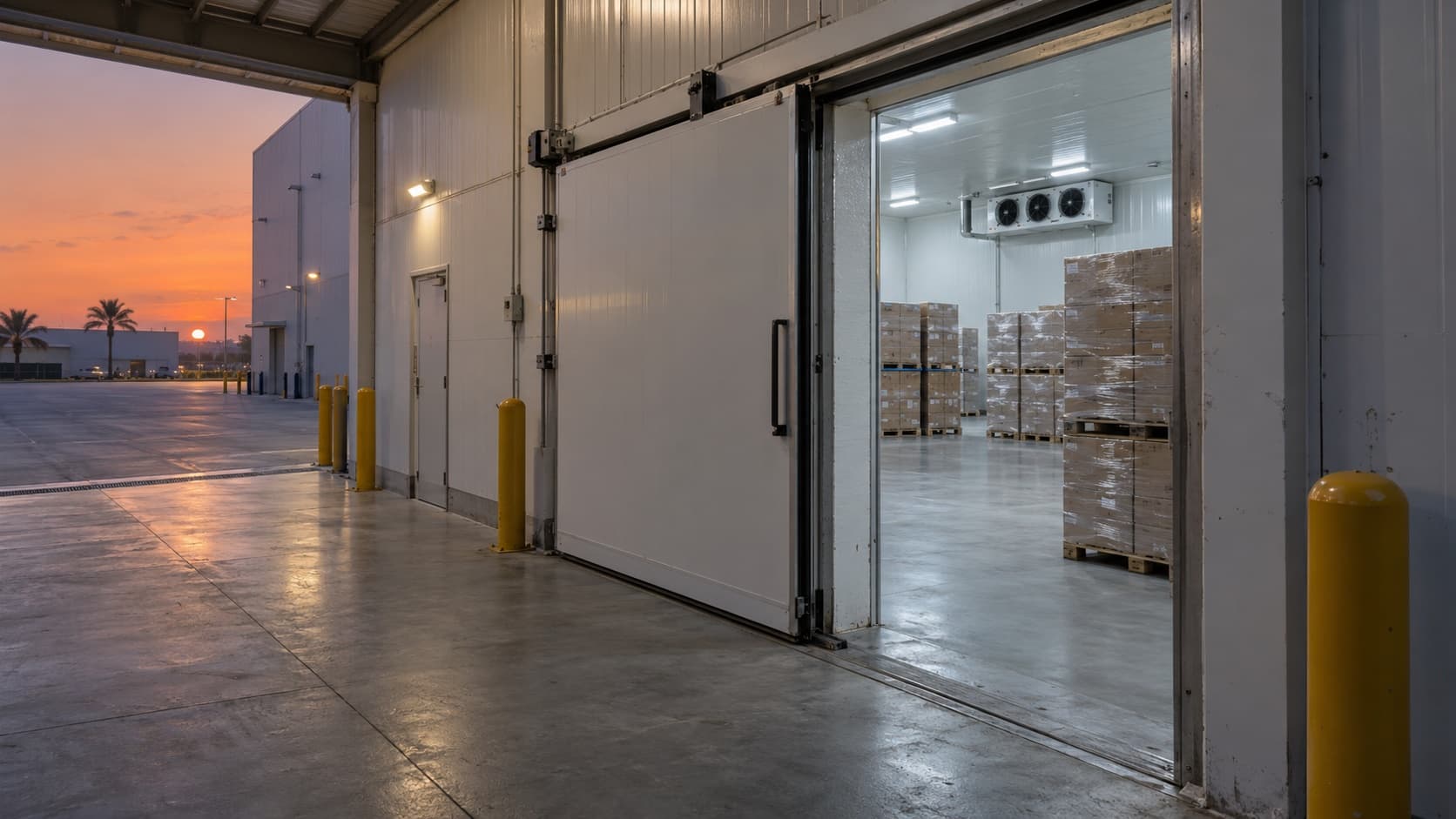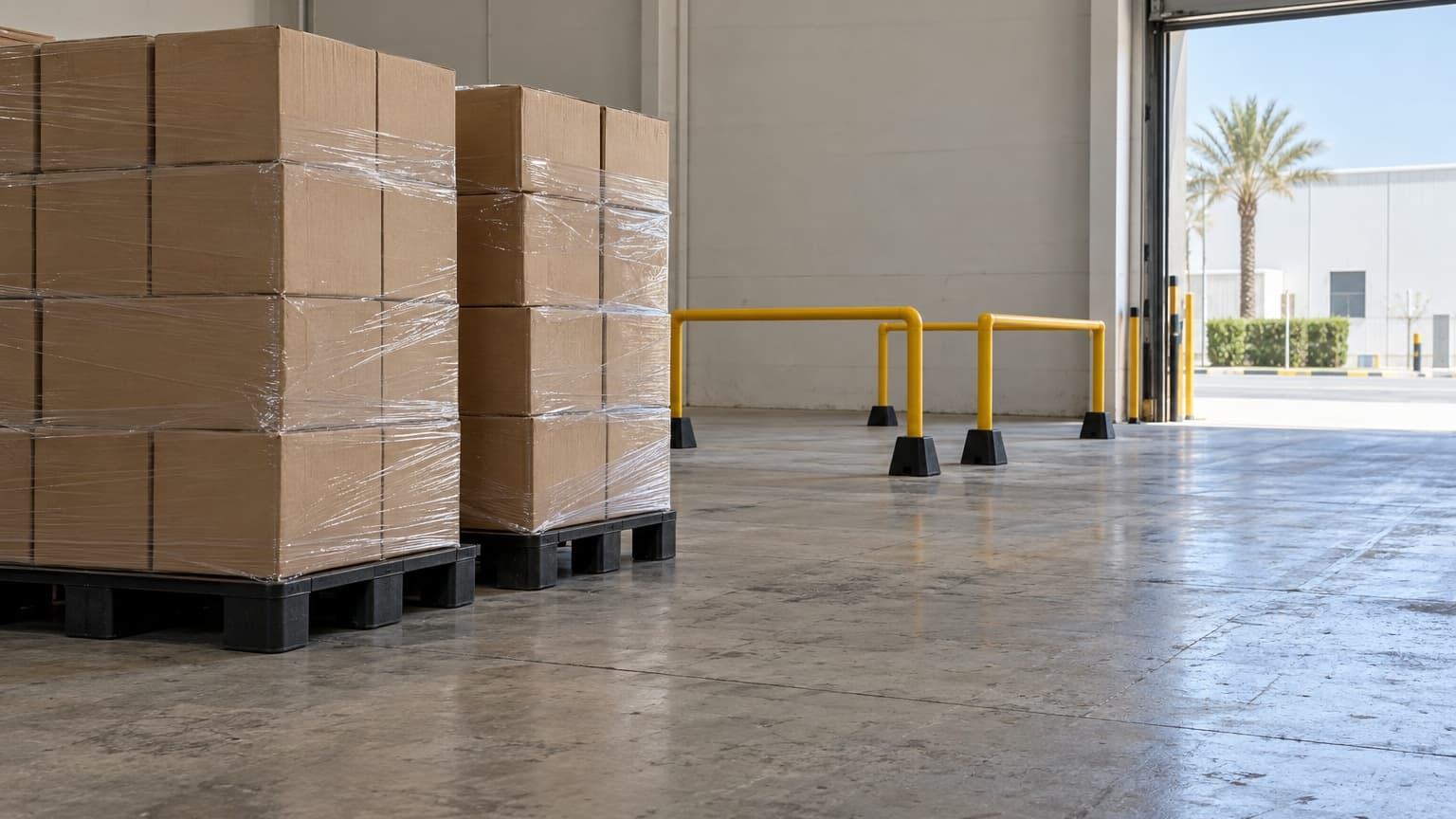
AI-generated illustration: warehouse stock beside a segregated work area, not a real insured site or an approved installation method.
Before installing solar on a Dubai warehouse, agree who insures three different things: the new installation work, the existing building and stock, and the financial loss if operations are disrupted. A contractor saying “we are insured” does not settle all three. Neither does a panel warranty or a promise to compensate for low generation.
For an owner, operator or finance team, the investment decision is whether the proposed works and completed system fit the site's insurance arrangements, and which costs or risks remain with the business. Resolve that with your insurer or authorised broker before authorising work, using the actual design and contract rather than the headline system price.
Start with the warehouse, not the value of the panels
A rooftop project takes place above an operating business. The relevant assets may include the landlord's building, the operator's machinery, its own stock and goods held for customers. List these interests separately. Do not assume that a policy protecting the solar installation also protects everything underneath it.
GIG Gulf's engineering insurance overview distinguishes construction and erection cover from operational machinery insurance, and describes optional extensions and project-specific arrangements. These are product descriptions, not confirmation that any particular rooftop project or loss is accepted.
Ask the installer for its proposed insurance schedule and relevant wording, not just a certificate showing the company name. Have your insurer or broker check the project address, insured parties, insured works, limits, excesses, exclusions and dates. Where the building owner, occupier and solar owner differ, ask whose property and financial interests each policy actually protects.
Complete the physical site checks alongside this exercise. The warehouse rooftop feasibility checklist helps assemble roof, structural, access and operational information that bidders and insurance advisers can review.
Use a three-phase responsibility matrix
Send the same matrix to every bidder and your insurance adviser. The questions below are a procurement tool, not a statement that all of these benefits are available or included.
Project phase | What needs a written answer | Evidence to request |
|---|---|---|
Delivery, storage and installation | Who carries risk for the equipment, damage to the existing building or stock, and liability arising from the works? | Project-specific cover confirmation, insured parties, existing-property treatment, limits, excesses, exclusions and storage or transit boundaries. |
Testing, partial use and handover | Exactly when does works cover end, and when does accepted operational cover begin? | Written dates and triggers for testing, takeover and energisation, with responsibility for any staged sections or delay. |
Normal operation and later intervention | Who insures the completed system, warehouse assets and relevant financial losses, including during repairs or temporary removal? | Accepted equipment and ownership schedule, applicable endorsements, maintenance conditions and a process for notifying later changes. |
The handover boundary deserves particular attention. Sukoon's current contractor's all-risk overview says its described cover terminates when the completed structure, or a completed part, is taken over or put into service. It describes maintenance-period extensions separately. Do not turn that example into a universal solar policy rule; ask how the actual proposed construction or erection policy handles your commissioning sequence.
Do not use “DEWA connected”, “installer handed over” and “insured for operation” as interchangeable milestones. Have the responsible parties reconcile the actual dates and documents. Utility or building approval does not, by itself, answer a question about the scope of an insurance contract.
Business interruption is not any interruption to business
The warehouse may lose trading income even when repairing the damaged solar equipment is a relatively small job. But a loss of income is not, by itself, evidence of an insured business-interruption claim.
GIG Gulf's commercial property overview describes its consequential-loss-of-profit cover as following material damage from an insured peril at the premises, and says that it is valid only when there is an admissible property material-damage claim. That is an important product-specific trigger, not a finding about your policy or every UAE insurance product.
Ask your adviser to distinguish four situations rather than answering “business interruption included”:
Planned installation shutdown: a scheduled isolation or restricted loading period with no accidental damage. Ask how the business should budget for it; do not assume the cited damage-triggered cover pays.
Damage to the warehouse or its contents: ask which property cover would respond, whose interest is insured, and whether the resulting trading loss meets the separate interruption conditions.
Solar equipment failure while the warehouse keeps trading: distinguish the cost of repair, lost solar generation and a higher electricity bill from a loss of warehouse trading income. Request an explicit answer for each.
Damage affecting somebody else's equipment or goods: ask how third-party ownership, goods held in custody and any contractual obligations are treated. Do not assume the operator's policy and the solar owner's policy protect the same loss.
For any proposed business-interruption protection, ask the broker and finance team to agree the insured financial basis, selected indemnity period, limits, applicable time excess or waiting period, and treatment of increased costs of working. Discuss the realistic time to restore both the building and normal trading, not just the time to replace an inverter. Do not substitute a supplier's repair target for that assessment.
A contractor's output remedy is a different enquiry. Our warehouse solar performance-guarantee guide explains how to distinguish forecasts, measured shortfalls and contractual compensation. None should be priced as business-interruption insurance without an express, reviewed basis.
Buying and third-party ownership need different questions
For a purchased system, ask how the completed equipment and its agreed value will be recorded, and whether the building and contents arrangements need amendment. For leased or provider-owned solar, identify the equipment owner and ask who must arrange cover, pay the excess and restore the installation.
Then test the contract against the insurance response: do solar payments continue during a shutdown? Who pays if the array must be removed to repair the warehouse? Who handles reinstatement if the equipment owner changes? These are questions to resolve in the specific agreement, not assumptions about every financing model. The wider Dubai business solar PPA and leasing guide provides the commercial context.
Keep landlord, tenant and provider responsibilities in one record. Separate cover can be appropriate, but overlapping assurances are not a substitute for knowing which party reports a loss, arranges urgent protection and pays the costs not recovered from insurance.
Put the remaining cost into the investment comparison
Ask each bidder to separate insurance included in its price from cover the owner must arrange. Obtain the insurer's actual project assessment before adding a premium assumption to payback. There is no verified standard warehouse-solar premium or universal percentage uplift in this guide.
Record any confirmed additional premium, survey or risk-improvement cost.
Identify excesses, sub-limits and uninsured costs that the business would retain.
Budget agreed installation disruption separately from accidental-loss scenarios.
Test repair and reinstatement responsibilities against the purchase or finance contract.
Require unresolved insurance items to remain visible in the bid comparison, rather than silently treating them as included.
This is not an argument against solar. It is a way to avoid comparing a carefully scoped proposal with one that has simply left the building and operating risks unanswered.
A brief to send before accepting a proposal
We are considering rooftop solar at an operating Dubai warehouse. Please identify the building owner, occupier and proposed equipment owner; describe the work, storage, testing and handover stages; and state the insurance included in your proposal. Supply the documents our insurer or broker needs to assess existing property, stock, liability and business-interruption implications. Identify cover boundaries, retained excesses and exclusions, and the responsibility for later removal and reinstatement. Do not assume that our existing policy accepts the project.
Attach the roof and equipment information, proposed work programme, operating constraints and ownership details. Send the same brief to your insurer or authorised broker and ask what additional information and written acceptance are required. Obtain the relevant issued wording, schedule and endorsements before relying on a statement of cover.
Decision takeaway: progress when the project team can show how works cover, existing assets and operational-loss protection fit together, including the handover dates and costs retained by the business. “The installer has insurance” is the start of that discussion, not the answer.
To obtain comparable site-specific proposals, request commercial solar quotations through SolarQuote, subject to project suitability and installer availability. Include the warehouse location, ownership or landlord authority, electricity bills and the insurance brief. SolarQuote helps compare installer proposals; your insurer or authorised insurance adviser must confirm cover.
Primary insurer product information checked on 20 October 2026. This is an owner procurement guide, not insurance advice, a policy quotation or a claim decision. Product summaries illustrate questions to ask; the issued policy wording, schedule and endorsements govern. No insurer, installer or insurance product is ranked or recommended.