Yes, daytime solar can reduce the electricity bill of a Dubai cold store that keeps refrigeration running overnight. Under standard Shams Dubai net metering, eligible exported daytime electricity is accounted for against grid imports. That is a billing mechanism, not a way of storing sunlight in the panels. After sunset, a grid-connected cold store without a separate storage system still takes its electricity from the grid.
For an owner or operator, the investment question is therefore not simply whether the business works at night. It is how much usable solar the site can produce, how that production changes the actual DEWA bill, and whether installation and maintenance can leave the cold chain undisturbed.
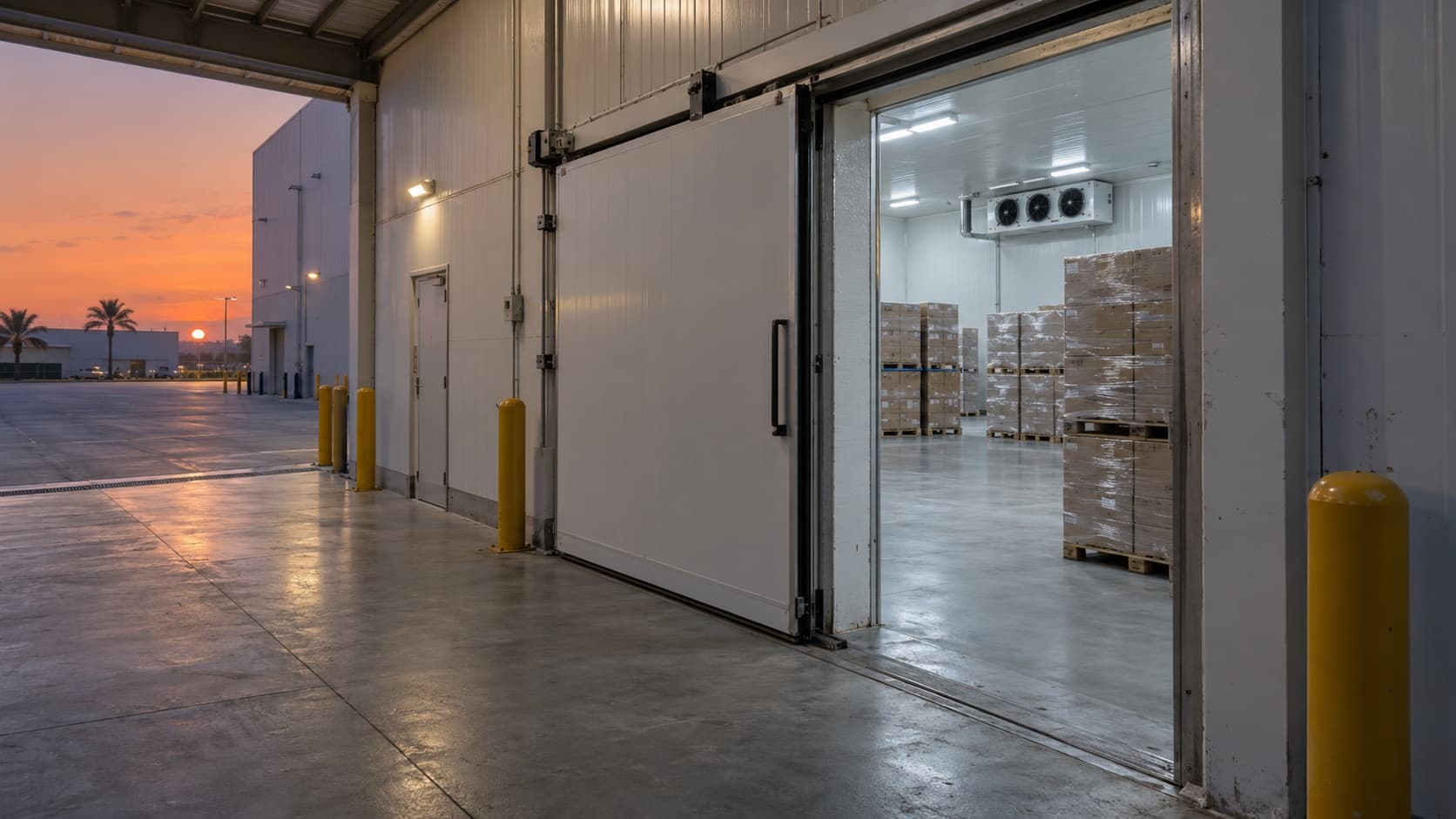
Illustrative generated image: a temperature-controlled warehouse, not a named customer or project.
Separate three questions before requesting a price
Energy savings: how much purchased electricity could rooftop solar displace, directly or through permitted net metering?
Physical supply: when are the compressors, fans and other loads powered by on-site generation, and when do they rely on the grid?
Continuity: what keeps the required refrigeration and controls operating if the grid or a component fails?
A proposal can answer the first question favourably without answering the third. Do not pay for a solar array on the assumption that it replaces a cold store's existing standby-power arrangements.
How daytime generation relates to overnight consumption
DEWA's Shams Dubai FAQ explains that solar supplies local loads first and excess electricity is exported. The monthly bill reflects net consumption; excess credits can carry forward. Exports and carried credits are deducted before the applicable tariff slabs and fuel surcharges are applied. Standard Shams Dubai does not pay cash for surplus electricity.
This means an hourly mismatch is not automatically a lost financial opportunity. A cold store may import electricity at night while its eligible daytime exports reduce net billed electricity. But an annual generation total alone does not show when credits arise or whether the customer can use them. Our explanation of how Dubai net metering works provides the wider billing context.
A simplified accounting illustration, not a customer case study: assume a single eligible hosting account, no opening credit and the following monthly AC electricity figures. These numbers are chosen only to explain the mechanism; they are not a yield forecast or system-size recommendation.
Monthly item | Illustrative electricity |
|---|---|
Total facility consumption | 120,000 kWh |
Solar generation | 40,000 kWh |
Solar used directly on site | 36,000 kWh |
Solar exported | 4,000 kWh |
Grid imports after direct solar use | 84,000 kWh |
Net imported electricity after exports | 80,000 kWh |
The example reduces net billed electricity, but it does not eliminate night-time imports. Nor does it imply the total invoice falls by the same proportion: use the site's actual billing category, tariff slabs, applicable surcharges and other charges. Ask for a month-by-month bill reconstruction, not one flat tariff multiplied by all annual generation.
The scope here is a DEWA-connected facility under standard Shams Dubai. A separate D33 arrangement, another emirate or a different customer-account structure needs its own assessment. For a multi-tenant facility, do not assume one owner's generation can offset every occupier's separate account. Check which DEWA accounts can share solar credits before the bidder allocates savings across the site.
Does a continuous refrigeration load make solar a better fit?
It can create a useful daytime demand for solar, but “open 24 hours” is not a load profile. Ask the refrigeration and facilities team to identify the actual minimum daytime demand and how consumption changes with occupancy, incoming stock, door activity, defrost schedules and seasonal conditions. Treat these as site inputs to verify, not assumed savings.
Request at least a year of electricity bills and, where available, interval meter data. Have the bidder plot facility demand and expected solar output on the same timeline. Require separate totals for direct use, exports, grid imports and carried credits. Run a lower-throughput case as well as the current operating case, so a temporarily full warehouse does not become the permanent assumption.
There is documented local precedent, but no universal savings percentage. In its September 2025 announcement of the RSA Cold Chain facility in JAFZA, Americold described a multi-temperature cold-storage hub with rooftop solar panels. This is an operator announcement confirming the stated project features, not an independently audited energy-performance study. It supplies no basis for applying a particular solar capacity, payback or savings rate to your building.
Bill savings are not refrigeration backup
DEWA describes interface protection that stops the PV plant when network conditions require disconnection, including when the electricity supply has been switched off for safety. An ordinary grid-connected solar proposal should therefore not be described as an outage solution for the cold store.
Keep the continuity brief separate. Ask a suitably qualified electrical and refrigeration design team to document critical loads, required operating duration, starting requirements, controls, changeover arrangements and interaction with any existing generator or UPS. If storage is proposed, require a design that explains exactly what it supports and under which conditions. A battery on a quotation is not proof that the refrigeration system can operate independently.
Do not change product-temperature limits, defrost cycles or refrigeration setpoints merely to improve a solar model. Any operational change must be assessed and authorised through the facility's refrigeration and food-safety processes.
Protect the roof and the cold chain during the works
Before sizing the array, use our warehouse rooftop feasibility checklist to organise the building-specific structural, roof-condition and access questions. A large footprint is not a verified usable panel area.
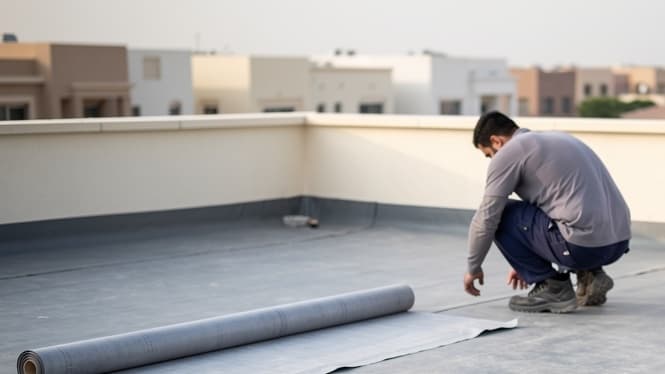
For a refrigerated facility, add an installation method statement that identifies any isolation, cable routes, access over occupied areas and possible effects on insulated building elements. Ask the contractor and operator to agree protected work windows, contamination controls where applicable, emergency contacts and a stop-work procedure if temperatures or operations are affected. These are procurement requirements to resolve for the site, not a claim that every project needs the same shutdown.
DEWA requires enrolled solar consultants or contractors for the grid-connected installation and an operation and maintenance contract. Ask the appointed team to confirm the permitted capacity, connection scope and relevant building-authority approvals before treating the quotation as an executable design.
What a comparable cold-store solar proposal should contain
Verified site and account scope: property address, roof rights, account holder, approved electrical load and the applicable utility arrangement.
An hourly energy model and monthly bill model: stated source data, solar losses, direct use, exports, imports and credit carry-forward.
A refrigeration operating brief: verified load variations and any planned efficiency improvements, with no unauthorised temperature assumptions.
A continuity boundary: what solar does not back up, plus separately specified storage or standby works if requested.
A buildable scope: structural assessment, roof interfaces, connection works, planned isolations and responsibility for protecting operations.
Lifetime costs and service: cleaning, monitoring, maintenance, replacement allowances, insurance questions and fault-response responsibilities.
Commercial sensitivities: lower generation, lower throughput, higher maintenance costs, lease expiry and priced exclusions.
If comparing purchase with third-party finance, use the same operating assumptions for both. Our Dubai solar PPA and leasing guide explains the broader contract questions; the cold-store proposal still needs to state its own term, payment basis, exit conditions and treatment of downtime.
The decision: assess savings and continuity separately
Do not reject rooftop solar simply because refrigeration continues after sunset. Do not buy it as backup simply because the roof generates electricity. Progress to site-specific proposals when the owner or authorised occupier can provide bills, operating data and roof access, and the design team can separate net-metering savings from cold-chain continuity.
To compare suitable options, request commercial solar quotations through SolarQuote. Identify the property as a cold-storage or refrigerated warehouse, provide its Dubai location and electricity-bill information, and have the operating schedule and any standby-power requirements ready for follow-up. SolarQuote is a comparison and installer-matching platform; responses depend on project suitability and installer availability.
Utility guidance and project sources checked 16 October 2026. This is an owner-facing feasibility and procurement guide, not an electrical design, food-safety plan or guaranteed financial return.