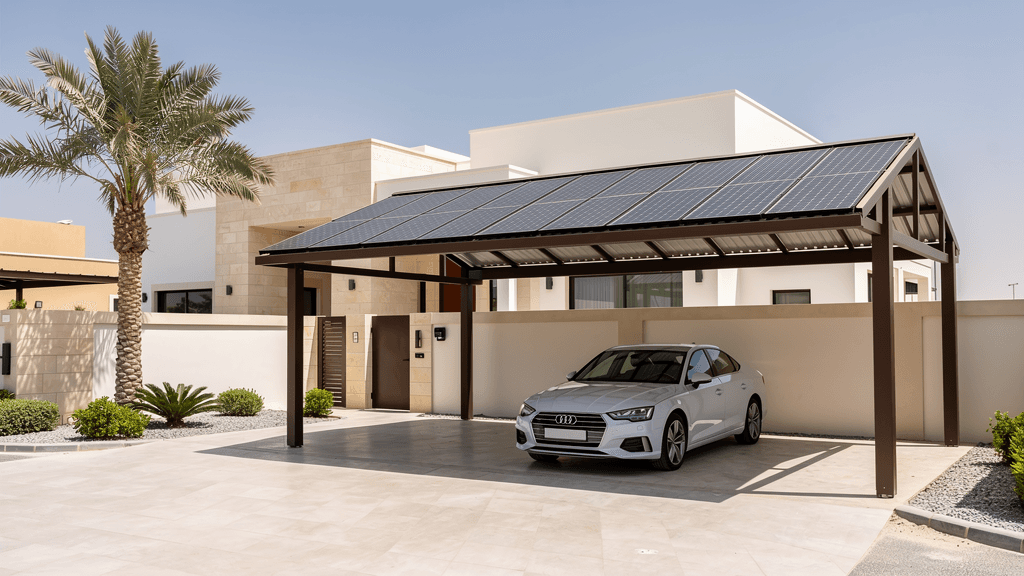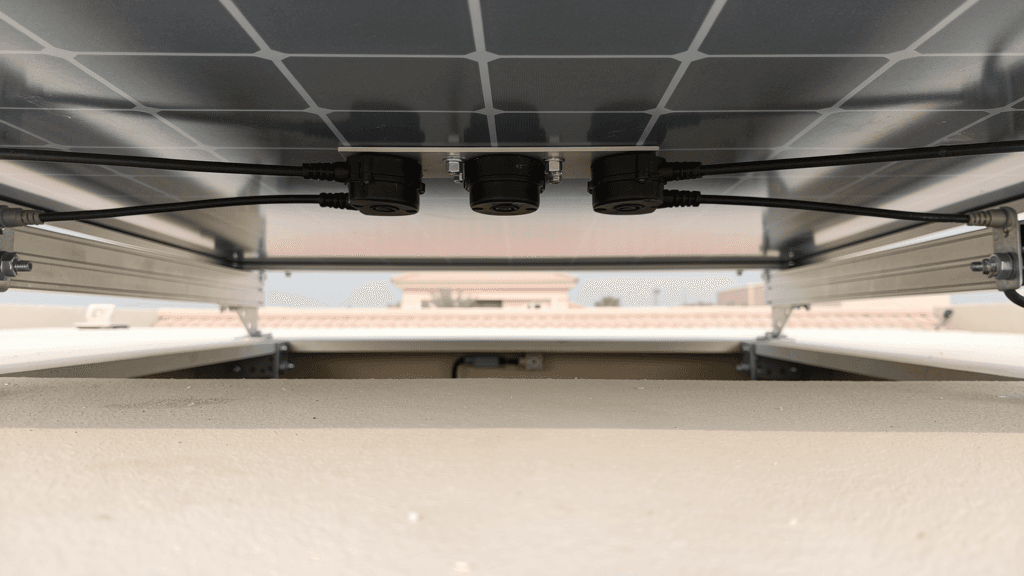
Illustration: a coastal-villa site assessment, not a named Dubai property or an approved installation.
Short answer: A salt-mist test certificate is useful evidence about a solar panel, but it is not enough to approve a complete system for a Dubai villa near the sea. Before accepting a quote, ask for the exact module's coastal installation conditions, the proposed mounting and electrical-equipment specification, and the warranty terms that apply to your address. A panel can pass a corrosion test and still need special installation measures.
This guide is for a Dubai coastal-villa owner comparing new rooftop solar proposals. It answers a specific question: does “IEC 61701 tested” settle the salt-exposure risk? It does not set a universal safe distance from the shoreline, grant community permission or recommend one brand.
What does a salt-mist certificate actually tell you?
IEC 61701:2020 covers salt-mist corrosion testing of photovoltaic modules. Its published scope describes test sequences for evaluating resistance to corrosion and possible faults in wet, salt-rich atmospheres. It also says that different test methods can apply depending on the atmosphere in which a module will operate.
The useful buying question is therefore not just “has the brand passed?” Ask which certificate or test report covers the exact module model in your quote, which edition and method it uses, and why that evidence is appropriate for the proposed site. A certificate for another product family is not a substitute for a clear match.
For the broader question of degradation and warranty duration, see our guide to realistic panel lifespan in UAE heat. This coastal checklist focuses instead on site acceptance and installation conditions before purchase.
Do not turn a module test into a whole-system guarantee. The module, rails, clamps, fasteners, earthing connections and inverter are different parts of the installation. Our guide to the main UAE solar-system components explains how those pieces fit together; the coastal check needs to cover them, not only the glass panel.
A real manufacturer example: passing the test is only the start
Canadian Solar's April 2026 module installation manual, revision 3.2 makes the distinction unusually clear. It says its modules have passed IEC 61701 salt-mist testing, while warning that corrosion may still occur where the module frame connects to the bracket or grounding connection. Annex C then sets out additional coastal installation requirements.
For the modules covered by that manual, its onshore distance bands are:
From 0 to 20 metres from the coastline, inclusive: Type II anti-corrosion modules are required, together with the specified installation measures.
More than 20 metres and up to 100 metres: Type I anti-corrosion modules are required, together with the specified installation measures.
More than 100 metres and up to 500 metres: Type I anti-corrosion modules and the specified measures are recommended.
More than 500 metres: follow the manual's general guidance.
These are Canadian Solar's product instructions, not DEWA rules for every solar brand. The manual defines the coastline at high tide and measures the shortest distance from the module array to it. It also says local conditions and wind patterns affect salt deposition, reserves the right to adapt the classification for individual cases, and asks customers to confirm the category with its local representative.
The practical lesson is to obtain the applicable document for the product actually offered. Do not accept an old manual, a different regional edition or a generic “marine grade” description without checking its applicability. Annex C warns that failure to follow its instructions and other general anti-corrosion principles will void Canadian Solar's limited product and performance warranty. The separate warranty document still needs checking for your model, sales channel and UAE installation.
The coastal quote checklist
Use these six questions alongside the 12-line-item solar quote checklist. They are requests for your contractor's design evidence, not instructions for doing electrical or roofing work yourself.
How has the site's exposure been assessed? Ask the surveyor to record the array location, relevant shoreline distance, exposure to sea spray and the basis for any manufacturer-defined coastal category. A community name or a map pin alone does not establish the equipment's suitability.
Which exact module is being supplied? Request its full model code, the matching salt-mist evidence, current installation manual and any required anti-corrosion variant. Have the contractor obtain written manufacturer clarification if the site's category or the product's eligibility is unclear.
What protects the complete mounting assembly? Ask for the rails, clamps, fasteners and protective finishes to be named, with compatibility and corrosion protection addressed at connections. Canadian Solar's coastal annex discusses metal compatibility, coatings and grounding; “aluminium structure included” does not answer all of those questions. Do not add coatings or insulating parts yourself.
Where will the inverter and other electrical equipment sit? Request the proposed location and the applicable manufacturer's environmental and coastal restrictions. A module's salt-mist certificate does not certify the inverter. Confirm that shielding equipment from the elements does not compromise its required ventilation or maintenance access.
Who covers corrosion-related work? Ask which warranty covers each component, what exclusions and installation conditions apply, and who pays for diagnosis, removal, replacement and reinstatement. Our guide to solar warranty repair labour separates the hardware promise from the cost of a service visit. The Canadian Solar manual also says it does not cover corrosion damage to mounting systems it has not supplied.
What maintenance is required to preserve that cover? Have the installer specify inspections, approved cleaning and any protective-finish maintenance required by the chosen products. Request a written schedule and service scope rather than assuming every coastal system needs the same interval.
Coastal suitability does not replace roof suitability. If the design changes mounting, roof interfaces or access, use the flat-roof waterproofing checks to agree the scope and responsibility before signing.
Does DEWA equipment eligibility settle the question?
No. Your contractor should confirm the proposed equipment's eligibility through the current Shams Dubai process, but eligibility is not a coastal performance warranty. DEWA's eligible-equipment disclaimer explicitly says the information is not an endorsement or warranty and should not be the only basis for a purchasing or contracting decision.
Keep the checks separate: equipment eligibility and project approvals, manufacturer acceptance of the environment and installation method, and the commercial warranty and service scope. A positive answer to one does not automatically settle the others. This guide does not verify rules for a particular developer or coastal community.
A message to send before accepting the quote
Please assess my proposed rooftop array's coastal exposure and identify the exact module, inverter and mounting components. Provide matching salt-mist evidence, the applicable current coastal installation instructions, and any required product variant or written manufacturer acceptance for this address. State corrosion-related warranty exclusions, required maintenance and who pays for labour and reinstatement. Confirm current Shams Dubai equipment eligibility and the applicable approvals. Please price any coastal-specific measures explicitly rather than describing the system only as “marine grade”.
For a new project, request Dubai solar proposals with a coastal-exposure assessment. Compare the documented design and obligations before the headline price. There is no verified universal coastal premium or safe-distance rule to insert into every villa quote.
Primary sources checked on 9 October 2026. The Canadian Solar example is manufacturer guidance for the products covered by that manual, not independent proof of field performance or a recommendation to buy that brand. The checklist is editorial advice. Hero image is AI-generated and illustrative.