TL;DR — A UAE solar system has three core parts: panels (monocrystalline is the standard for heat and space efficiency), an inverter (on-grid for net metering in Dubai, hybrid if you want batteries, off-grid for no grid connection), and optionally a battery (more important in Abu Dhabi's self-supply model than in Dubai's net metering). Choose components rated for high heat and dust. Get system designs from installers
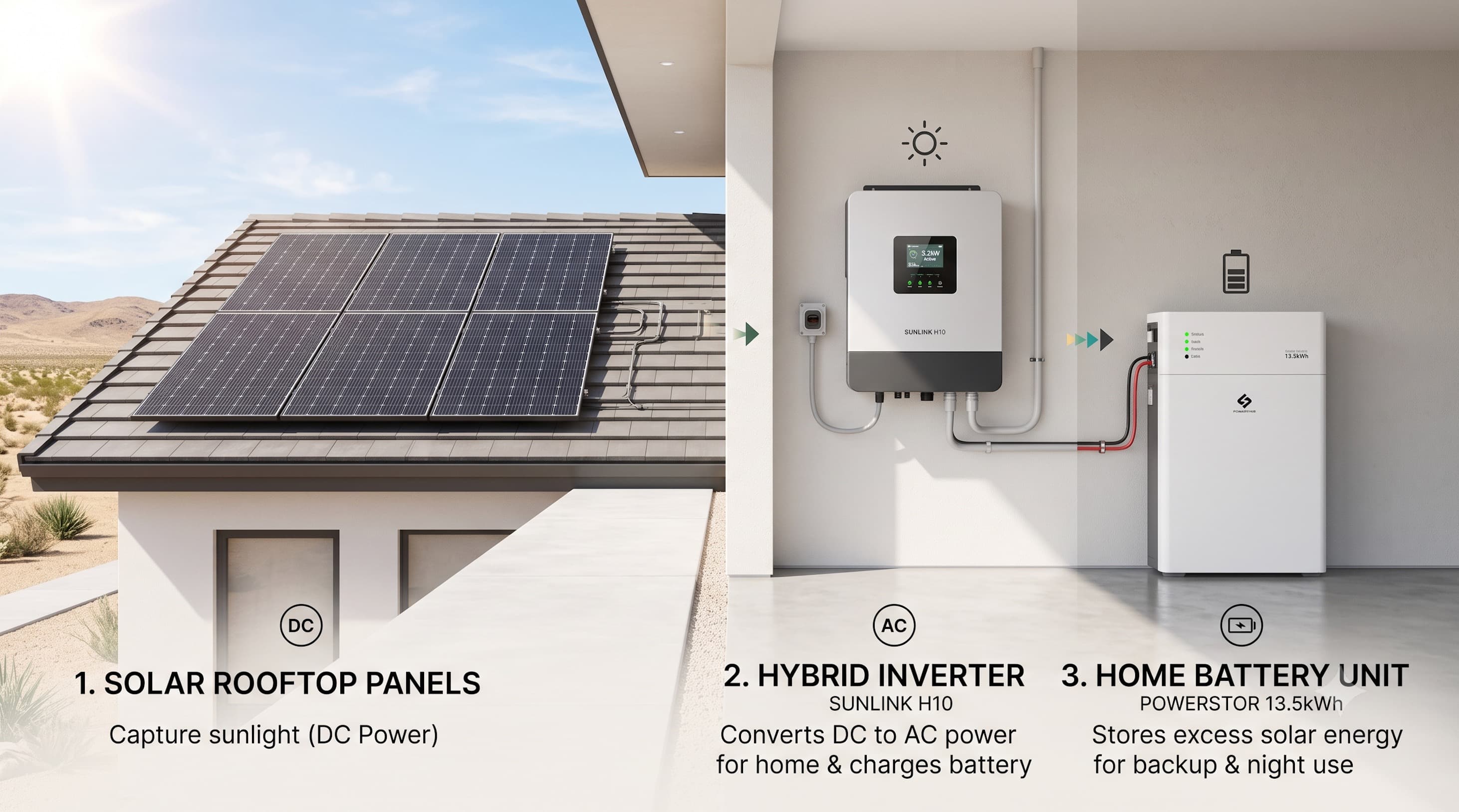
What components make up a UAE solar system? Three main parts: solar panels that capture sunlight (monocrystalline is the UAE standard), an inverter that converts that power for your home, and an optional battery that stores surplus for later. The right mix depends on your emirate's rules and whether you want backup power — and everything should be rated for extreme heat.
1. Solar panels: monocrystalline vs polycrystalline
Monocrystalline panels are the common choice in the UAE. They're more efficient (roughly 17–22%) and need less roof space for the same output — useful on a villa with limited unshaded area. They cost more per panel but suit the UAE's space and heat profile well.
Polycrystalline panels are cheaper but less efficient and need more space, so they've largely fallen out of favour for premium residential work.
For UAE conditions, prioritise heat tolerance (a lower "temperature coefficient" means the panel loses less output as it gets hot) and a strong performance warranty. Premium panels that hold output at 45°C+ can deliver a faster payback despite a higher sticker price. Bifacial panels, which also capture light reflected off light-coloured surfaces, are increasingly used in the region.
2. Inverters: on-grid, hybrid or off-grid
The inverter is the brain of the system, and the type determines what your system can do:
On-grid (grid-tied): the standard for Dubai net metering. Cheapest and simplest, but provides no power during a grid outage and can't use a battery.
Hybrid: works with the grid and a battery. The right choice if you want storage now or want to add it later — and the natural fit for Abu Dhabi's self-supply model where storing daytime surplus drives your savings.
Off-grid: runs independently of the utility, always paired with batteries. Used for remote sites without a grid connection; needs separate approvals.
Match the inverter to your strategy: net metering in Dubai → on-grid (or hybrid if you may add a battery); self-consumption in Abu Dhabi → hybrid with storage.
3. Batteries: when they're worth it
A battery stores surplus solar for use at night or during outages. Whether you need one depends heavily on your emirate:
In Dubai (net metering): a battery is optional. The grid effectively stores your surplus as credits, so many homeowners skip the battery to keep costs down, adding it only for backup resilience.
In Abu Dhabi (self-supply): a battery is far more valuable, because exported surplus isn't automatically credited. Storing midday generation for evening use is central to a good return.
Batteries add meaningful upfront cost, so size them to your actual evening load rather than over-buying.
Designing for UAE heat and dust
Two environmental factors shape every UAE system:
Heat: panel and inverter output and lifespan suffer if components aren't rated for high ambient temperatures. Choose heat-tolerant equipment and ensure good airflow behind panels.
Dust: accumulation cuts output between cleans. Factor periodic cleaning into your running costs, and consider monitoring so you can see when output drops.
Putting it together
Your ideal configuration is specific to your roof, consumption pattern and emirate. A good installer will propose component models with named specs and warranties — not just "panels and an inverter." Comparing a few designs is the best way to see the trade-offs between price and performance.
Get tailored system designs and quotes from UAE installers →