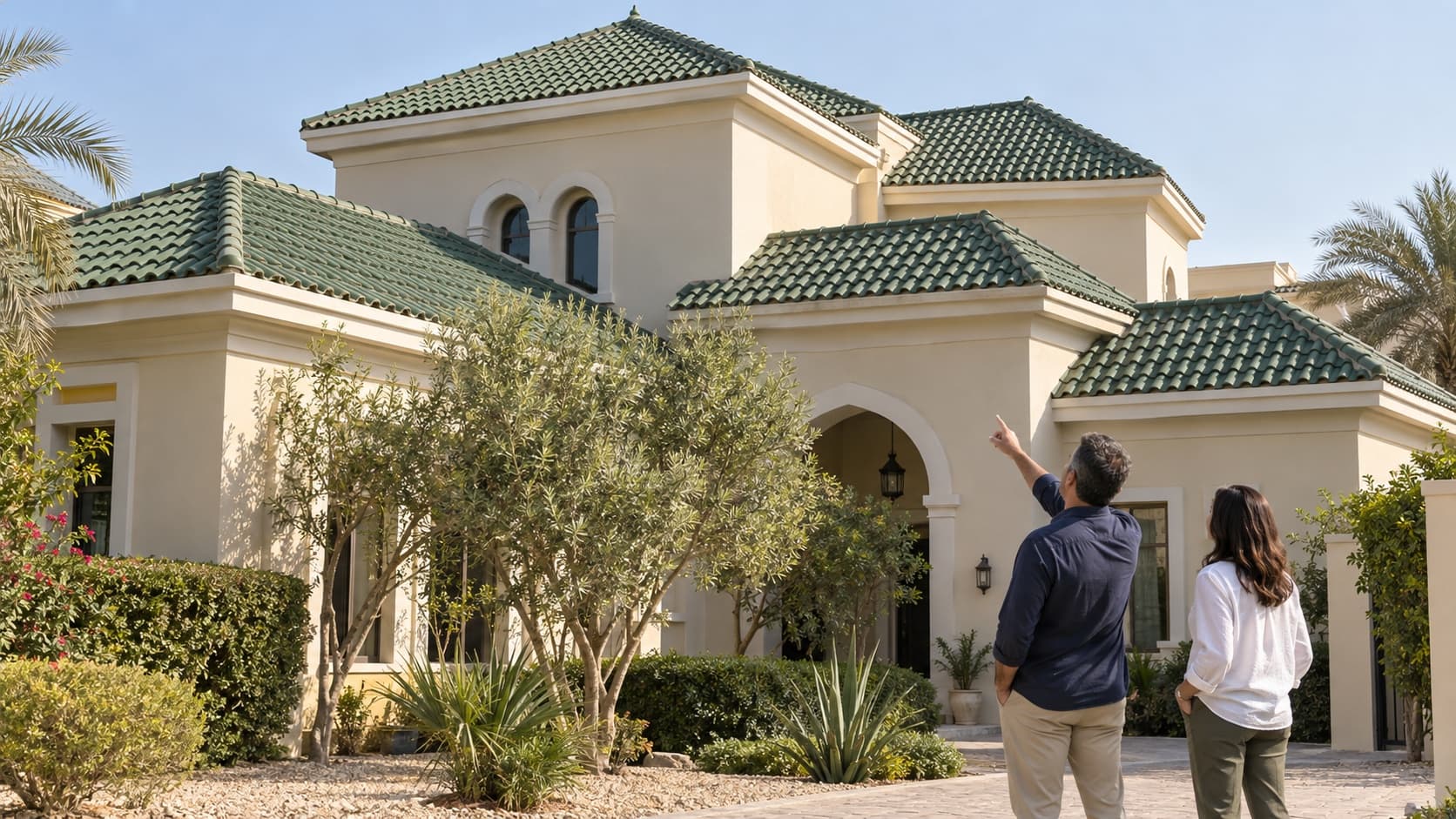
Illustrative image: a generated tiled-roof villa survey scene, not a photograph of Quortaj or an approved installation.
If you own a Quortaj villa or townhouse in Al Furjan, the useful first question is not “how many panels fit a four-bedroom home?” It is which parts of your actual roof can support a suitable, maintainable and permitted solar layout. The community's tiered green-tile architecture makes a generic flat-roof quotation a poor starting point. A site survey may identify a workable design, a smaller system than you expected, or a reason not to proceed.
This guide helps owners decide what to ask before paying for a final design or signing an installation contract. It does not establish that rooftop solar is approved across Quortaj, or that every home with the same bedroom count has the same roof.
Why Quortaj needs a different starting point
Nakheel's Al Furjan project page describes its Quortaz-style villas and townhouses as having tiered green-tile roofs. Quortaj is the spelling used in the Bayut area guide and Property Finder's community listings. The practical point is the architecture, not the spelling: several roof faces and changes in level need a different assessment from an unobstructed concrete rectangle.
Both property portals place villas, townhouses and apartments within the wider Al Furjan area. Do not apply a Quortaj roof assumption to Dubai Style, Murooj, a privately developed townhouse or an apartment building simply because the address says Al Furjan. Start with the exact development, property type and approved drawings.
A property's advertised built-up area is not its solar roof area. Nor is its plot size. Ask the surveyor to identify the roof surfaces actually available to your property, measure them and show the areas excluded from the proposal.
Ask for a roof-face plan, not an aerial panel count
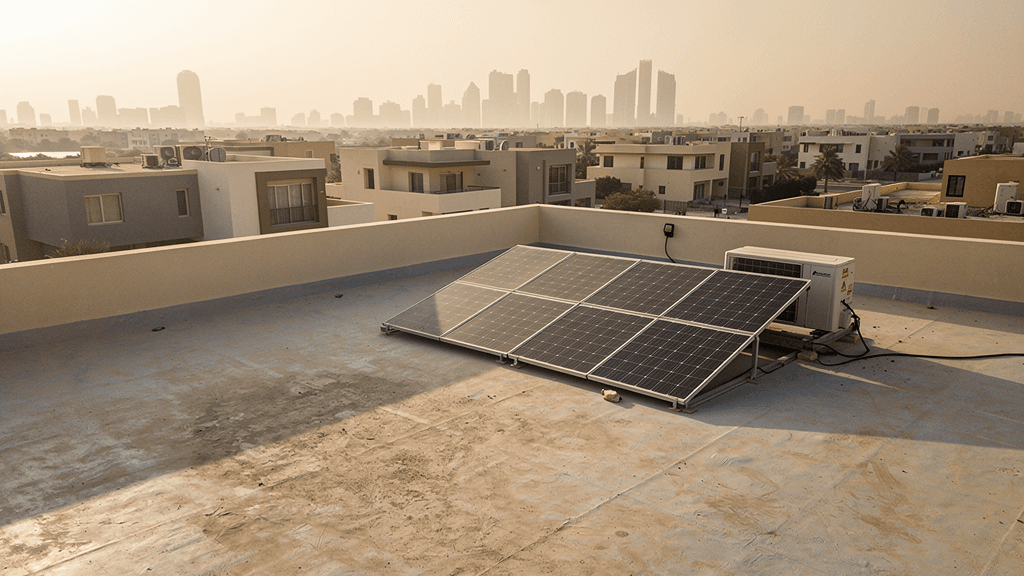
DEWA's Shams Dubai FAQ identifies roof orientation, shading and surface area as suitability factors and advises using an enrolled solar consultant or contractor to assess the premises. For a tiered tiled roof, turn those factors into a drawing you can compare between bidders.
What the survey should identify | What to ask before accepting the quote |
|---|---|
Each proposed roof face | Which way does it face, what is its slope, and which modules are assigned to it? |
Ridges, hips and changes in level | Which small or awkward areas have been omitted, and why is the remaining layout practical? |
Shadows and obstructions | How have upper roof sections, neighbouring buildings, trees and any roof equipment been included in the annual estimate? |
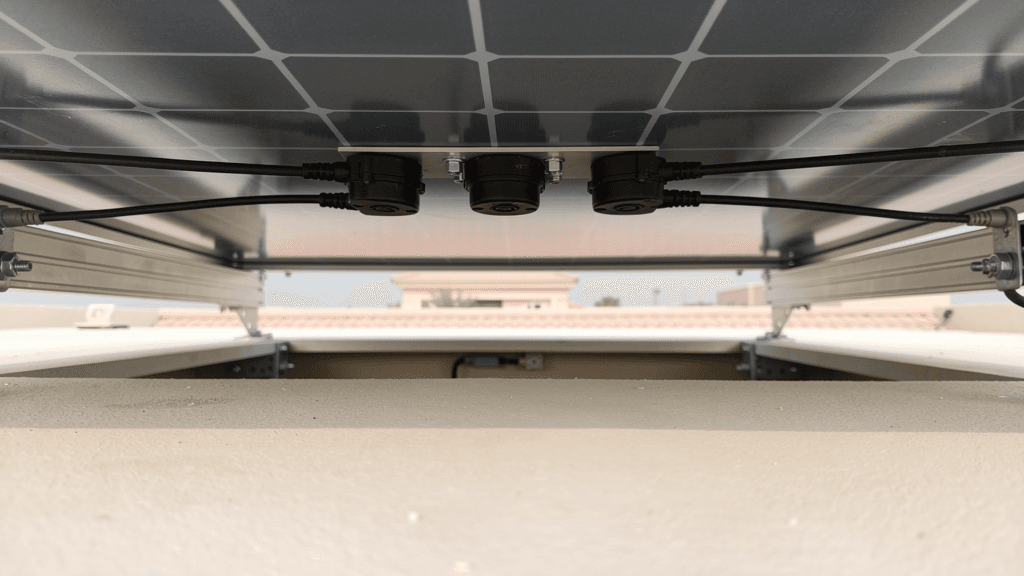
The roof construction beneath the tiles | Who verifies the supporting structure, condition and proposed attachment design rather than judging capacity from the visible tiles? |
Safe maintenance access | How will qualified workers inspect, clean, repair and replace equipment without relying on an unsafe route across the roof? |
These are questions for the professional survey, not a DIY inspection. Do not climb onto tiles, lift roof coverings or investigate electrical equipment yourself. Our villa solar shade-survey checklist explains the separate seasonal-shadow assessment in more detail.
Where an installer proposes several differently oriented roof faces, ask for the expected monthly and annual AC electricity output and an explanation of the electrical arrangement. Do not accept one unexplained yield assumption copied across every face. A larger quoted kWp is not enough to establish that the extra modules earn their additional cost.
Resolve tiles, leaks and access before comparing prices
Ask the designer to explain the proposed mounting method for your actual roof build-up. A tiled surface does not establish what is beneath it, and a “no drilling” promise intended for a flat roof is not a design for a tiled one. Have the competent professional assess structural capacity, wind loading and the roof interface; this article does not prescribe a fixing detail.
Existing condition: record any known leaks, previous repairs and available roof-warranty documents before solar works begin.
Roof work: identify any tile lifting, replacement, waterproofing work or other preparation in the written scope. Ask who carries out and signs off that work.
Access costs: state what scaffolding, lifting equipment or other safe access is included for installation and later service visits.
Responsibility: name who investigates a post-installation leak, makes good damaged roof finishes and pays for panel removal if access to the underlying roof is needed.
The relevant warranty is not just the panel manufacturer's promise. Check the installer's workmanship terms and any separate roofing cover. Our guide to planning solar removal and refitting for roof repairs sets out the longer-term access and cost questions.
Check the proposed appearance with community management
The current Dubai Holding Community Management page for Al Furjan asks residents to maintain the community's appearance and refrain from unauthorised exterior alterations. That is not a published blanket permission for PV, and it does not specify an approved panel height or a standard solar layout.
Ask community management for a written determination on your exact proposal: panel position and height, visibility above or beside the tiled roof, inverter location, cable routing and any access works. Request the current application requirements and contractor-access conditions for your property. We did not verify a public Quortaj-specific solar approval timetable, fee schedule or universal permitted mounting arrangement, so none is assumed here.
Keep that property/community decision separate from the utility application. DEWA's FAQ says the civil or structural part also needs a building permit from the competent authority or entity and a completion certificate after its checks. Ask your enrolled consultant to identify the authority and scope for your address in writing; do not infer it from a general renovation website. Our Shams Dubai approval walkthrough covers the utility process, not permission to alter a particular Quortaj roof.
Compare a sensible smaller layout with any expansion
Request a base option using the most practical productive roof faces. If a bidder proposes adding modules on more difficult faces, ask for a second option with the additional installed cost, expected annual kWh, access requirements and maintenance implications shown separately.
Supply a full year's electricity consumption where available, not just the largest summer bill. Under standard Shams Dubai, DEWA describes surplus as a credit against future electricity consumption, not a cash payment. Ask the bidder to show how each layout's monthly generation fits your consumption and what assumptions drive the projected bill reduction.
There is no verified Quortaj-wide system price or payback in this guide. A useful quotation includes the roof-specific mounting and access scope, applicable permissions, electrical works and ongoing service, rather than treating those as surprises after signature. Use the solar quotation line-item checklist to compare the rest of the offer once the physical layout is consistent.
The brief to send with your quotation request
I own a Quortaj villa/townhouse in Al Furjan. Please assess my exact roof construction and condition, identify the usable roof faces and seasonal shade, and show a proposed layout with expected monthly and annual AC output. Please separate the mounting, roof works, safe access, community determination and competent-authority/DEWA scope. Compare a practical base layout with any proposed expansion, and state the workmanship, leak-responsibility and future maintenance arrangements.
Decision takeaway: proceed to comparable final offers only when the roof-specific layout, professional assessment and permission path are clear. If the workable area is too limited or the necessary roof and access works undermine the economics, a smaller system or a decision to defer can be the sensible result.
To explore that assessment, request solar quotations for your Al Furjan property through SolarQuote, subject to project suitability and installer availability. Include the exact cluster and villa/townhouse type, your ownership or landlord authority, electricity bills and any roof drawings you already hold. SolarQuote is a comparison and installer-matching platform; a quotation request is not community or DEWA approval.
Developer, community-management and utility information checked on 19 October 2026. Bayut and Property Finder were consulted for local property context, not as authorities for solar permissions, usable roof area or savings.