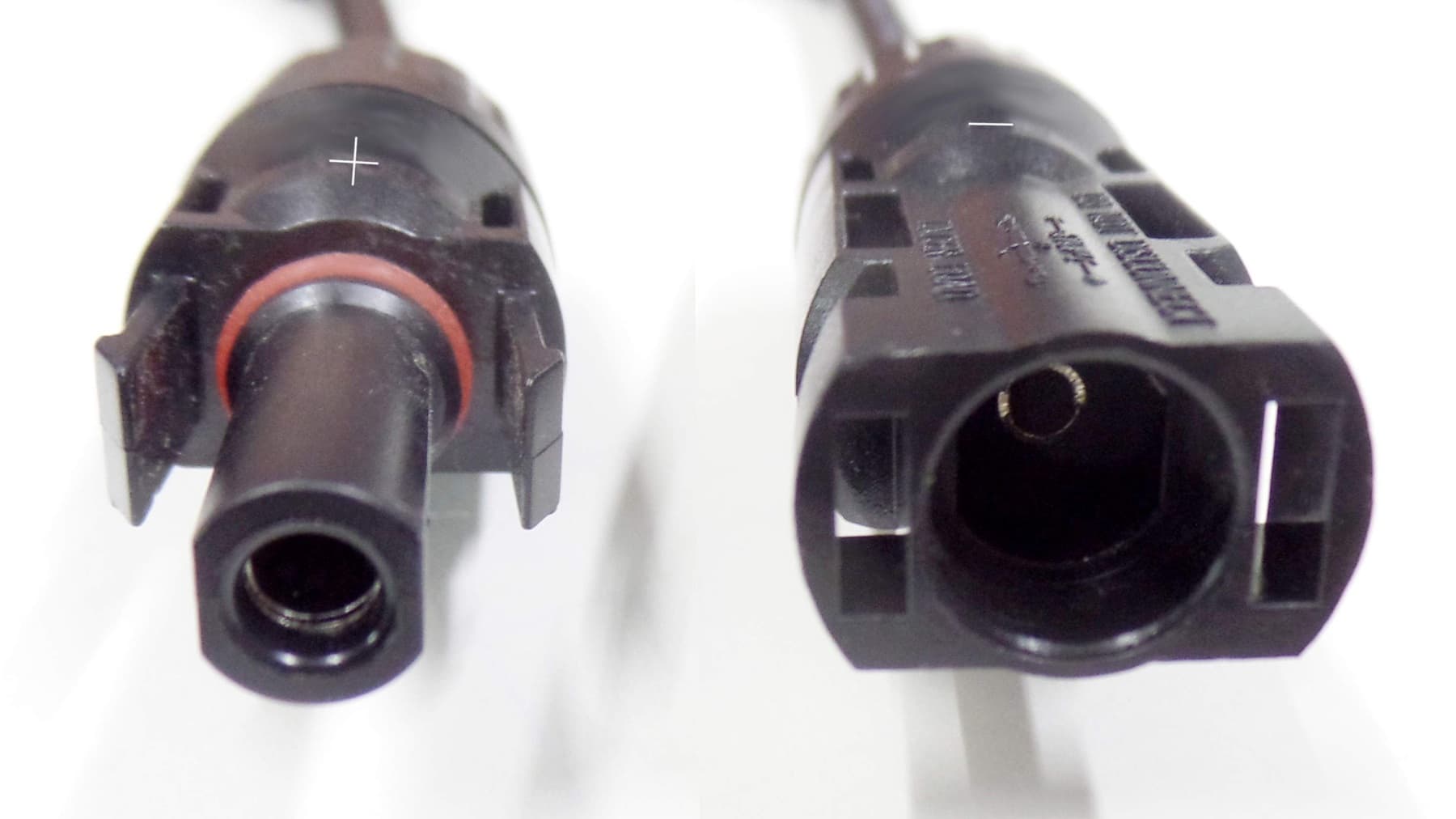
Illustrative connector close-up, not a Dubai installation or proof that two products are compatible.
“MC4 compatible” is not enough detail for a Dubai solar quote. Ask the installer to identify the manufacturer and exact type of both halves of each mating connection, then show that the proposed pairing is permitted by the relevant manufacturer documentation. Similar shape, a matching voltage rating or a plug that clicks into place is not that evidence.
This guide is for Dubai villa owners and business buyers comparing a new rooftop proposal, or checking the records of an existing system. It is a specification checklist, not an instruction to handle connectors or test live wiring.
What does “MC4 compatible” actually tell you?
MC4 is Stäubli's connector product name, not a universal promise that every lookalike can safely connect to it. On its cross-mating guidance, Stäubli says it has not recognised third-party products as compatible with its Original MC4 portfolio. The company identifies differences in contact technology, materials, tolerances and sealing among the reasons cross-brand connections can be unsafe.
That is a manufacturer's position about its products, not a claim that every installation must use Stäubli. Other connector manufacturers exist. The useful buying rule is to specify a documented mating pair, rather than accept a generic compatibility label or choose by appearance.
Our broader solar quote specification checklist covers modules, inverters, cabling and scope. Connector identity deserves an explicit entry within that electrical specification, even when the quote otherwise says “complete balance of system included”.
Why a connector that fits can still be the wrong pairing
The IEA PVPS 2025 failure fact sheets, section 2-1 on DC connector mismatch, explain that visually similar connectors can apparently fit despite differences in design and materials. Reduced sealing and incompatible materials can cause problems; documented consequences include contact corrosion, burnt connectors and electrical arcing, with fire possible in the worst case.
The report also warns that problems may develop over time rather than appear immediately. A system generating normally on handover day therefore does not establish that every connector pairing is suitable. This is international technical evidence, not a measured Dubai failure rate or a prediction that a particular installation will fail.
IEA PVPS recommends asking the supplier or checking module and inverter specifications for the connector manufacturer and type, and mating only connectors from the same manufacturer that are certified as compatible. “Same brand” alone is still incomplete if the proposed product types are not an authorised pairing.
Check the interfaces, not just the panel brand
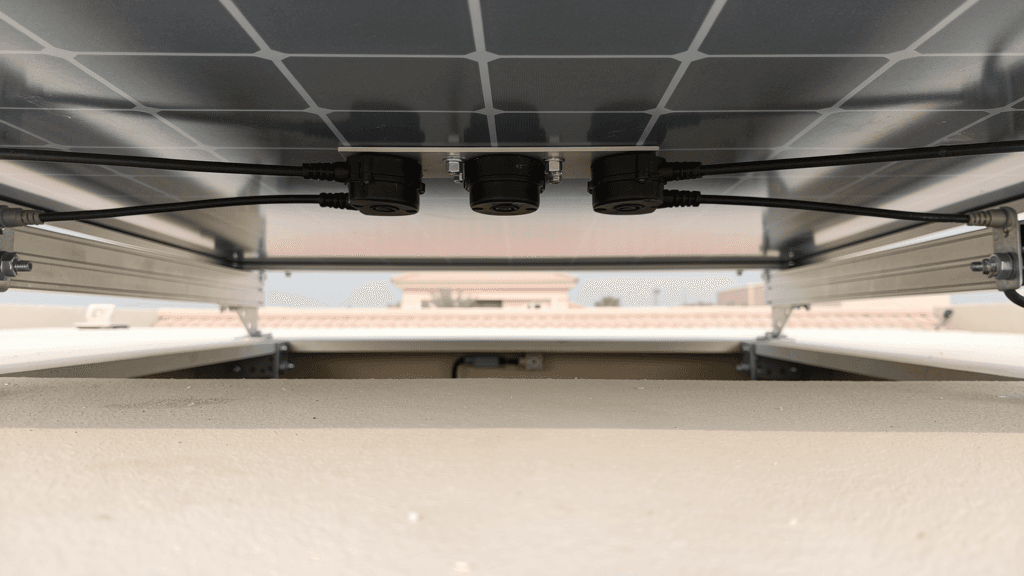
A proposal may name a reputable module and inverter while leaving the plugs between them unspecified. IEA PVPS identifies string ends, extension cables and connections to inverters or combiner boxes as places where mismatches can occur. Ask for a connector schedule covering the actual design, including optimisers or other module-level equipment if supplied.
Connection to identify | Useful evidence to request | Answer that leaves a gap |
|---|---|---|
Module leads to the next module or extension cable | Factory-fitted connector make/type and the exact mating component specified for it | “All panels come with MC4s” |
Site-made extension and string cables | Named connector components, cable suitability and manufacturer assembly instructions | “Compatible plugs, equivalent quality” |
Inverter, optimiser or combiner-box interface, where present | Equipment manual identifying the intended connector and mating type | “The panel and inverter are good brands” |
A later equipment substitution or repair | Revised schedule and documented matching at the affected interfaces | “It fitted the existing cable” |
This is a suggested owner procurement check, not a newly announced DEWA form or an exhaustive electrical design specification. Your qualified contractor must assess the complete installation.
Five questions to send before signing
Which connectors arrive on the modules? Request the factory-fitted manufacturer and exact type for the offered model and supplied configuration, supported by the relevant documents.
What will mate with them? Ask for both component identities at each interface and the documentation establishing the permitted pairing. Do not accept the word “compatible” as a substitute.
How will field-assembled connections be controlled? Ask the contractor to confirm the applicable cable specification, prescribed components, assembly tools and instructions. These are matters for its trained team, not owner DIY work.
What happens if hardware changes? Require written confirmation of the revised connector arrangement before an agreed module, inverter or optimiser substitution. A replacement model may change the interface that needs checking.
What records will I receive? Request the final connector schedule, relevant manuals and commissioning records in the owner file, with the responsible contractor named.
Keep these records with your solar installation handover pack. If the schedule is missing, mark it as information to obtain; do not climb onto the roof or unplug parts to identify them yourself.
If the system is already installed
Missing paperwork is not proof of unsafe hardware. First ask the original installer or your maintenance provider to establish what was actually fitted and whether the mating combinations follow the relevant documentation. If a questionable pairing is identified, request a written corrective scope and the appropriate inspection and testing after the work.
Do not use a good production graph as the only reassurance, and do not assume every output problem is a connector fault. Our Dubai solar underperformance guide separates the wider possible causes. If an inverter is being changed, the inverter replacement checks help frame the broader repair and system-change conversation.
Keep this check documentary, not hands-on. The DEWA Shams Dubai FAQ says electrical installation, operation and maintenance should be performed only by qualified solar PV electricians from enrolled consultants and contractors. It also warns owners not to interact with system components and that arrays exposed to light create hazardous electrical energy. Do not disconnect plugs, open equipment or try to find a hot connection by touch.
A short specification request you can copy
Please identify the manufacturer and exact type of the factory-fitted module connectors and every component that will mate with them, including extension cables and relevant inverter or optimiser interfaces. Confirm that each mating pair follows the applicable manufacturer documentation, rather than relying on “MC4 compatible”. Include field-assembly controls, any agreed substitutions, and the final connector schedule and commissioning records in the handover pack.
The deciding question is not whether a plug looks familiar. It is whether the contractor can identify and document the intended connection. If you are still comparing proposals, request Dubai solar quotes with the connector specification included alongside the rest of the electrical scope.
Sources checked on 11 October 2026. Technical recommendations are an owner buying checklist, not a substitute for project-specific design or inspection. Hero photograph: Orion Lawlor, “MC4 Connector Front and Top View”, Wikimedia Commons, CC0 1.0; cropped to the front-view detail. The source does not establish a UAE location.