Solar panels can reduce a Dubai factory's electricity purchases without fixing its power factor. If the PV system supplies active power while the factory still draws reactive power from the grid, the power factor measured at the grid connection can actually fall. That is a design and procurement question to resolve before signing, not a reason to abandon solar.
For owners of workshops, factories and warehouses with substantial motors, pumps or compressors, the useful question is: does the solar proposal assess the existing electrical installation, or only forecast rooftop generation? Ask for a coordinated assessment and keep energy savings, electrical-capacity benefits and any claimed charge avoidance separate.
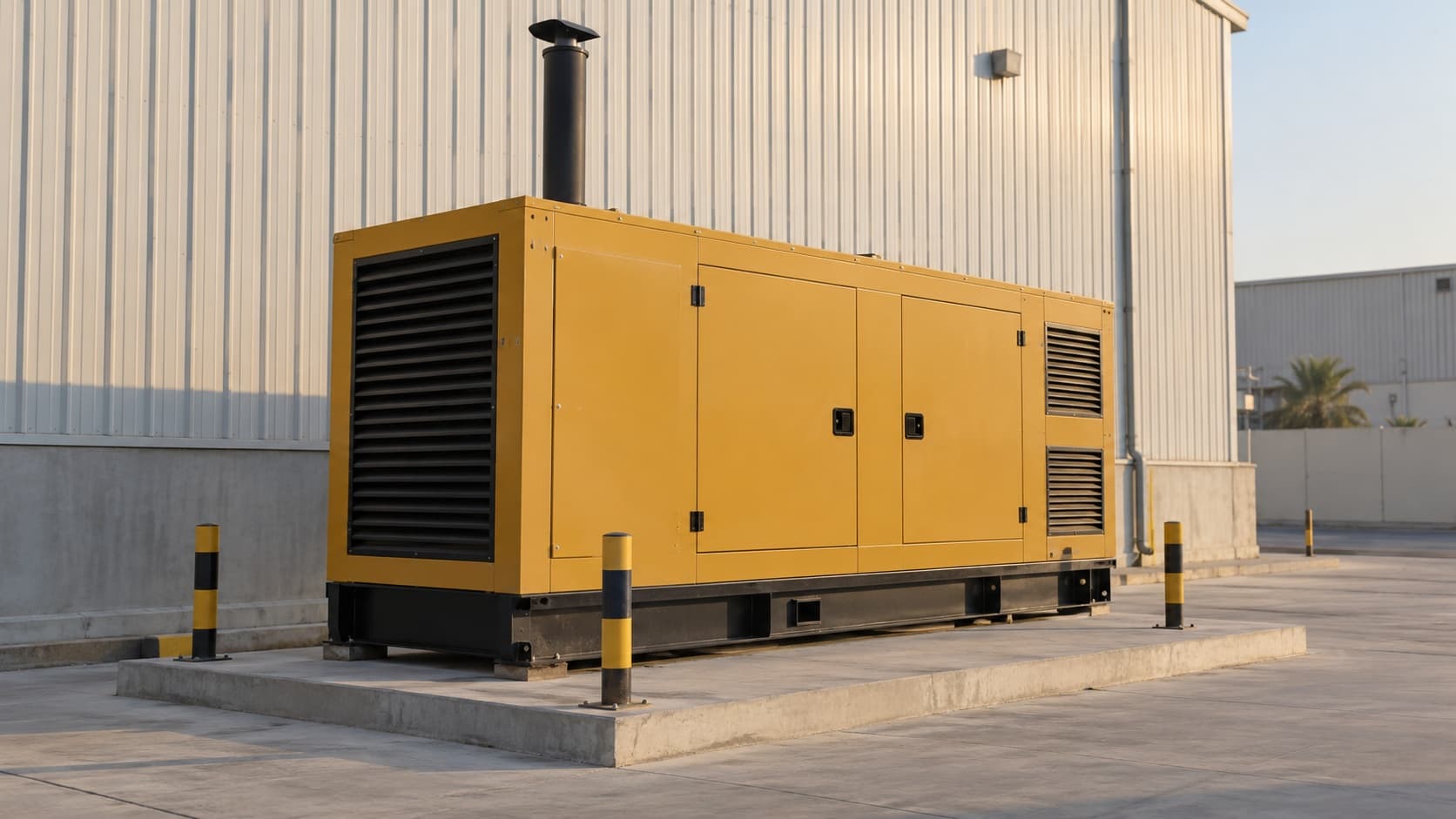
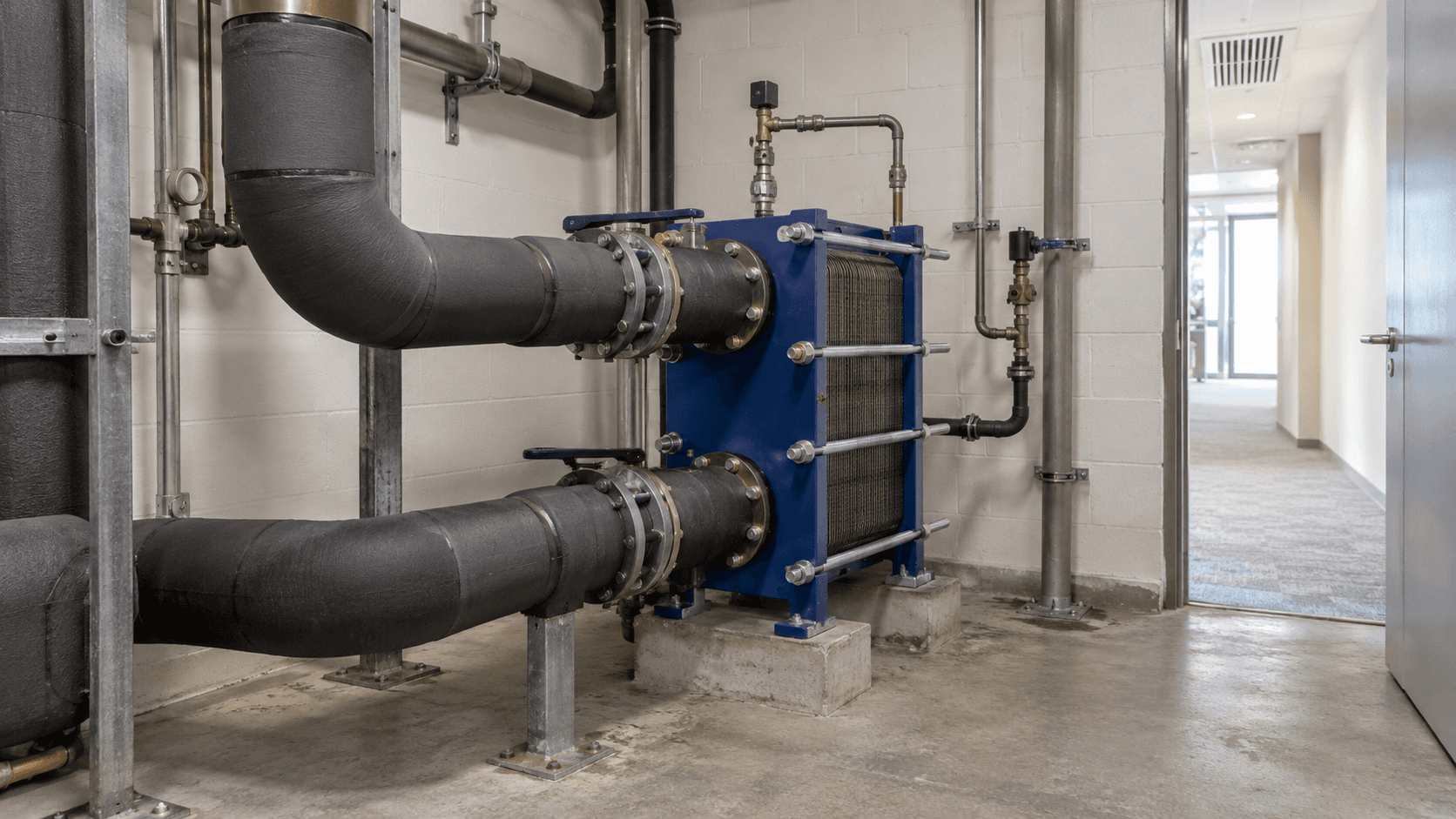
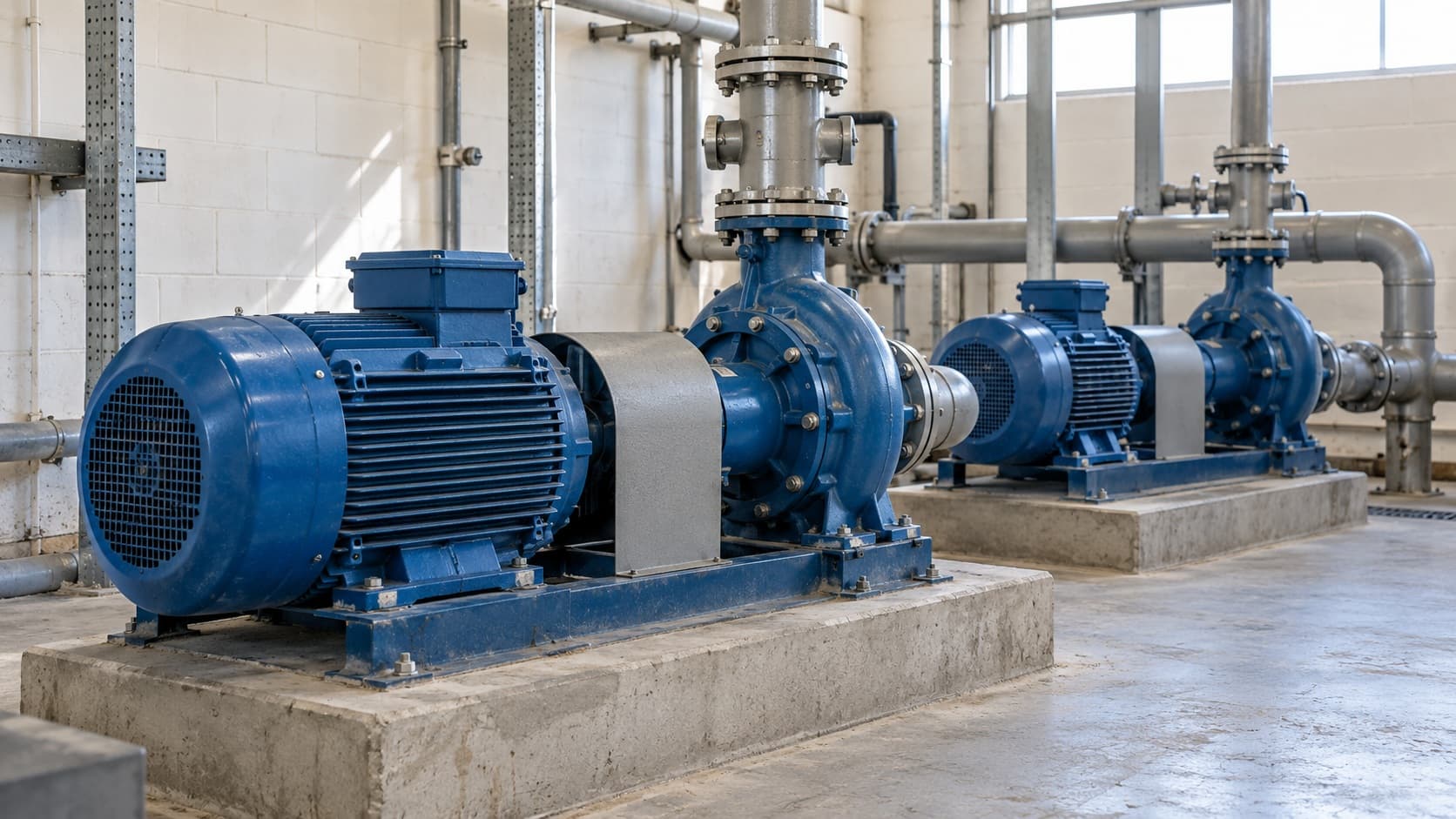
Illustrative AI-generated plant-room image, not a real customer site or an approved equipment layout.
What power factor means for a business owner
Active power, measured in kilowatts (kW), does useful work. Reactive power, measured in kilovolt-amperes reactive (kvar), supports the electromagnetic fields associated with loads such as induction motors. Apparent power, measured in kilovolt-amperes (kVA), combines those components. Power factor expresses the relationship between active and apparent power.
This is different from kilowatt-hours (kWh), the energy quantity used in a solar production forecast. A good annual kWh forecast does not, by itself, show what happens to the factory's power factor at different operating loads.
The Institution of Engineering and Technology's explanation of solar PV and power factor describes this interaction in commercial and industrial installations. It is UK engineering guidance, not a Dubai tariff, a DEWA approval or a set of inverter settings to copy.
Why lower grid consumption can come with a lower power factor
Imagine the production equipment continues working as before, while rooftop solar supplies part of its active-power requirement. If the PV installation does not also address the reactive-power requirement, the grid supplies less active power but still supplies that reactive component. The mix seen at the grid connection has changed.
The IET explains that this can reduce the power factor seen by the electricity supplier. It does not mean the factory necessarily uses more active energy, that every PV project develops a problem, or that a poor reading at one location describes the whole installation.
Some inverters can provide reactive-power support. Whether that is suitable depends on the equipment, available inverter capacity, controls, site conditions and the applicable connection requirements. The IET notes that providing reactive power can affect active-power output when sufficient capacity is not available. A bidder claiming both functions should explain the design and reflect any generation trade-off in the forecast.
Our guide to evaluating solar inverter proposals in the UAE covers the wider equipment decision. Here, the extra question is who has assessed the inverter together with the factory's existing loads and correction equipment.
Do not buy an assumed DEWA penalty saving
International articles often discuss reactive-energy penalties or demand charges. Do not transfer those charging rules into a Dubai payback spreadsheet without evidence that they apply to your account.
DEWA's published slab-tariff page sets out electricity-consumption bands, fuel surcharge and meter service charges. It does not establish the site-specific power-factor penalty saving that a bidder might put into a proposal. Ask for the actual bill line, charging rule and written account-specific basis before accepting such a saving. Equally, do not treat this article as confirmation that no other account conditions can apply.
For ordinary Shams Dubai energy accounting, DEWA's solar FAQ explains that exported electricity and carried-forward credits are deducted before the applicable tariff slabs and fuel surcharge are applied. That energy-offset mechanism is not a promise that solar removes every electrical obligation or charge.
Procurement rule: recognise an electrical-capacity benefit as a capacity benefit. Count it as a cash saving only when the proposal identifies an actual cost that will be avoided. Do not count the same reduction twice under solar savings and power-factor correction.
Ask for three separately priced scopes
Use the following comparison when requesting bids. These are owner-side procurement recommendations, not standard DEWA package names.
Scope | What the bidder should establish | What to keep separate in the budget |
|---|---|---|
Solar generation | Site-specific generation, on-site use, exports, inverter operating assumptions and the resulting energy-bill model. | PV purchase or finance payments, cleaning, maintenance and any generation reduction allowed for electrical-control requirements. |
Existing installation assessment | Measured power factor and load patterns at an agreed location; condition and operation of any existing correction equipment; interaction with the proposed PV. | Survey and testing costs, pre-existing defects, proposed corrective works and any production interruption needed to carry them out. |
Coordinated controls and acceptance | Named responsibility for the combined design, applicable approvals, controls, before-and-after measurements and ongoing review. | Additional metering or control equipment, integration work, commissioning, training and continuing service responsibility. |
Do not assume a new capacitor bank is always needed, or that an existing one is automatically adequate. Ask the appointed electrical specialist to recommend what this installation needs and explain why. This is not a capacitor-sizing or DIY settings exercise.
The warehouse pre-quote feasibility checklist remains the starting point for roof rights, structure, usable area and operating demand. An electrical-interface review supplements those checks; it does not replace them.
Five answers to obtain before awarding the contract
Where is performance being measured? Identify the agreed grid-connection or intake measurement point and distinguish it from the inverter's own display. Ask which existing measurements are available and what additional survey is proposed.
Which operating conditions have been assessed? Request representative production periods, lighter-load periods with strong sunlight, and periods without PV generation. An annual generation total alone does not describe these conditions.
Who owns the interface? Name the party coordinating the solar contractor, the existing electrical-maintenance provider and any controls supplier. List exclusions and pre-existing defects rather than leaving each contractor to assume the other is responsible.
Are the savings compatible? Ask whether the proposed controls affect forecast solar output, and whether claimed capacity or penalty savings have an evidenced financial basis. Request a base case without unverified charge avoidance.
What proves completion? Agree the test conditions, records to be supplied, acceptance criteria confirmed by the design team, and responsibility for correcting a failure. State who will review the combined installation after a change in production equipment.
If a bidder offers a performance promise, use the same discipline as our warehouse solar performance-guarantee guide: specify the measurement boundary, exclusions and remedy. A panel-output warranty is not evidence that the factory's overall power factor will be satisfactory.
What to send with a quotation request
Provide twelve months of electricity bills, operating hours, the main production-load categories, a roof plan or site photographs, and confirmation of who can authorise the work. If available, include existing single-line drawings, power-quality or power-factor reports, and service records for correction equipment. Have the responsible facilities or electrical team supply those records; do not open electrical cabinets to collect them.
A useful enquiry is:
We are assessing rooftop solar for a DEWA-connected commercial or industrial premises with motor-driven loads. Please price the PV proposal and identify the assessment needed for its interaction with our existing electrical installation. Separate energy-bill savings from capacity benefits and any charge-avoidance claims. State responsibility for existing correction equipment, controls, approvals, commissioning and before-and-after records.
The decision takeaway: buy solar for an evidenced energy-saving case, with its electrical interfaces assessed. Do not buy it on the assumption that lower kWh imports automatically fix power factor, remove a penalty or release an approved connection allowance.
If you own the premises or have authority to progress the project, request comparable commercial solar quotations through SolarQuote. Include the operating-load and existing-installation information so bidders can identify the assessment required. SolarQuote is a comparison and installer-matching platform; responses depend on project suitability and installer availability.
Sources checked 24 October 2026. The IET article is from September 2025 and provides engineering context, not Dubai charging rules. Confirm current DEWA requirements and account terms with the appointed consultant before committing.