Rooftop solar does not directly reduce a separate Empower or other district-cooling bill. Under Shams Dubai, the benefit is electricity used on site or credited against eligible DEWA electricity consumption. A cooling-provider account is not a DEWA electricity account, even when its charges include an energy or fuel surcharge.
That distinction matters before you size a system. A Dubai business owner or homeowner with roof rights may still have a worthwhile solar project, but the calculation must start with the electricity the property actually buys, not its combined electricity-and-cooling spend.
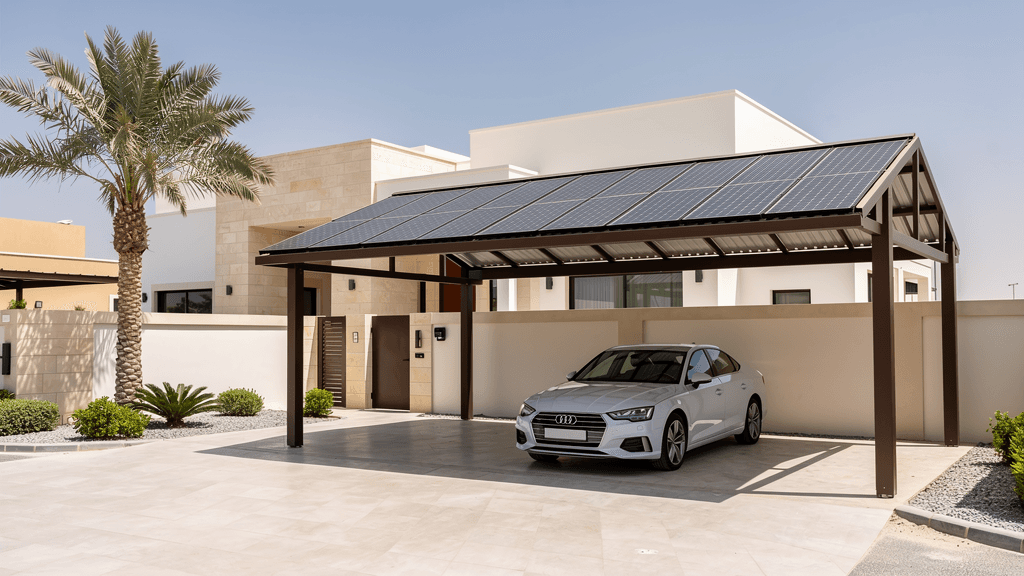
Illustrative hero image generated with AI; not a named property, customer or cooling-provider installation.
First identify what actually supplies your cooling
A thermostat alone cannot tell you which bill solar can affect. Ask your facilities manager or maintenance contractor to identify the cooling arrangement and the account paying for each part.
Your arrangement | What to check | How to treat it in a solar quote |
|---|---|---|
Split or packaged AC supplied through your DEWA meter | Which meter supplies the compressors and indoor equipment? | Include their electricity only where it is billed on an account eligible for the proposed solar connection. |
Chilled water from a district-cooling provider | Separate cooling bill, consumption meter, capacity or demand charge, and any local fan or pump electricity | Exclude the provider's cooling charges. Include only confirmed electricity demand on the eligible DEWA account. |
A building's own central chiller | Who owns the plant and which electricity account supplies it? | Assess the plant's actual electricity account. Do not assume a central chiller is district cooling. |
Cooling included in rent or service charges | Who pays the underlying utility accounts, and how costs are allocated? | Do not count a reduction in rent or service charges without a documented mechanism. |
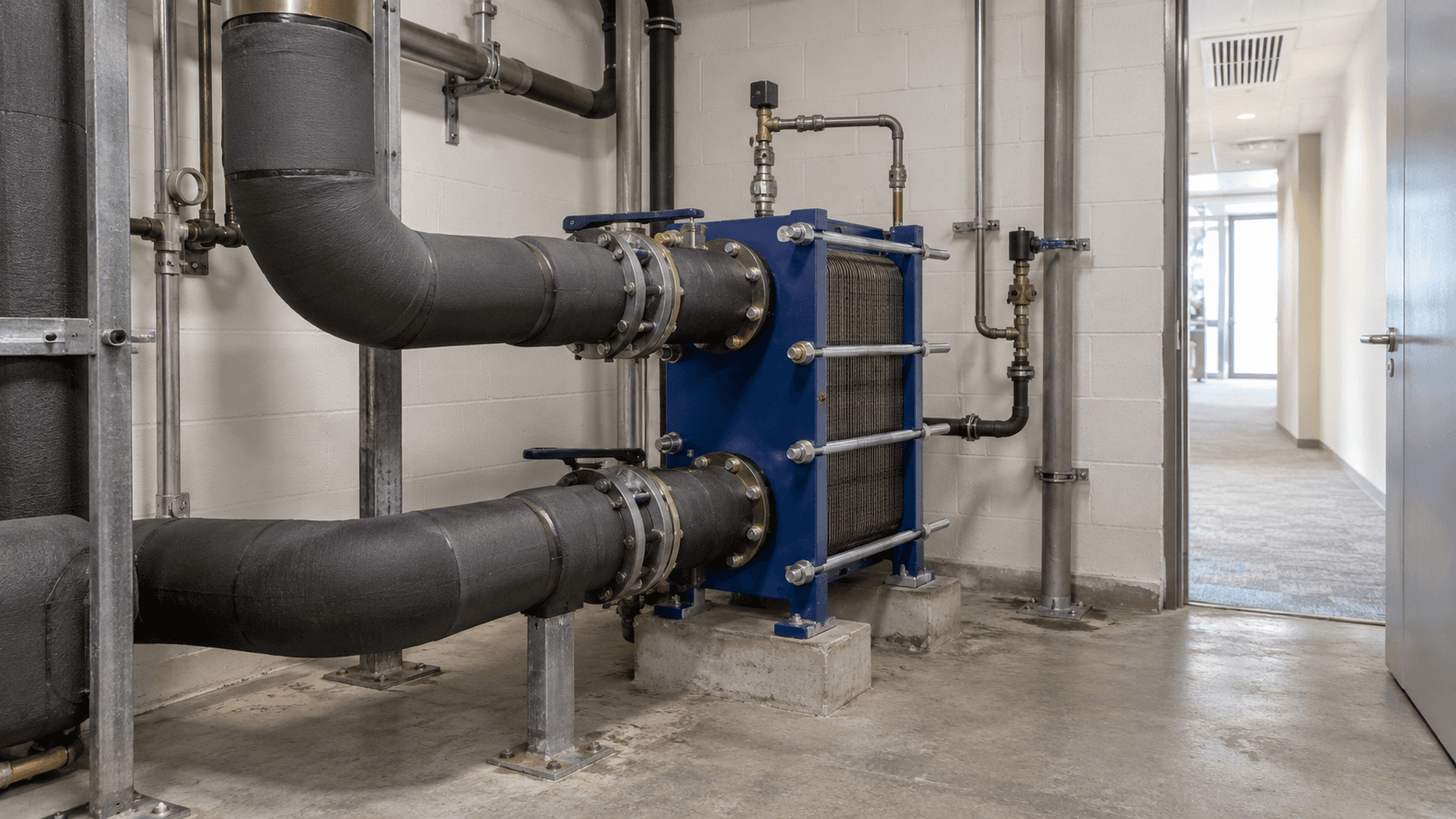
Empower explains district cooling as chilled water produced centrally and delivered to buildings through insulated pipes. The building uses that water to cool indoor air. Your rooftop panels generate electricity; they do not replace the cooling provider's thermal-energy meter.
If your property instead runs its own electrically powered AC, our guide to running air conditioning with solar in Dubai addresses that different starting point. Do not apply an AC-heavy villa's savings estimate to a district-cooled property simply because both have thermostats.
Which cooling charges stay outside the solar calculation?
Empower's published billing structure separates consumption charges, based on metered cooling use, from a recurring demand charge, based on cooling capacity. Its charges page also lists meter maintenance and fuel surcharges. These are cooling-service charges, not electricity units that your rooftop system can cancel through Shams Dubai.
There is a useful distinction within that bill: reducing cooling use can affect the consumption line, but generating solar electricity does not itself reduce the cooling capacity assigned to your unit. Empower even states that demand charges and meter maintenance continue during voluntary disconnection. Check your own provider's agreement rather than assuming every Dubai cooling account uses identical terms or rates.
Use Empower's official charges explanation to identify the charge types, not as a substitute for your building's bill. This article does not assume a universal cooling tariff or a guaranteed saving.
A cooling fuel surcharge is not a loophole. Even where the provider passes through electricity-related costs, that does not turn its invoice into your DEWA hosting account. A solar proposal should not deduct that surcharge merely because its name contains “fuel” or “energy”.
What Shams Dubai actually offsets
DEWA's Shams Dubai FAQ says solar electricity can supply local electrical loads, with surplus exported and credited against future electricity consumption. Exports and eligible carried-forward credits are deducted before the applicable electricity tariff slabs and fuel surcharges are calculated. Surplus is not paid out as cash.
The consequence for a district-cooled owner is straightforward: model the remaining DEWA electricity demand, including lighting, appliances, business equipment and any cooling-related electrical equipment actually supplied by that account. Do not add a cooling provider's refrigeration-ton-hour consumption to electricity kWh. They measure different things.
For a landlord, there is a second boundary. DEWA's FAQ says a building owner cannot offset one PV plant against electricity consumed by different customers; it describes offsetting common-area consumption measured by the owner's meters instead. A large shared roof is not permission to add every tenant's electricity and cooling invoices to one savings forecast.
If your building has several accounts, establish the producer, account ownership and plot eligibility before calculating savings. Our guide to linking eligible DEWA accounts on the same plot explains why account structure matters.
A simple example: the denominator changes the sales pitch
Suppose a property has an annual electricity-energy cost of AED 18,000 and a separate annual cooling bill of AED 12,000. These are invented round numbers for a two-bill comparison, not typical Dubai costs or a customer case study.
Now suppose a site-specific solar model estimates AED 6,000 of annual electricity savings. That is a 20% reduction in the combined AED 30,000 subtotal, not a 20% reduction in both bills. The cooling bill remains AED 12,000 in this example. Any other unchanged property charges sit outside this simplified subtotal.
The AED 6,000 is an assumed gross saving, not a forecast from SolarQuote. Cleaning, maintenance, financing and replacement allowances would still need to be considered before calculating net benefit or payback. The point is the method: calculate the electricity saving first, leave the cooling invoice unchanged, then compare the combined spending.
Give every bidder the same bill-and-meter brief
Before requesting a final design, assemble the following:
Twelve months of DEWA consumption in kWh. Separate electricity charges from water and other invoice items. Use the full year rather than a summer total distorted by a different property's cooling arrangement.
The cooling invoices and agreement. Mark consumption, demand or capacity, meter fees and surcharges. Label them “excluded from direct solar savings” unless a separate, evidenced change is being proposed.
A facilities-manager confirmation of the cooling system. Identify the central plant, local equipment and the electricity meters supplying them. Do not open electrical cabinets or inspect live equipment yourself.
The proposed solar hosting account. Record who holds it and which eligible loads it supplies. For shared buildings, separate landlord/common-area demand from tenant accounts.
Roof and installation rights. Establish who can authorise the works and which property, community and authority approvals apply. An individual apartment's cooling bill is not evidence of rights over the shared roof.
A comparable savings model. Request monthly generation, electricity offsets, unused-credit assumptions, ongoing costs and the cooling costs held unchanged. Ask for a smaller-system alternative if the first proposal produces more credit than the eligible accounts are likely to use.
These documents make it easier to compare the scope and assumptions in solar quotes. A single “percentage off energy bills” headline is not enough when different utilities supply electricity and cooling.
Questions worth sending back before you sign
“Does your savings percentage refer to DEWA electricity, the whole DEWA invoice, or electricity plus cooling?”
“Which exact account receives the solar credit, and which loads are excluded?”
“Have you kept district-cooling consumption, demand charges and surcharges unchanged in the solar-only case?”
“If you predict cooling savings as well, what separate efficiency work causes them, what does it cost, and how will you measure them?”
“What happens to the proposed system size and payback when only eligible electricity demand is included?”
Efficiency work and solar can be considered together, but keep their contributions separate. Better controls or reduced cooling losses are a different intervention from generating electricity. If the proposal bundles both, ask for a baseline, an efficiency-only case and an efficiency-plus-solar case so the same saving is not counted twice.
The owner decision
District cooling does not automatically rule out solar. It changes the demand you should size against. Proceed to a detailed assessment when you have roof rights, an eligible electricity account and enough evidenced electricity consumption to justify the proposed investment. If most of your energy spending is a separate cooling bill, challenge any solar payback based on that combined total.
For a Dubai business property or home where you can authorise rooftop works, request solar quotes based on your actual electricity use. Tell the installer that the property uses district cooling and provide the separate bills during assessment. The useful answer is a system sized to the loads you can genuinely offset, not the largest array a roof can hold.
Billing and Shams Dubai sources checked 15 October 2026. Provider agreements, account arrangements and project approvals need property-specific confirmation.