Short Summary:
The UAE's solar capacity rose to around 6.7 GW by the end of 2025, while Dubai has raised its flagship solar park's 2030 target to more than 8,000 MW.
Most new capacity is utility-scale. There is still no authoritative national figure for rooftop-solar adoption by villas or businesses.
Dubai's Shams Dubai programme had connected more than 725 MW across 8,430 buildings by June 2025, but the split between homes and commercial sites is not published.
Abu Dhabi has extended self-supply solar to villa owners, but exported surplus currently earns no credit against bills.
The UAE Is About to Blow Past Its Solar Target — Almost None of the New Capacity Will Be on a Rooftop
Dubai's mega solar park just got 60% bigger. Villa owners are still largely watching from the sidelines — and no one in government publishes a number that says otherwise.
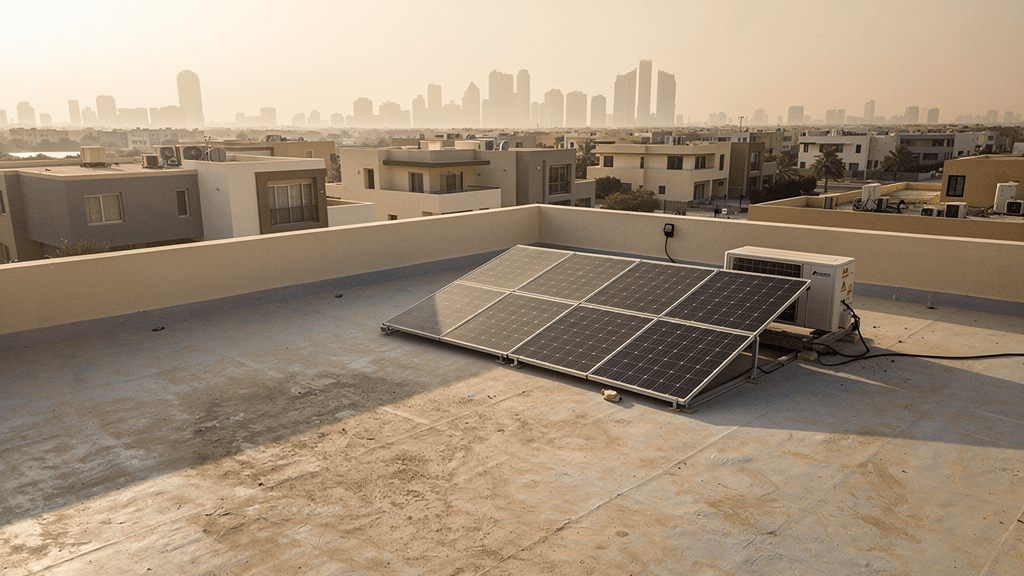
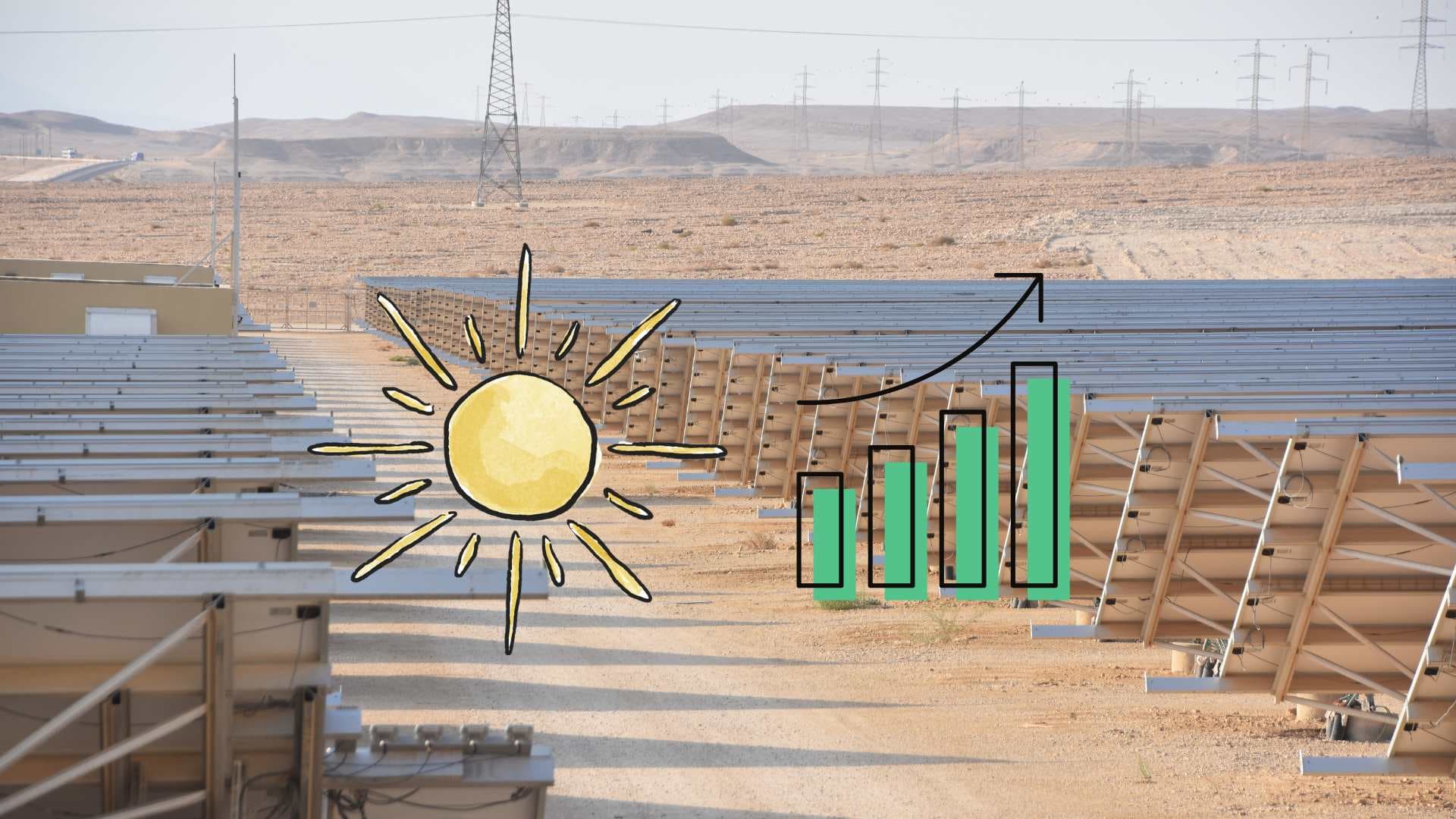
Drive south from Dubai on the E44 and, within about 50 kilometers, the desert gives way to nearly 15,000 acres of photovoltaic glass — the Mohammed bin Rashid Al Maktoum Solar Park. In November 2025, the Dubai Electricity and Water Authority quietly raised the park's 2030 capacity target by 60%, from 5,000 megawatts to more than 8,000 (DEWA). Drive into any villa community in Dubai or Abu Dhabi, and the picture looks almost exactly as it did five years ago: rooftops mostly bare, solar panels still the exception.
That contrast is the real story behind the UAE's solar boom. The country is not just meeting its clean-energy targets — it is smashing through them. But almost none of that growth is happening on the roofs of the homes and businesses that make up the built environment.
A UAE solar capacity target that keeps moving upward
The numbers aren't in dispute. UAE cumulative solar capacity rose from 5.7 gigawatts (GW) at the end of 2024 to around 6.7 GW by the end of 2025, per GlobalData figures reported by PV Magazine, with 2.4 GW more projected for 2026 (PV Magazine). GlobalData forecasts capacity compounding at over 17% annually to reach 32.3 GW by 2035 — a fivefold increase (now.solar/GlobalData). IRENA's Renewable Capacity Statistics 2026 puts total UAE renewable capacity at 7.91 GW at end-2025, roughly 95% of it solar (Zawya, citing IRENA).
The centerpiece is DEWA's solar park. Its own November 2025 release states production capacity had reached 3,860 MW, with the 2030 target raised to "more than 8,000 MW," lifting clean energy's share of Dubai's generation capacity from about 21.5% today to 36% by 2030 (DEWA). That release — several hundred words on phases, towers and storage records — never mentions rooftop solar, Shams Dubai, or residential adoption.
Measure | Latest cited figure | What it shows |
|---|---|---|
UAE cumulative solar capacity | Around 6.7 GW at end-2025 | National capacity is expanding quickly. |
Mohammed bin Rashid Al Maktoum Solar Park | More than 8,000 MW target by 2030 | Dubai's utility-scale target was raised by 60%. |
Utility-scale share of UAE installed solar capacity | Roughly 74.6% in 2025 | Most capacity is not on rooftops. |
The silence reflects where growth sits: Mordor Intelligence estimates utility-scale plants held roughly 74.6% of installed UAE solar capacity in 2025, with residential ownership at just 6.5% of the broader renewables base (Mordor Intelligence, Solar Energy Market; Mordor Intelligence, Renewable Energy Market). Grand View Research puts the utility segment's revenue share of the broader Middle East solar PV market at 95.6% in 2024, noting:
"Rooftop adoption remains minimal compared to large-scale ground installations." (Grand View Research)
The rooftop solar adoption UAE number nobody quite has
There is no single, authoritative, independently verified figure for how many UAE villas or businesses have solar, nor a clean national penetration rate. What exists is a patchwork of program-level statistics, mostly from Dubai.
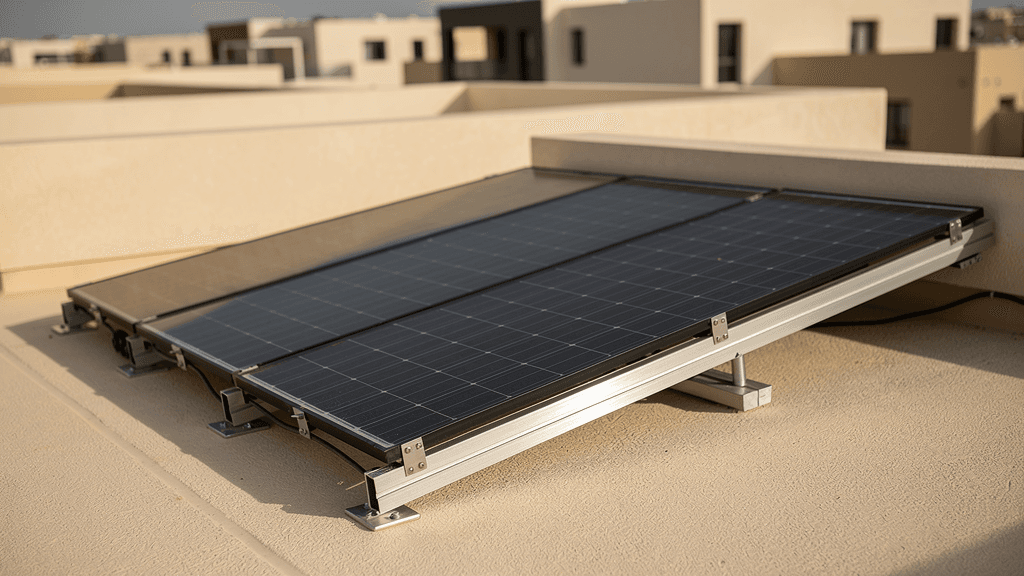
The most-cited figure is DEWA's own: as of a June 2025 update, Shams Dubai — the emirate's rooftop net-metering program — had connected more than 725 megawatts across 8,430 buildings, via 111 certified contractor companies, with 1,700 new connection requests in 2024 alone, up 30% year-on-year (SolarQuarter, reporting DEWA figures). Genuine momentum — but a rounding error against the park's gigawatt scale, and DEWA does not break the figure down between residential villas and commercial buildings.
Rooftop measure | Cited figure | Important limitation |
|---|---|---|
Shams Dubai connected capacity | More than 725 MW by June 2025 | No published split between villas and commercial buildings. |
Shams Dubai connected buildings | 8,430 | A programme total, not a national penetration rate. |
Dubai C&I rooftop adoption | About 5.6% | Covers commercial rooftops only, not villas. |
UAE distributed solar | 500 MW at end-2022 | A whole-UAE figure, described as small beside utility-scale plants. |
A 2025 Planno analysis of Dubai's commercial and industrial rooftops specifically found that of 15,283 identified C&I rooftops with 5 GW of combined potential, only about 5.6% had adopted solar — meaning over 94% of that commercial potential remained untapped after a decade of Shams Dubai (Planno). That figure covers commercial rooftops only; no comparably specific number exists for villas. A December 2024 Middle East Institute report is blunter still: distributed solar across the whole UAE totaled just 500 MW at the end of 2022 —
"a drop in the bucket compared to that for utility-scale plants." (Middle East Institute)
No UAE government agency currently publishes a consolidated, emirate-by-emirate residential solar penetration rate.
Why the growth stays in the desert
The Middle East Institute report, based on 2023–2024 interviews with Gulf developers and utility executives, is direct:
"Both sets of developers... agreed that residential solar was a non-starter in the Gulf," citing "the high upfront costs that the mostly expatriate tenants would have to pay." (Middle East Institute)
One utility executive, quoted anonymously, said there was:
"no commercial case" for distributed generation "when the utility-scale power it was procuring was offered to end users at half the price." (Middle East Institute)
Subsidized retail tariffs, cheap desert land for utility auctions, and an absence of feed-in tariffs all blunt rooftop economics that have driven adoption elsewhere, according to consultancy Qamar Energy (Qamar Energy). For a practical starting point on property-level economics, read our guide to UAE solar costs, savings and payback.
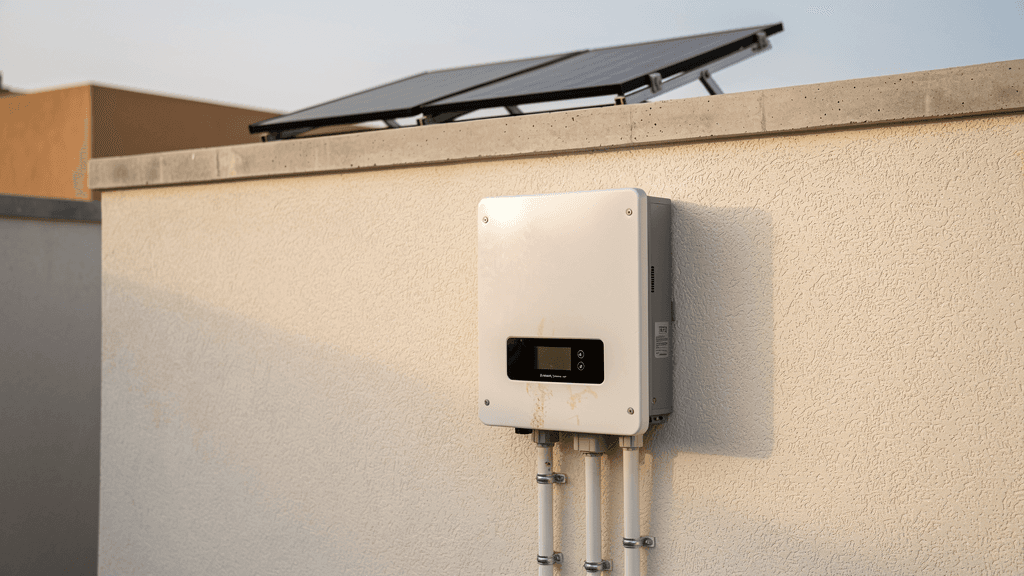
Then there's fragmentation. Each emirate runs its own separate rooftop-solar contractor system, with no mechanism for cross-emirate recognition. In Dubai, a company must enroll with DEWA as an Electrical Contractor, then separately add the DRRG Solar PV category, employing DEWA-certified staff and a graduate electrical engineer — a process DEWA documents in its published enrollment criteria (RISE/ESMAP, hosting DEWA criteria). Abu Dhabi runs an entirely separate track: contractors must appear on ADDC's or AADC's own approved lists, and:
"using a contractor not on the applicable list causes immediate rejection." (SurgePV)
Sharjah's utility, SEWA, has not published a formal residential net-metering or contractor-approval framework at all; the northern emirates' utility, EtihadWE, runs a separate scheme launched only in September 2024 (SurgePV). None of these systems recognizes another's approvals — a contractor certified in Dubai restarts the entire process to legally operate in Abu Dhabi.
Comparing installer quotes is only useful when the installers can legally deliver the project in your emirate. See real installer quotes for your property at solarquote.ae/get-quote.
That fragmentation compounds a second issue: regulatory opacity.
"The application processes are opaque and a lot comes down to how much wasta you bring along," one Gulf distributed-solar developer told the Middle East Institute's researchers. (Middle East Institute)
David Provenzani, Yellow Door Energy's country director for UAE and Oman, called for "a single-window clearance system" in the same report. Mordor Intelligence separately lists "rooftop net-metering policy uncertainty" as a drag on residential growth in Dubai, Sharjah and Ajman (Mordor Intelligence). For a step-by-step check before choosing a provider, see our Dubai and Abu Dhabi villa owner's guide to choosing a solar installer.
Abu Dhabi opens a door — carefully
The most concrete recent government move on residential rooftop solar came from Abu Dhabi, not Dubai. In February 2026, the Department of Energy launched Phase 1 of a Solar Energy Self-Supply Policy, initially for farms, ranches and rest houses (Khaleej Times). In March/April 2026, Phase 2 extended it to residential villa owners for the first time (Abu Dhabi DoE).
This is self-supply, not net metering — a distinction the regulator has stressed.
"At this stage, net metering or energy exports are not permitted under the policy," DoE Director General of Regulatory Affairs Abdulaziz Alobaidli told Khaleej Times. (Khaleej Times)
Exported surplus is "not subject to netting or offset" — an Abu Dhabi villa owner gets no credit for power sent to the grid, unlike Dubai's Shams Dubai, which credits exports against future bills (Abu Dhabi DoE policy PDF). PV Magazine described the framework as marking "a shift to energy intelligence" rather than a subsidy push (PV Magazine); MESIA called it "not a traditional net-metering framework" but "a structured, system-driven approach that prioritizes grid reliability" over rapid uptake (MESIA). Even the policy text says detailed metering and settlement guidelines are still being finalized.
What it would take to close the gap
None of this means UAE rooftop solar is failing — Shams Dubai connection requests grew 30% year-on-year in 2024, and Mordor Intelligence projects residential compound annual growth of 15–16% going forward (SolarQuarter; Mordor Intelligence). But the growth math and adoption math run on separate tracks. One is driven by state utilities and 20–25 year power purchase agreements that make mega-projects easy to bankroll — the model behind DEWA's 60% target hike. The other requires a villa owner to navigate an emirate-specific contractor system, absorb an upfront cost with a payback measured in years (estimates vary widely and require an independent quote to verify), and, in Abu Dhabi's case, accept that exported power currently earns nothing.
In our SolarQuote.ae analysis, we track installer registration requirements across emirates while matching homeowners with solar quotes. We flag the emirate-by-emirate contractor licensing structure as one of the more persistent, if under-discussed, points of friction for property owners comparing bids across jurisdictions. For a current market overview, see our 2026 UAE residential solar installer buyer's guide.
Closing the gap would likely require steps regulators have so far only partially taken: a harmonized contractor registration system letting an approved installer operate across emirates without restarting the paperwork; publication of an actual national residential-penetration figure so progress can be measured; and clarity on whether Abu Dhabi's self-supply framework will ever move toward compensated export. Until then, the UAE's solar story will keep being told in gigawatts added to the desert — while the rooftop count stays a number nobody in government has gotten around to counting.
If you are assessing rooftop solar for a Dubai or Abu Dhabi property, compare options based on your actual site, tariff and approval route. See real installer quotes for your property at solarquote.ae/get-quote.