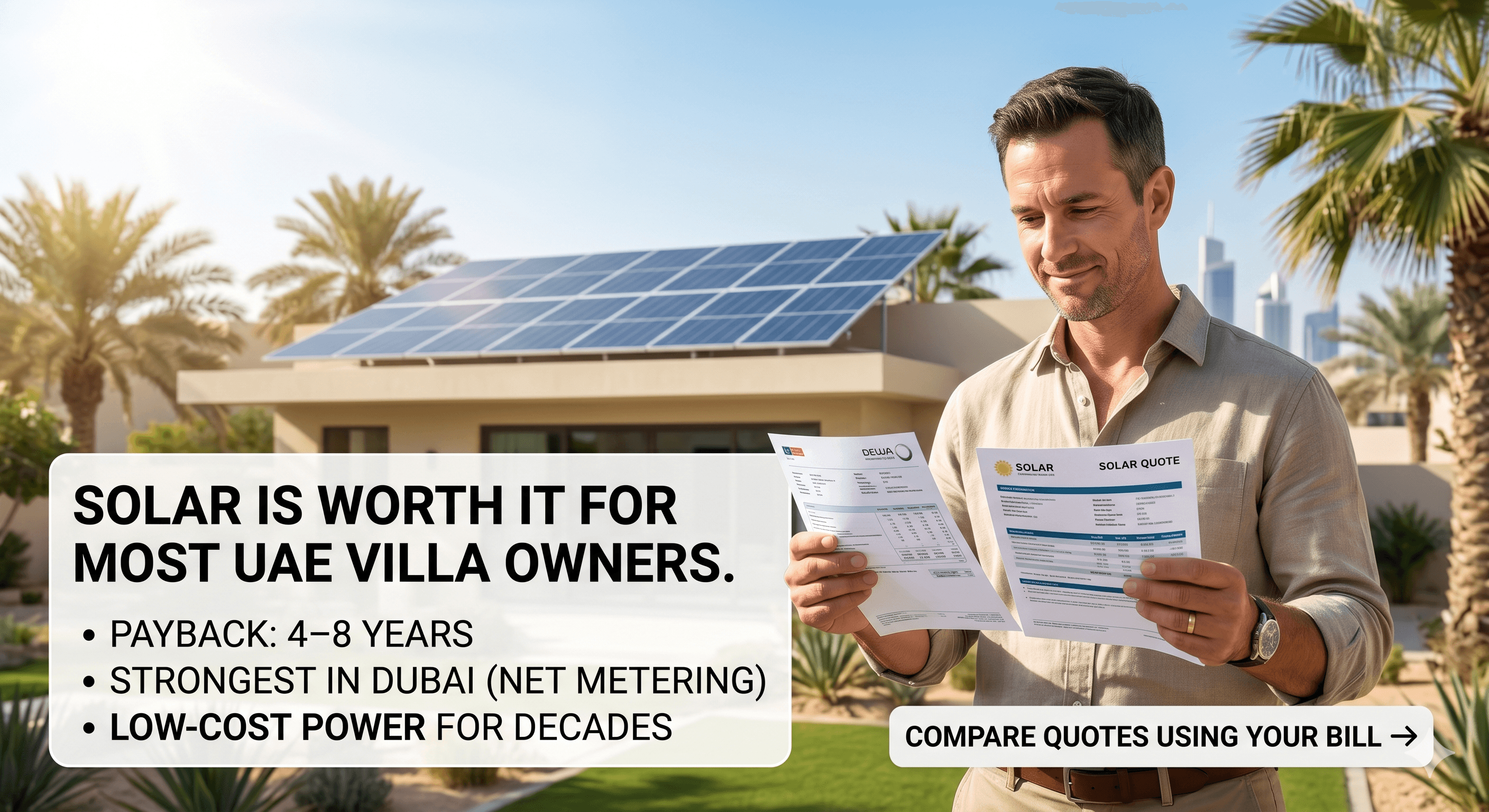
TL;DR — For most expat villa owners and UAE businesses on higher electricity tariffs, solar is worth it: installed systems commonly pay for themselves in roughly 4–8 years and then deliver years of low-cost power. The economics are strongest in Dubai (net metering) and for anyone paying upper-slab DEWA rates. They are weakest for UAE nationals on subsidised tariffs and for low-consumption apartments. The only way to know your real number is your own bill plus real quotes. Compare quotes free →
Is solar worth it in the UAE? For most villa owners and businesses paying standard or higher electricity rates, yes — rooftop solar typically pays back its cost in about 4 to 8 years and then keeps cutting bills for the 20–25 year life of the panels. Whether it's worth it for you depends on three things: how much you currently pay, which emirate you're in, and how much of your roof gets sun.
The case for solar in the UAE
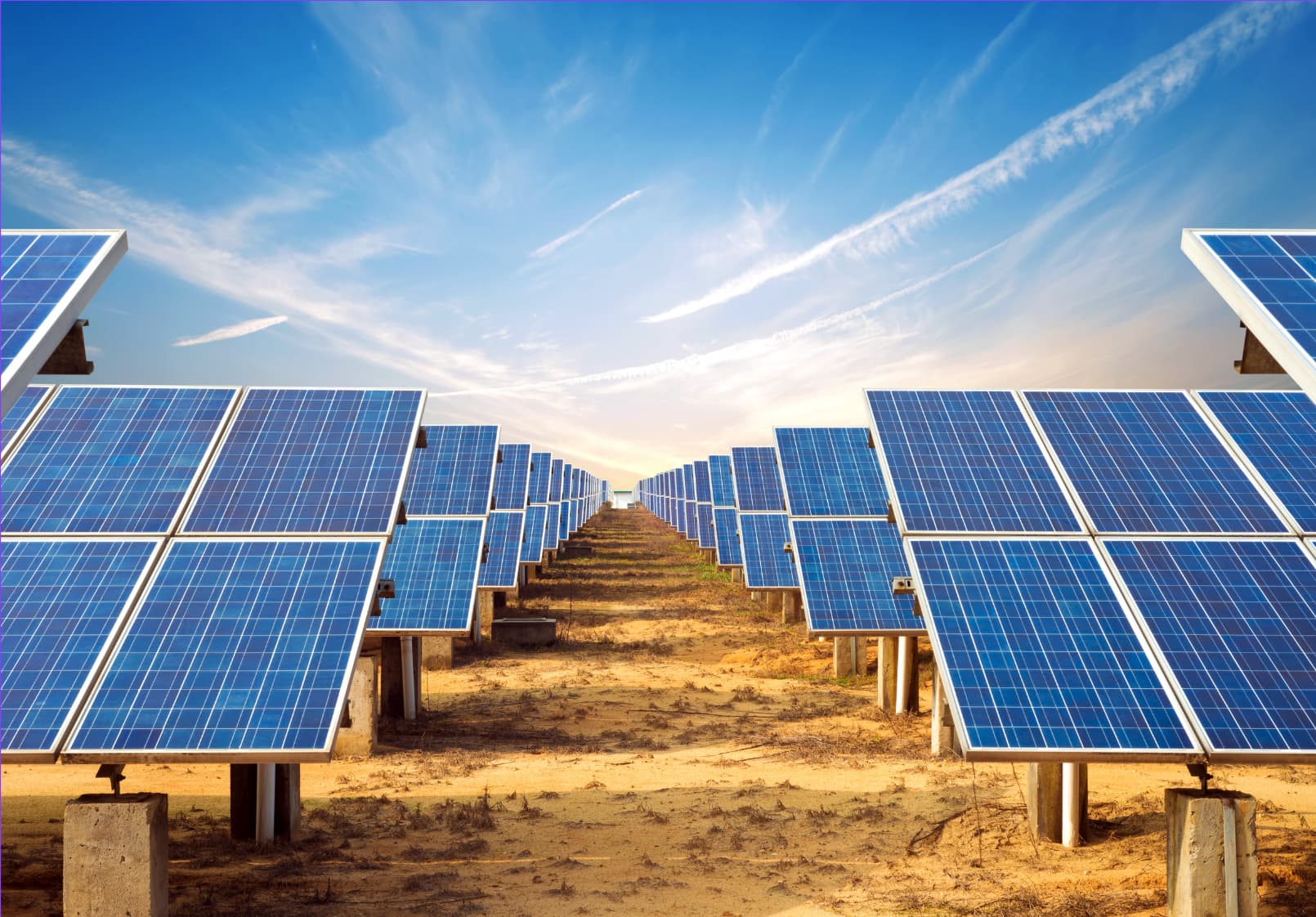
The UAE has some of the strongest sunlight on earth and over 300 sunny days a year. That means a solar panel here generates more electricity than the same panel in most of Europe or North America — so each dirham you invest works harder.
At the same time, electricity is not as cheap as people assume. In Dubai, DEWA charges residential customers on a rising "slab" system: the more you use, the higher the rate per unit, climbing from 23 fils per kWh at the bottom to 38 fils per kWh for heavy users, plus a fuel surcharge. A three-bedroom villa running air conditioning through the summer can easily see bills of AED 2,500–4,000+ per month. Air conditioning alone accounts for the majority of a UAE home's electricity use, and that load peaks in daylight hours — exactly when solar produces most.
Who benefits most — and who doesn't
Solar is not equally worthwhile for everyone. Be honest about which group you're in:
Strong fit: Expat villa owners on standard DEWA slabs, and businesses paying commercial rates, especially with high daytime consumption.
Moderate fit: Townhouse owners and smaller villas — still positive, but the absolute savings are smaller.
Weak fit: UAE nationals on heavily subsidised tariffs (a fraction of the standard rate), and low-use apartments where you may not own the roof.
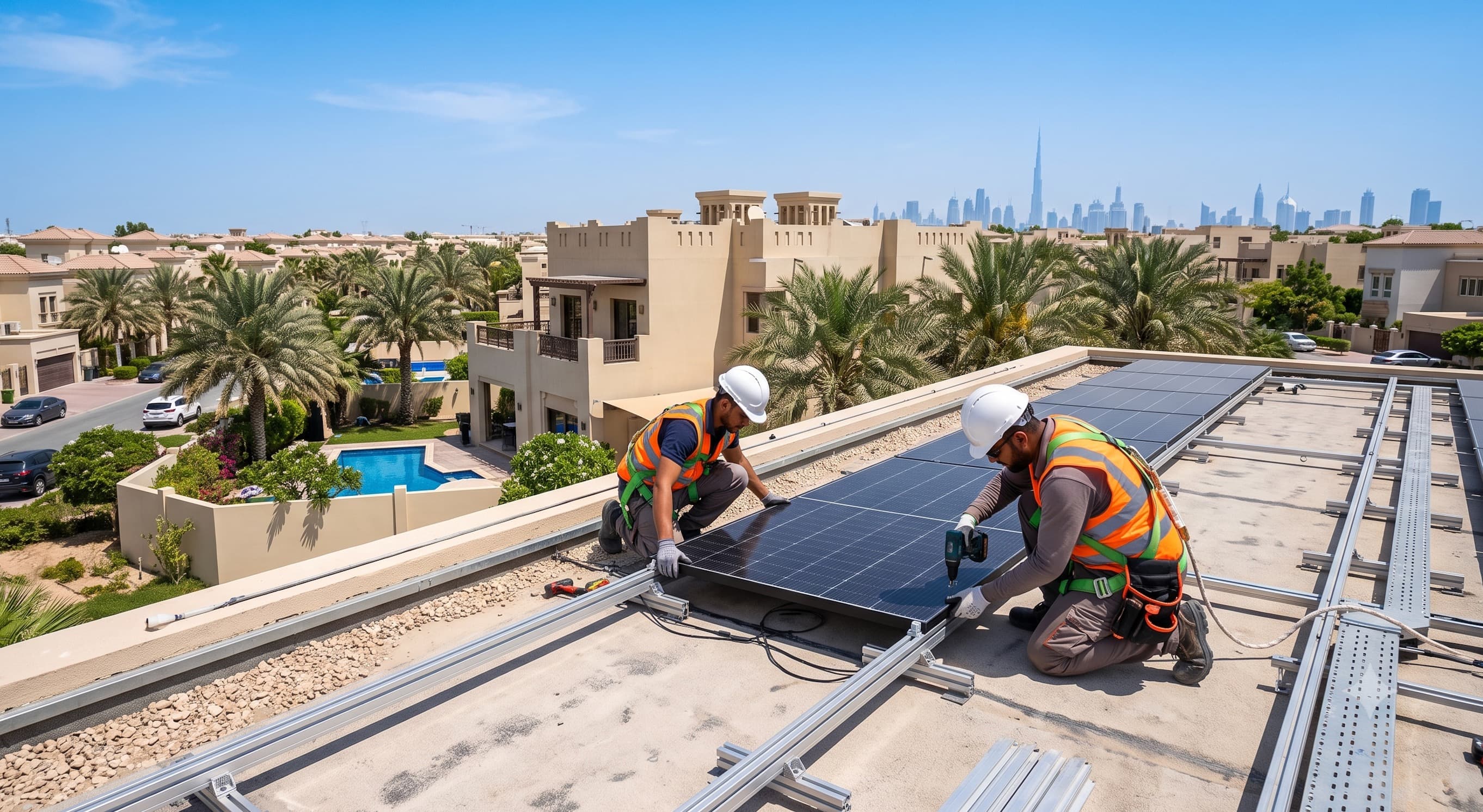
If you rent, you generally can't install a permanent rooftop system without the owner's involvement.
How the savings actually work
In Dubai, the Shams Dubai programme lets your system connect to the grid under net metering: you use your solar power first, and any surplus is credited against future bills, with credits rolling over. You stay connected to the grid for 24/7 reliability while shrinking the units you buy.
Abu Dhabi works differently — its 2026 self-supply policy is built around self-consumption rather than crediting exports — so battery storage matters more there. (See our Abu Dhabi guide.)
A realistic payback picture
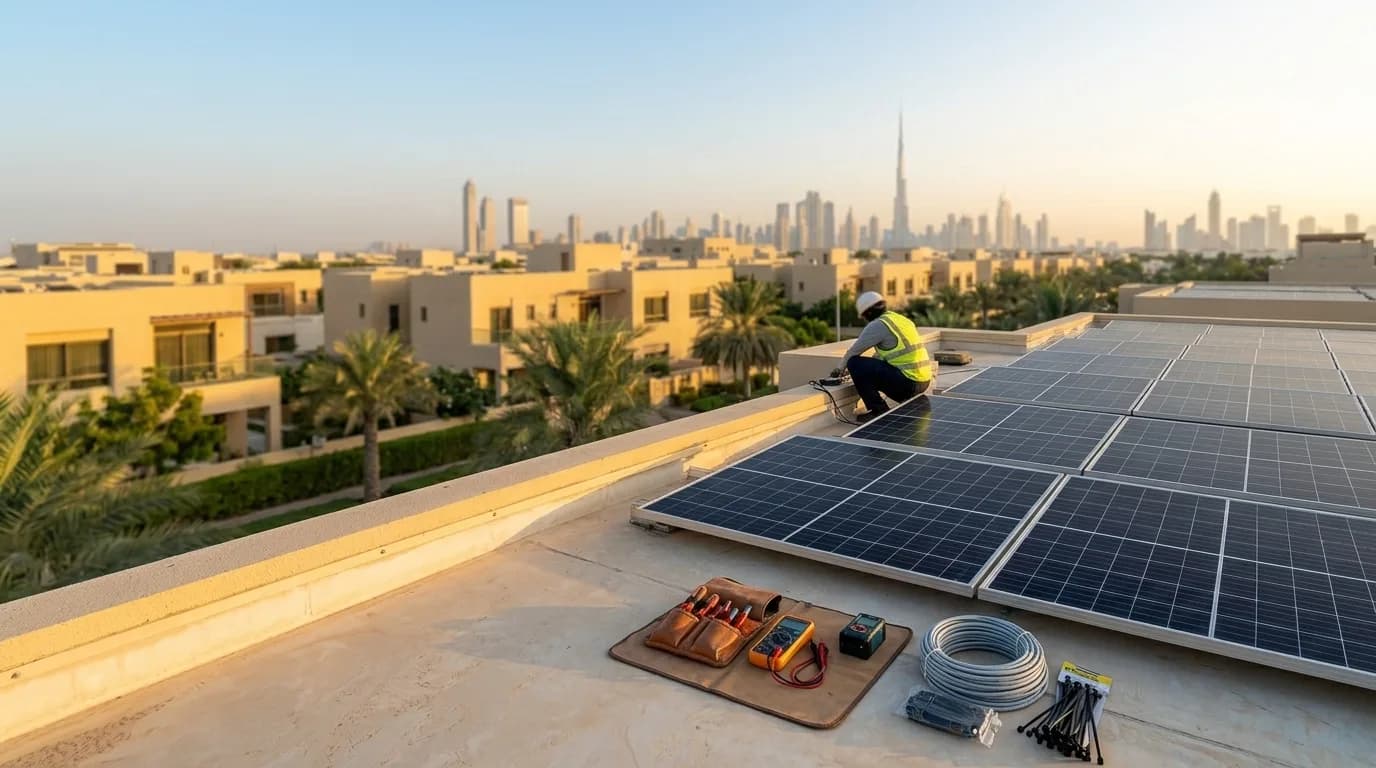
Published UAE market data for 2025–2026 puts installed residential systems in the region of AED 2–2.50 per watt, with typical villa systems sized between 5 kW and 12 kW. Industry sources consistently report payback periods of around 4–8 years for well-sized systems. After payback, the electricity is effectively free apart from cleaning and occasional maintenance.
These are ranges, not promises. Your real payback depends on your exact consumption, roof, equipment and the price you're quoted — which is why it pays to compare.
Bottom line
If you own a villa or run a business and your bills are climbing every summer, solar in the UAE is very likely worth it. The smartest first step costs nothing: get your last 12 months of bills together and request a few itemised quotes so you can see your payback, not a generic one.