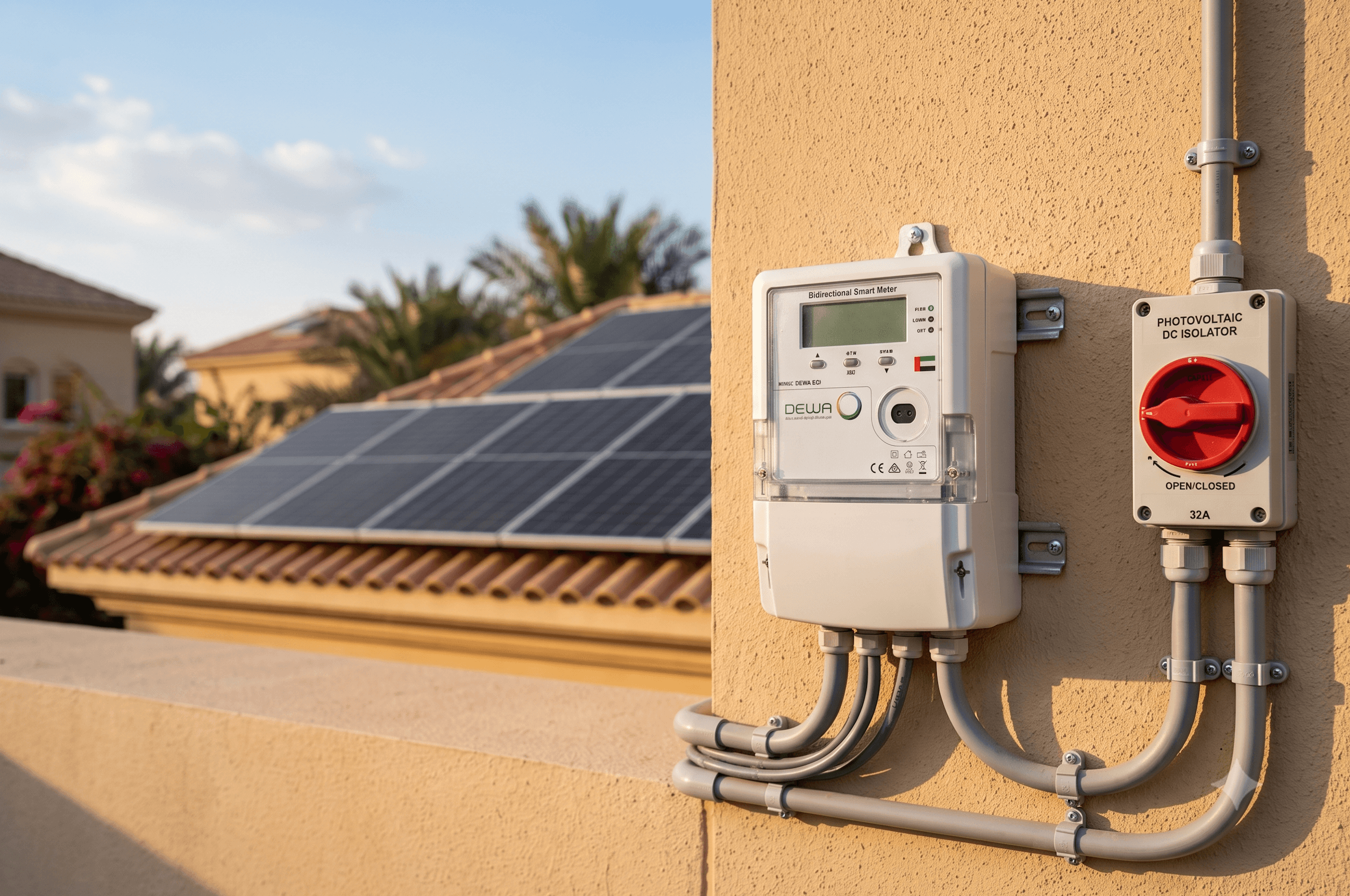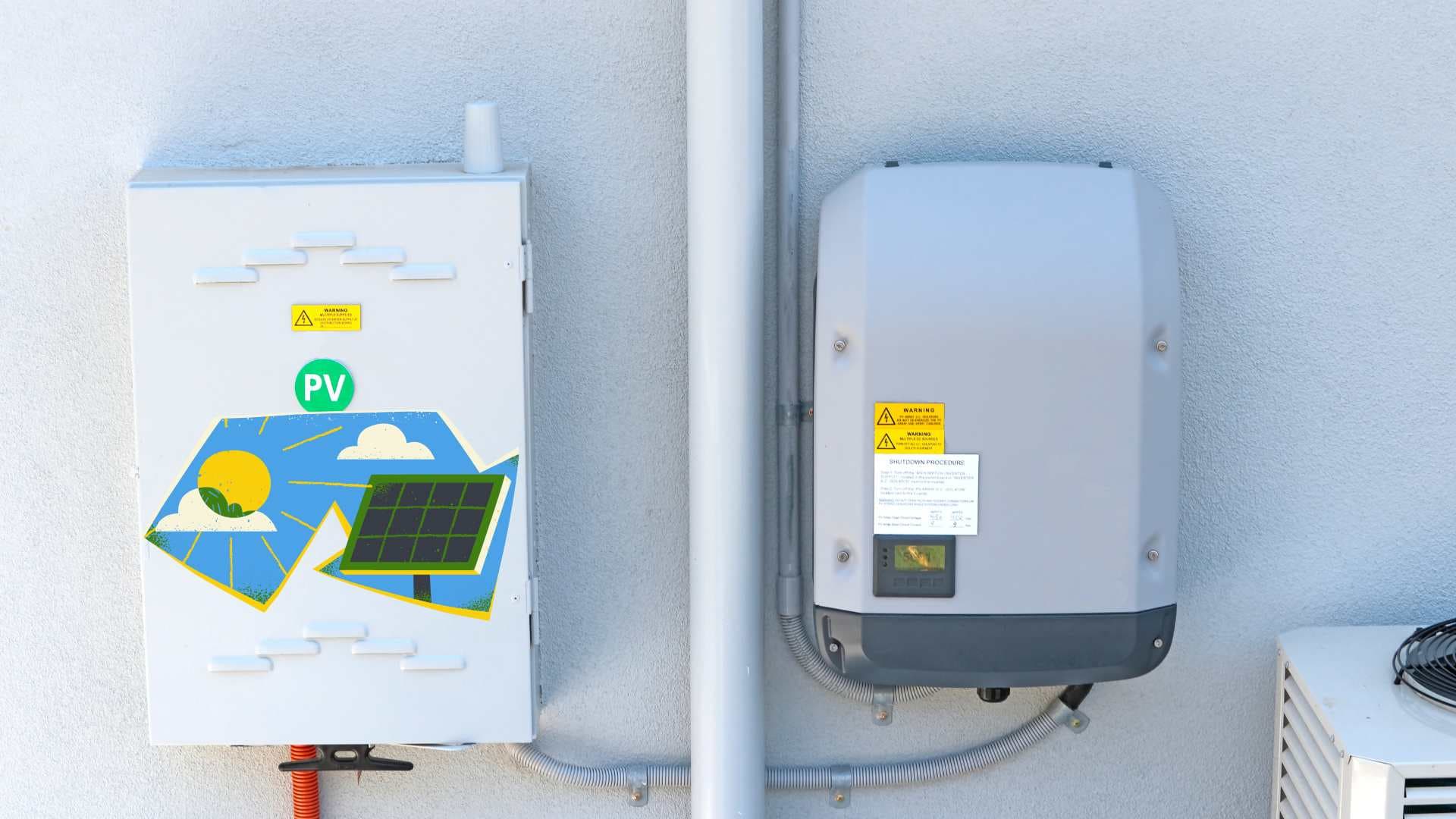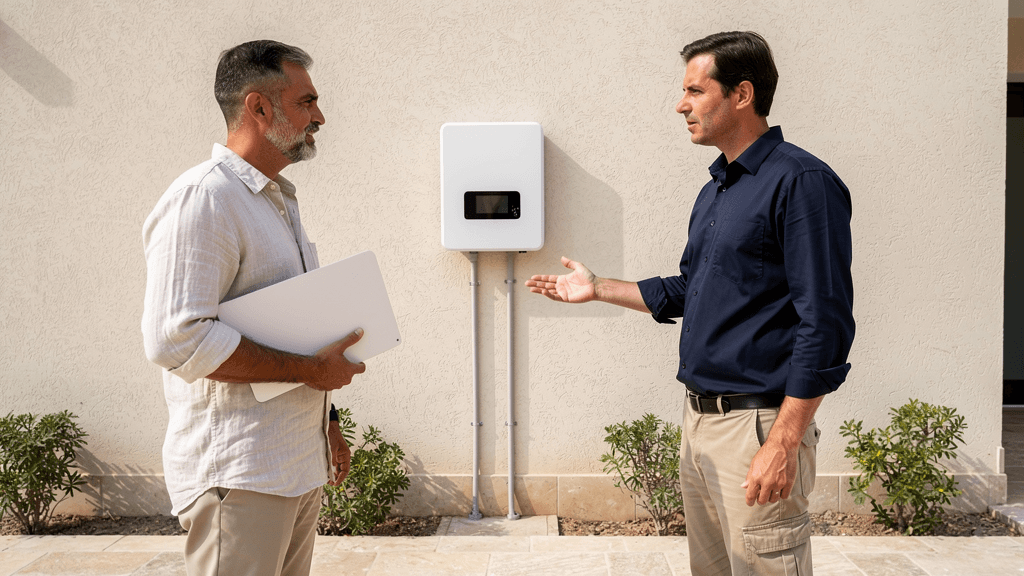
No. If an existing Shams Dubai solar installation moves into the D33 Solar PV Initiative as part of an expansion, its banked surplus electricity does not carry over. DEWA's D33 connection conditions say the Shams Dubai contract ends when the additional D33 capacity connects, all the solar capacity then falls under D33, and existing surplus credits are forfeited.
For a qualifying Dubai factory, data centre or agri-tech business, D33 can open up more solar capacity. But it changes the economics of the existing installation as well as the new panels. Before approving an expansion, compare the whole site's electricity costs under both arrangements, not just the extra generation.
This guide is for businesses with an existing DEWA-connected system considering that transition. It is not a residential solar option or an Abu Dhabi rule. The conditions below were checked on 5 October 2026.
What changes when an existing system moves to D33?
Section 2.2 of DEWA's D33 Solar PV Connection Conditions, version 1.1, treats D33 and Shams Dubai as alternatives, not incentives you can stack. Its specific expansion provision allows a D33 company with an existing Shams Dubai installation to apply for further capacity at the same plot, subject to termination of the Shams Dubai contract when the additional capacity connects.
At that point:
The existing and additional solar capacity both become subject to D33. You cannot assume the old panels keep their net-metering treatment while only the extension earns export payments.
Shams Dubai net metering stops applying. D33 does not offset exported electricity against electricity imported under the hosting account or your other accounts at the plot.
Existing banked surplus is forfeited. It is not transferred into a D33 credit balance or converted into an export invoice.
These are contract consequences, not a recommendation to switch. Ask your DEWA-enrolled consultant to confirm the affected accounts, capacity and transition date in writing. If your company has installations at several plots, get a portfolio-specific answer too: the conditions also state that a person may not contract under both initiatives simultaneously.
Net-metering credits and D33 export income are different things
Under DEWA's Shams Dubai Connection Conditions, version 4.1, surplus electricity can be carried forward indefinitely while the applicable arrangement continues, but cannot be used to claim a cash payment. Our explanation of how Dubai net-metering credits reduce future electricity bills covers that mechanism.
D33 replaces this with a separate export-invoicing arrangement:
Eligible exports earn 10.5 fils per kWh, excluding VAT, from 1 March to 30 November. Payment eligibility begins only after successful completion of the generator's performance tests.
Exports earn no DEWA payment from 1 December to the end of February. They are not banked as Shams Dubai credits instead.
DEWA can reduce or prevent exports without compensation in the circumstances specified in the conditions. These include winter, emergencies, grid constraints, maintenance and avoiding oversupply.
The producer invoices DEWA monthly. The conditions provide for DEWA to review and pay eligible units within 30 days; do not assume an automatic deduction from your utility bill.
Solar electricity used directly by your business still reduces the electricity it needs to import. The modelling mistake is treating every exported kWh as though it receives the same value as an avoided imported kWh, or assuming export payments continue throughout the year.
Why switch at all? The capacity calculation changes
Shams Dubai uses a sliding allowance based on Total Connected Load, with a maximum of 1,000 kW per plot and the possibility of a stricter DEWA technical limit. D33 instead limits aggregate solar Maximum Capacity to the Plot Maximum Demand, including capacity from the pre-existing Shams Dubai project.
That does not mean filling every available roof space. The D33 definitions matter:
Maximum Capacity is an AC-side figure: the sum of the maximum active power deliverable by the inverters, not simply the headline kWp rating of the panels.
Maximum Demand is DEWA-approved: Approved Load multiplied by the applicable Demand Factor, not a peak reading you select from a monitoring dashboard.
Plot Maximum Demand includes the producer's relevant accounts at that plot: accounts not directly related to D33-eligible activities are excluded.
Have the consultant calculate both routes using the same account data. Then check whether the extra capacity is physically feasible. The warehouse rooftop feasibility checklist remains useful for the roof, access and operating constraints; a different electricity arrangement does not make the roof stronger.
Who can consider this transition?
D33 eligibility is not automatic because a property is large or has a warehouse roof. DEWA's Industry Friendly Power policy FAQs identify industrial customers, agri-tech enterprises and data centres as the eligible sectors, subject to a certificate jointly issued by Dubai's Department of Economy and Tourism, Department of Finance and DEWA. The energy-supply condition involves DEWA's grid and new captive solar generation, not a requirement to run entirely on solar.
The D33 connection conditions define an eligible site as a plot listed in the company's certificate. Check the actual company, plot and accounts before commissioning an expansion design.
One other distinction can prevent a misleading quote: the policy's 25% discount on qualifying new connection charges does not apply to the solar PV connection. DEWA also excludes fit-out and temporary/construction connections, among others. Do not treat it as a 25% discount on solar equipment or the installation contract.
The comparison to request before signing
Ask for two whole-site projections: keeping the existing Shams Dubai arrangement, and moving the existing system plus proposed expansion to D33. Use the same consumption assumptions and explicitly show:
Current surplus balance. Record the banked kWh and estimate how much would realistically offset future consumption if you stayed with Shams Dubai. A credit is not cash; its practical value depends on usable future offsets.
On-site solar use and exports separately. Include weekdays, weekends, shutdowns and seasonal changes rather than assuming the factory always absorbs its output.
The winter treatment. Assign no DEWA export payment to December, January or February under D33. Model imported electricity charges separately from export invoices.
The transition itself. Show the expected contract cutover, performance-test milestone, forfeited credits and any interruption or commissioning assumptions. Ask DEWA about billing treatment around the proposed date before relying on it.
All additional costs and responsibilities. Include engineering, connection work, D33 monitoring and control requirements, operation and maintenance, and responsibility for monthly export invoicing.
A downside case. Test lower daytime demand, more unpaid exports and constrained export availability. A larger permitted system is not automatically a better investment.
When comparing contractors, adapt the solar quote line-item checklist so every bidder prices the same transition and expansion scope. If a third party owns or finances the existing plant, also review the solar lease and PPA contract risks: the utility arrangement can change while your private payment obligations remain, so check the actual agreement.
The decision in one sentence
Consider D33 for the additional usable solar capacity it can enable, but price the loss of banked credits and the change in export treatment before committing. Do not approve an expansion on the assumption that you keep Shams Dubai net metering and add D33 cash payments on top.
Preparing a factory or commercial rooftop project? Request commercial solar quotes with your existing system details, consumption history and proposed expansion. State that you need a Shams Dubai versus D33 comparison, and confirm that the installers responding can cover the D33-specific scope.
Illustrative AI-generated image, not a photograph of a named factory or customer. This is a practical reading of DEWA's published conditions, not a site-specific approval or legal opinion; confirm the proposed transition with DEWA and your enrolled consultant.