TL;DR — Shams Dubai is DEWA's programme that lets Dubai homes and businesses install rooftop solar and connect to the grid under net metering. You power your property with solar first; surplus units are credited to future bills and roll over. You must use a DEWA-approved contractor, get a Solar NOC and design approval, and have a bidirectional meter installed. Ground-mounted systems aren't allowed — rooftop, façade or existing structures only.
What is Shams Dubai? Shams Dubai is the Dubai Electricity and Water Authority's (DEWA) programme, launched in 2015, that allows customers to install rooftop solar panels and connect them to the grid. It runs on net metering: you consume your own solar power, and any surplus you export is credited against future electricity bills, with credits rolling over month to month.
How net metering saves you money
The mechanism is simple but powerful:
Your panels generate power during the day.
Your home or business uses that power first (this is where most of the saving comes from — you buy fewer units from DEWA).
Any surplus flows to the grid and is credited to your account.
At night or when solar isn't enough, you draw from the grid as normal.
At billing time, DEWA nets your imports against your credits.
Because you stay grid-connected, you keep 24/7 reliability without needing a battery. Surplus credits roll over rather than expiring each month, which smooths out seasonal differences between high-summer cooling and milder months.
The rules you need to know
DEWA sets clear conditions for grid-connected systems:
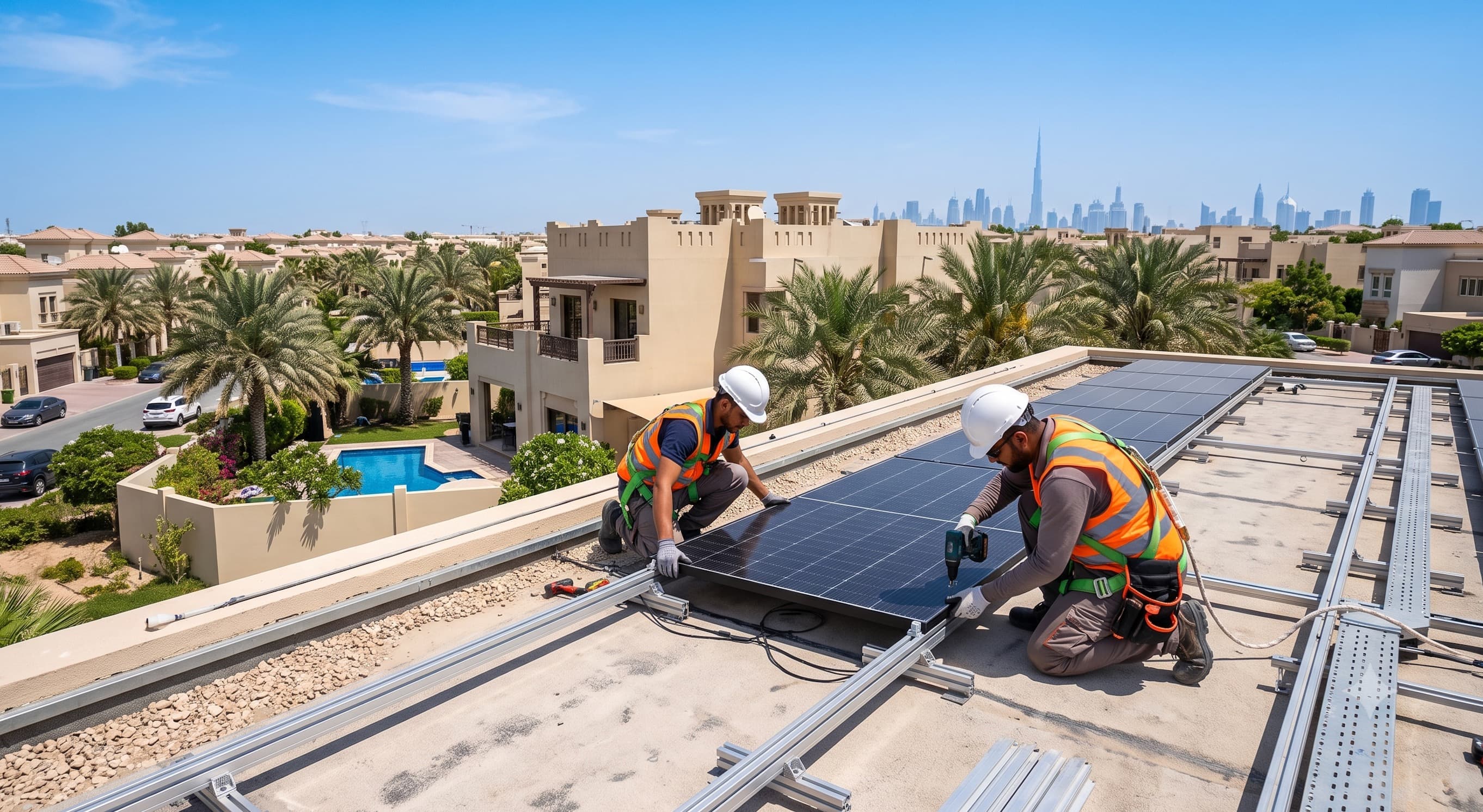
Rooftop, façade or existing structures only. Ground-mounted residential installations are not permitted under the programme.
Capacity is capped relative to your plot's Total Connected Load, and the maximum system size was reduced to 1 MW in DEWA's updated regulations.
A DEWA-enrolled contractor or consultant is mandatory. Only approved firms can apply for permits and connect systems.
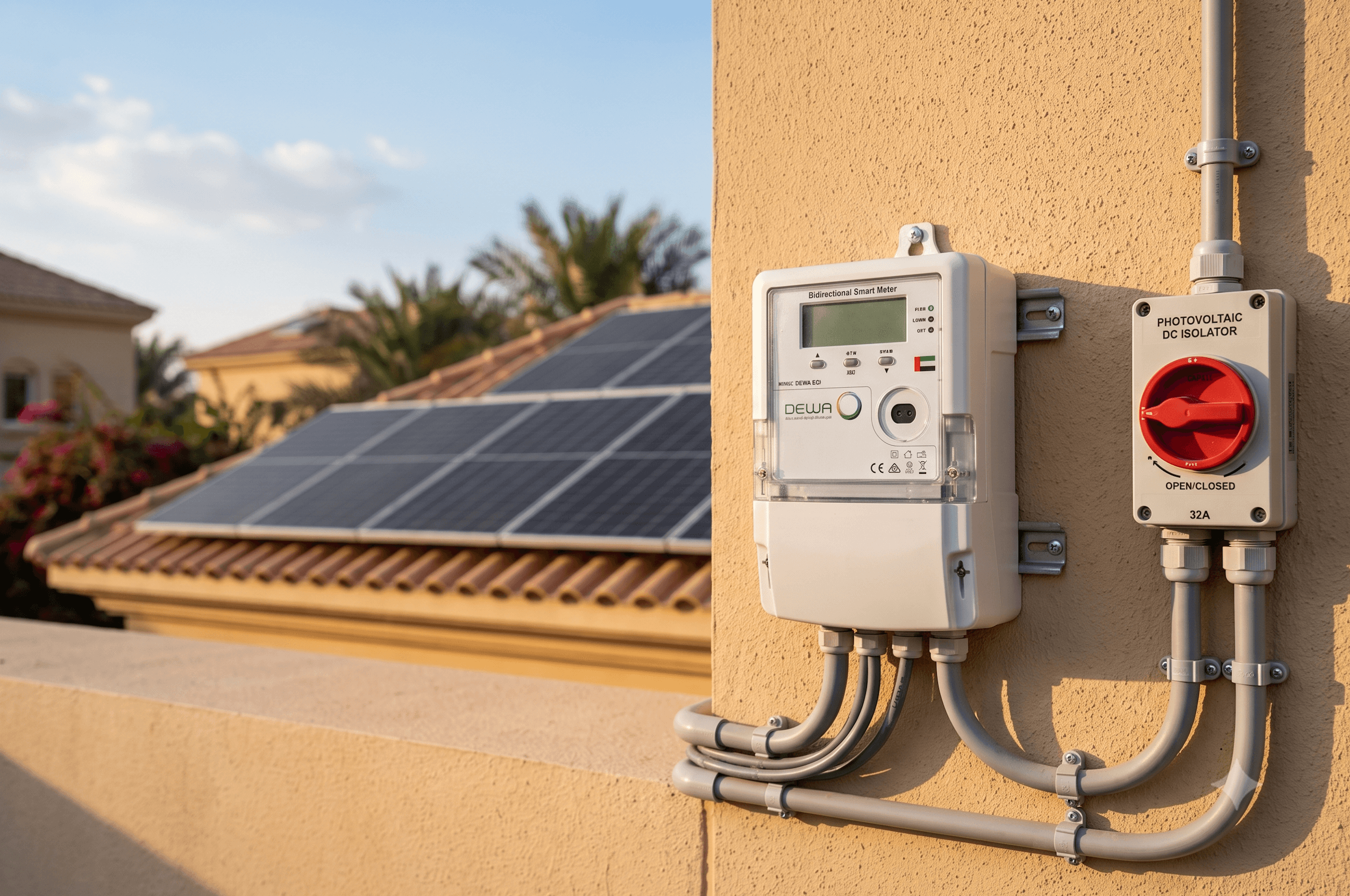
A bidirectional (net) meter is installed by DEWA to measure both import and export.
The approval and connection process
Working through a DEWA-approved contractor, the journey runs in stages:
Engage a contractor for a feasibility check and system design.
Apply for the Solar NOC and design approval — your contractor submits site plans, system drawings and equipment details for DEWA review.
Installation in line with the approved design.
Inspection — DEWA verifies structural integrity, electrical safety and compliance.
Metering and go-live — the bidirectional meter is installed and the system is energised.
Why "DEWA-approved" matters
Using a DEWA-approved (enrolled) contractor isn't optional box-ticking. It protects you on three fronts: the system will use eligible, certified equipment; the paperwork will be accepted rather than bounced; and your warranty and grid connection stay valid. Unauthorised installations can face penalties or disconnection.
Costs and incentives — set expectations
There's no direct cash subsidy or feed-in tariff that pays you for solar; the benefit is the bill reduction itself. DEWA charges a one-off connection fee, currently set at AED 1,500, which mainly covers the generation check-meter — and it can be reduced significantly for small systems below 10 kWp where no check-meter is required. There are currently no specific tax incentives for commercial solar.
What to do next
If you're in Dubai, the practical first step is getting matched with DEWA-approved installers who handle the NOC, design approval and metering for you. Comparing several keeps the price honest.