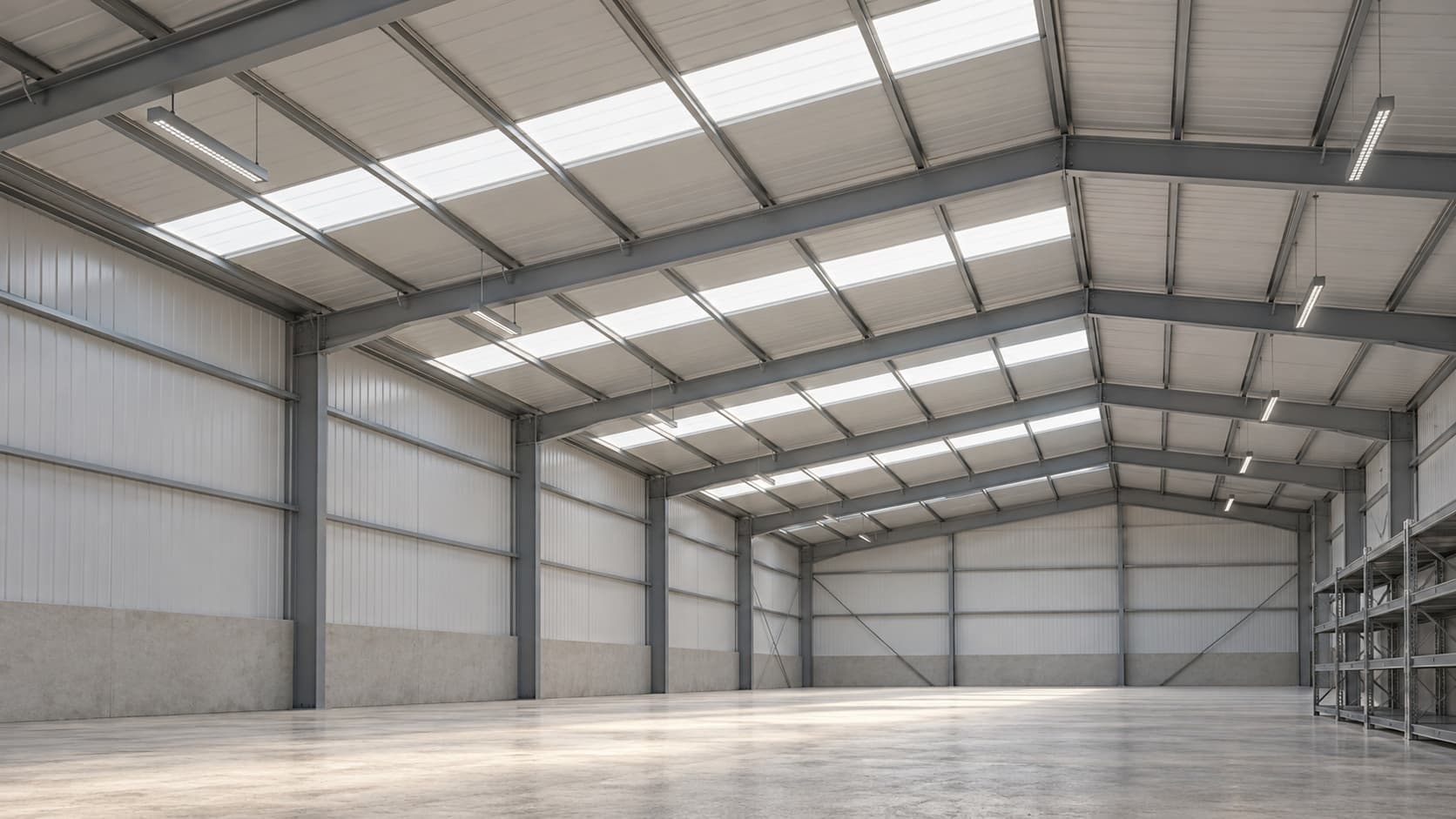
A Dubai warehouse with an insulated sandwich-panel roof needs more than a solar quote marked “suitable for metal roofs”. Before committing, have the design team identify the installed roof, specify the complete roof-and-PV arrangement and show which evidence applies to that combination. A certificate for the solar module alone does not answer whether the proposed installation is suitable for your building.
For a warehouse owner, factory operator or authorised tenant, the decision is whether the proposed retrofit is supported by roof-specific evidence, or whether further assessment or a different arrangement must be priced first. This is a procurement check, not a reason to reject every insulated roof or replace a serviceable one.
Start by identifying what is actually overhead
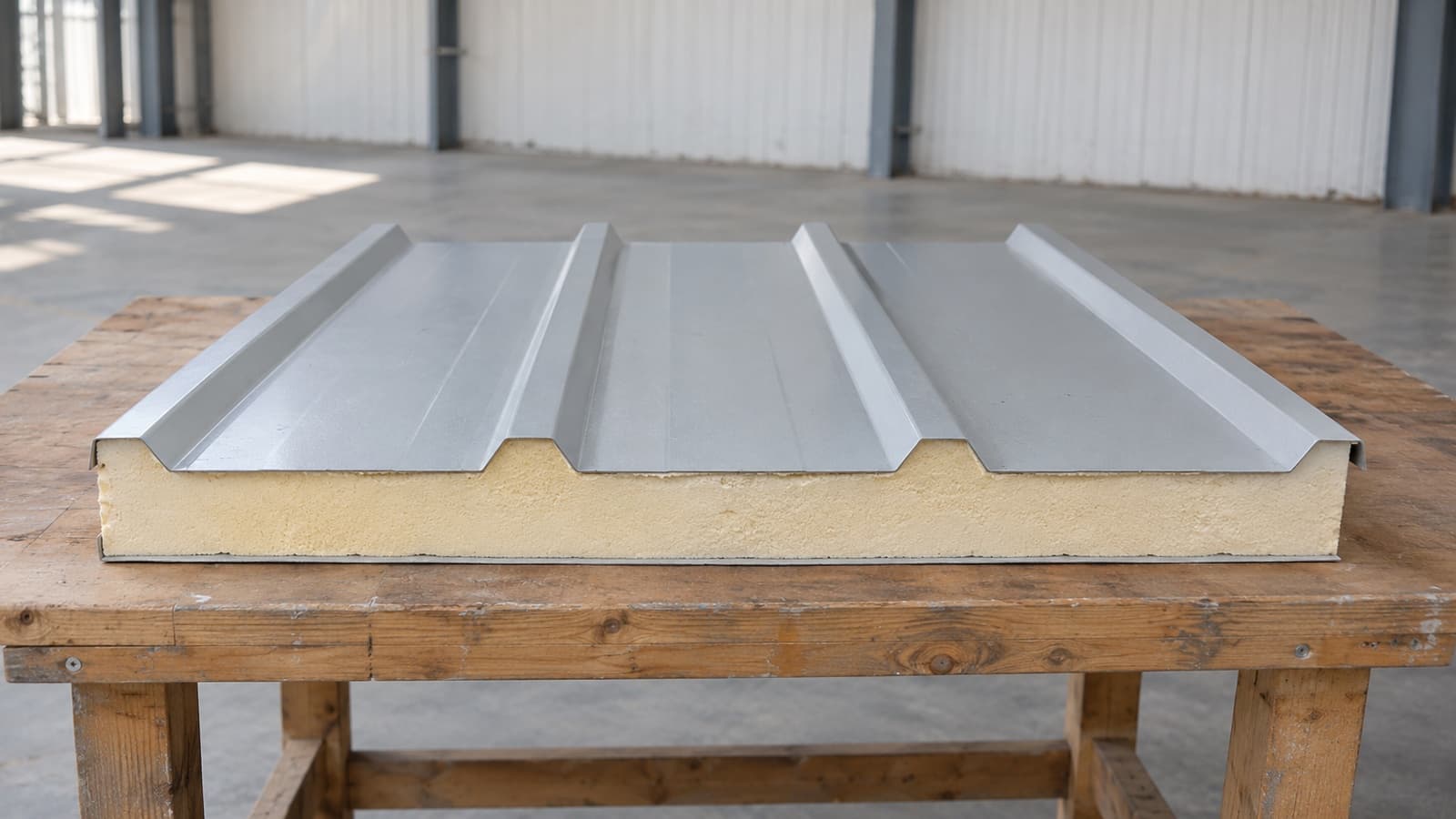
“Sandwich panel” is a description, not a complete specification. Ask the building owner, roof supplier or qualified roof assessor to establish the manufacturer, product reference, insulation core, thickness, metal facings, profile, joints and original fixing arrangement. Obtain the as-built roof and supporting-structure drawings where available.
Do not identify the core or an approval from a roof photograph, paint colour or sales description. If records are missing, commission a competent assessment with its limits recorded. Do not cut, drill or expose the roof yourself to find out.
Keep condition and identity separate. Knowing the product does not establish the condition of the installed roof, and a leak-free roof is not proof that a proposed attachment is suitable. If repair or renewal is already in question, use the separate warehouse roof-replacement comparison to assess timing. The question here is which roof-and-solar combination the supporting evidence actually covers.
A module certificate is not a roof-system certificate
The distinction is explicit in FM Approvals' March 2025 Standard 4478. It addresses rigid photovoltaic modules installed with a certified roof assembly. Its certification application requires the finished assembly's components to be identified by manufacturer, trade name and installation method, along with the ratings sought for each combination. It also calls for the certified roof-cover manufacturer's acknowledgement of compatibility.
That is useful evidence discipline, not a statement that FM 4478 is compulsory for every Dubai warehouse. The standard itself limits its scope to the hazards investigated and says it is not intended to determine a product's suitability for its end use. It also does not cover the other electrical components supplying power to the facility.
There is a further distinction worth asking about: the same standard permits PV modules to be recognised as Identified Components, but says that this recognition does not grant certification. If a bidder presents an FM-related document, ask whether it concerns a component or the proposed finished assembly, and what its actual scope and limitations are.
Do not make that judgement from a logo on a brochure. Have the consultant and relevant roof specialist check the current listing, document reference, revision and specified configuration. Any substitution needs a documented review, rather than an assumption that another panel, clamp or roof profile is equivalent.
Use this evidence register before comparing prices
Send the same register to each bidder. The requested documents are a practical comparison tool, not a universal list of statutory submissions.
Evidence layer | What the owner should request | What it does not settle |
|---|---|---|
Installed insulated roof | Actual product/core/thickness, facings, drawings, condition report and original roof documents. | Whether an added solar arrangement is compatible or the existing structure has spare capacity. |
Roof plus PV arrangement | Named modules, attachment system and roof build-up; applicable test/listing references, installation conditions and recorded deviations. | Local permission, acceptance of the actual building or insurance cover. |
Building-specific design | Qualified structural and wind assessment, attachment/load-path design, fire-safety review and the applicable authority route. | Continuation of a private roof warranty or acceptance under an insurance policy. |
Warranty and insurance | Written responses for this roof, design and work scope from the warranty issuer and insurer or authorised broker. | A substitute for engineering, a building permit or DEWA connection approval. |
Ask one coordinator to resolve mismatches between these layers. “The roof supplier accepts it” and “the solar contractor has installed something similar” are not interchangeable answers. The broader warehouse solar structural and sizing guide covers the separate building-load and connection-capacity questions; a roof-system document does not replace those assessments.
Read the limits of a roof manufacturer's example
Kingspan's current Irish QuadCore PowerPanel product information illustrates why exact configuration matters. It describes an integrated insulated-roof and PV product, and says insurer approvals depend on panel thickness, cover width, orientation, assembly method, coating and manufacturing facility. Its fire-performance information also distinguishes the tested internal face from external-face enquiries.
This is manufacturer-published information for a particular product and regional market, not confirmation of UAE availability, approval for your property or permission to retrofit ordinary modules onto any Kingspan or other sandwich-panel roof. An integrated new roof and an array added to an existing roof are different proposals; compare their actual documents rather than transferring a product headline between them.
Similarly, do not assume that a familiar insulation-core abbreviation establishes the fire performance of the completed roof-and-PV system. Ask the qualified design team what assessment and evidence are appropriate to the installed construction and warehouse use. This guide does not classify your roof or prescribe a fixing method.
Keep Dubai permissions, warranties and insurance separate
DEWA's Shams Dubai FAQ says the civil or structural part requires a building permit from the competent authority or entity and a completion certificate after its checks. It separately requires DEWA-enrolled solar consultants and contractors for installation, operation and maintenance. Have your consultant identify the relevant authority and requirements for your actual address and occupancy.
Do not treat a roof-system test report as that permission. Equally, a utility connection does not answer which private warranty terms or insurance conditions apply.
Send the proposed layout, roof identity, attachment details and work scope to the roof warranty issuer. Ask which existing cover continues, what conditions apply, who accepts completed work, and who investigates and pays if a leak or roof defect arises. A promise about solar-module output is not an answer about the roof.
Have your insurer or authorised broker assess the same design before work is authorised. Our warehouse solar insurance guide separates installation works, existing building and stock, and operational losses. A test certificate should be part of that discussion, not an assumed policy acceptance.
Price the evidence-backed option, not just the cheapest attachment
Ask for a proposal on the identified existing roof, with assessment, design, permissions and warranty conditions stated. If that route is not supported, request separately assessed alternatives: a revised arrangement, necessary roof works, a suitable alternative existing structure, or deferral. None is automatically feasible or permitted.
Separate the building baseline: repairs or roof replacement needed without solar.
Identify solar-related additions: investigations, design, roof preparation, attachments, strengthening and professional reviews required for the proposed project.
Include operating consequences: access, protection of stock, work restrictions, shutdowns and any confirmed insurance changes.
Record future intervention: who pays to make the system safe, remove and refit equipment, repair the roof and restore generation if access is needed later.
Compare options over the same period and with consistent generation, electricity, maintenance and financing assumptions. Do not credit an integrated replacement roof with cooling savings unless a separate assessment supports them, and do not count roof-renewal benefits twice. The solar quotation line-item guide helps keep the remaining scope comparable. There is no verified standard sandwich-roof surcharge or universal payback in this guide.
A brief to send with your quotation request
We are considering solar for a Dubai warehouse or factory with an insulated sandwich-panel roof. Please identify the installed roof and propose a building-specific arrangement. State which roof, PV and attachment evidence applies to the complete combination, including configuration limits and any substitutions. Identify the structural, fire-safety and authority reviews required, and the documents needed for roof-warranty and insurer acceptance. Separate existing building works from additional solar-related costs, and list unresolved items before procurement.
Attach the available roof documents, warranty, repair history, site address, ownership or landlord authority, operating restrictions and a year of electricity bills. If the roof identity is unknown, say so at the outset rather than asking bidders to assume a generic metal roof.
Decision takeaway: progress when the installed roof, proposed system and supporting documents match, with unresolved design, permission, warranty and insurance conditions clearly assigned. A good module and a good roof do not, by themselves, establish a suitable combination.
To compare site-specific offers, request warehouse or factory solar quotations through SolarQuote, subject to project suitability and installer availability. Include the roof information so the comparison starts with the building you own, not a standard roof on somebody else's brochure.
Sources checked on 5 November 2026. This is owner procurement guidance, not structural design, fire classification, installation instructions, insurance advice or project approval. International testing standards and regional manufacturer information do not establish Dubai compliance for an individual property.