Short Summary:
UAE homeowners can receive very different solar quotes for what appears to be the same job, without a public tool that shows what is normal.
Dubai, Sharjah and Abu Dhabi use separate installer approval systems; an approval in one emirate does not transfer automatically to another.
Consumer complaint routes are general-purpose, with no dedicated solar category or public data on solar complaint volumes.
Comparing like-for-like scope, equipment, warranties and approvals before signing is still the homeowner's job.
SolarQuote.ae analysis
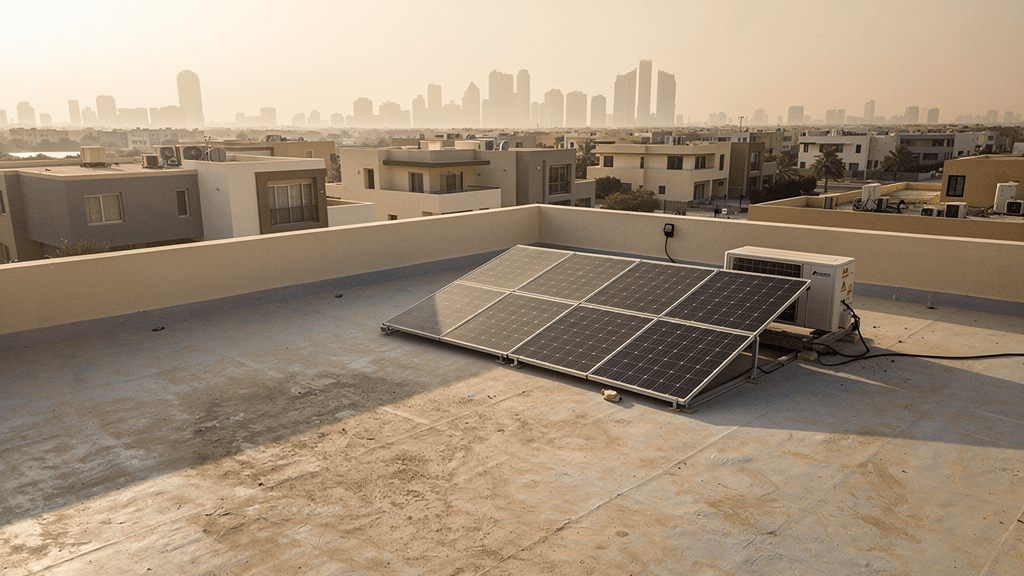
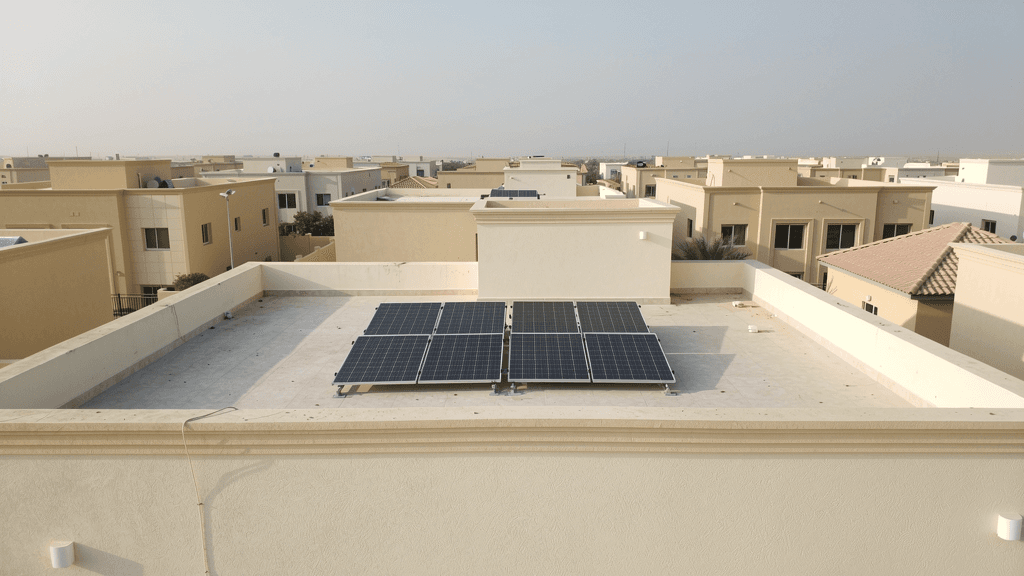
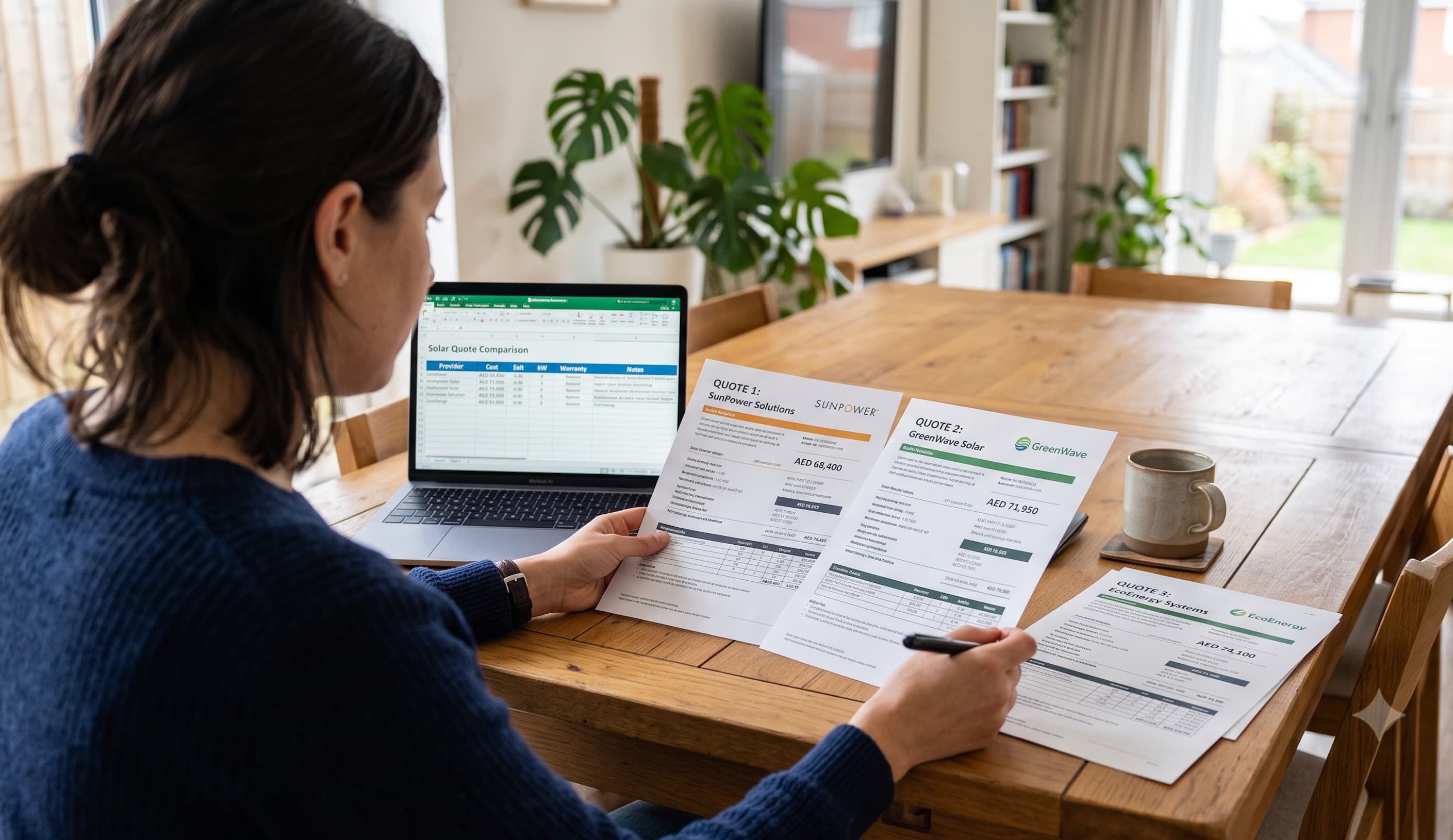
A homeowner in a Dubai villa community — a composite drawn from the pricing spread residents routinely describe, not a documented individual case — collects three solar quotes in one week. One prices a 10-kilowatt system at roughly AED 30,000–50,000; a second, for a similar villa footprint, comes in near AED 100,000–130,000; a third quietly bundles in a battery no one asked for.
On a UAE residential forum thread where Ajman villa owners were comparing exactly this kind of spread, one participant looked at a neighbor's quote and reacted the way many homeowners eventually do:
“Uff that's very exaggerated quote, perhaps you look rich to the company”
— r/Ajman
Nobody in that thread could say what “normal” pricing actually was, because nothing in the UAE tells them.
In our SolarQuote.ae analysis, that is the shape of a real structural gap, not a single reported case: the UAE has no independent, government-run platform where a resident can compare competing solar quotes side by side, and no regulator has built one. Homeowners gather bids the way people compare secondhand cars — one call at a time — for a purchase that can run into six figures of dirhams and lock them into a 25-year equipment relationship.
Why this matters now
The UAE is not short on solar ambition. Dubai's Shams Dubai programme has connected more than 8,430 buildings and roughly 725 megawatts of rooftop capacity as of 2024, through 111 DEWA-enrolled contractor and consultant companies (MESIA). Abu Dhabi just opened a new front: in February 2026 its Department of Energy launched a solar-plus-storage self-supply policy, letting residents apply through the emirate's TAMM portal for licenses to install panels and store power on-site (Energy Storage News).
More installers, more emirates opening doors — and still no single place to weigh one contractor's numbers against another's, or to know where to turn if the numbers turn out wrong.
That absence sits inside a market fragmented at the regulatory level and thin at the consumer-protection level. Both gaps are verifiable from primary sources — not from complaint statistics, because no public complaint-volume data on solar disputes exists in the UAE at all.
Three gatekeepers, no shared passport
For homeowners comparing solar quotes in the UAE, the approval status behind a quote matters as much as the price. The systems are separate:
Emirate / route | What the source requires | What it means for a homeowner |
|---|---|---|
Dubai — Shams Dubai | A company must first be enrolled as “Contractor – Electrical,” then separately apply to add the “DRRG Solar PV” category, hold a renewable-energy-specific trade license, and staff the job with DEWA-certified “Solar PV Experts” (DEWA). | Only companies enrolled with DEWA under Shams Dubai may design or install a grid-connected system. |
Sharjah — SEWA | “EPCs working across Dubai and Sharjah need separate enrollments — DEWA registration does not transfer to SEWA” (SurgePV UAE Solar Compliance Guide 2026). SEWA's supplier registration requires a distinct set of documents, including a SEWA-specific approval certificate for MEP companies (Sharjah DPW supplier registration form). | A Dubai registration does not transfer to SEWA. |
Abu Dhabi | Only a “registered Solar PV Integrator” — certified by the local Distribution Company — may design a system, alongside a separately licensed “Licensed Contractor” holding “a Competency Licence by that Distribution Company” (Abu Dhabi DoE). | Both credentials are tied explicitly to “the Emirate of Abu Dhabi.” |
Ask a Dubai homeowner why they can't simply hire the cheapest bidder, and the answer is regulatory. DEWA is explicit that unauthorized installers void grid eligibility:
“If you do not rely on an authorised contractor, your system will not be eligible for the grid connection and as such you will not be eligible to benefit from the Net Metering mechanism”
For the underlying process, see our guide to DEWA solar approval and the Shams Dubai steps.
Abu Dhabi is a third, separate system entirely. The regulation ties both credentials explicitly to “the Emirate of Abu Dhabi,” with no cross-emirate recognition clause anywhere in the text. An installer accredited in Dubai cannot carry that credential to Abu Dhabi or Sharjah — each emirate demands its own paperwork, engineers and inspection regime, run by three authorities that share no common registry.
For a homeowner, this is invisible until something goes wrong: there is no national “approved installer” badge, only three non-transferable local ones — and no independent body cross-checking any of them against actual customer outcomes. Before choosing, it is worth using a practical UAE installer-comparison checklist alongside the formal approval requirements.
Compare multiple vetted installer quotes side by side, free, at solarquote.ae/get-quote.
When a quote goes wrong, the complaints system doesn't know what “solar” is
If registration is fragmented, recourse is thinner still — it lacks a category for this dispute altogether. Dubai's consumer-protection portal lists its complaint categories explicitly: “defective or unsafe products, poor service quality, misleading advertising, breach of warranty or unfair business practices” (Consumer Rights Dubai). Nowhere on that page, or its “Know Your Rights” section, is there any reference to solar panels, renewable energy, or installation contracting as a distinct category (Consumer Rights Dubai, Know Your Rights).
Federally, the Ministry of Economy and Tourism's “Resolve Consumers Complaints” service is more generic still: it commits to receiving complaints and “referring the same to the concerned authorities” within eight working days, with no complaint-category breakdown published (Ministry of Economy and Tourism).
A resident whose installer walks away mid-job, undersizes a system relative to promised savings, or ignores a workmanship warranty has, on paper, the same pathway as someone disputing a mislabeled receipt. Nothing verifies an output guarantee or checks whether the contractor was properly enrolled at all — that would fall to DEWA, SEWA or Abu Dhabi's DoE separately, none positioned as a consumer ombudsman.
What that gap looks like in practice has to be pieced together from adjacent evidence, since no UAE-specific complaint database exists. The forum chatter that does exist is anecdotal, not adjudicated: on that same Ajman thread, villa owners found quotes for ostensibly similar systems ranging from roughly AED 30,000–50,000 to AED 100,000–130,000, with no consistent disclosure of whether batteries, warranty length, or installation scope were bundled in (r/Ajman).
No poster alleged fraud or filed a documented case — this is homeowner chatter, not verified dispute data — but the pattern of hard-to-compare pricing is exactly what a functioning comparison and complaints framework exists to fix. For villa-specific questions to ask before signing, see our Dubai and Abu Dhabi villa-owner guide.
An instructive contrast next door
Saudi Arabia offers a useful comparison point on accreditation, if not a full complaints solution. Its Water and Electricity Regulatory Authority runs “Shamsi” (shamsi.gov.sa), a government feasibility and cost-calculator portal that also requires solar consultants and contractors to be vetted by a national Qualification Committee; the distribution utility must “maintain an updated register of qualified contractors and consultants, publish this record on its website, and provide it to anyone upon request” (SERA).
Shamsi's tool is a feasibility calculator, not a live quote-comparison marketplace — it doesn't let homeowners rank competing bids — but its qualification registry is centralized nationally and published, which the UAE's emirate-by-emirate lists are not consolidated to do.
An industry association flags standards gaps — but not this one
The Middle East Solar Industry Association (MESIA), the region's principal trade body, headquartered in Dubai, tracks installed capacity and testing standards across the sector (MESIA). Its most recent public Solar Outlook Report details rigorous panel-durability testing and separately flags, for the wider region, “an absence of technical standards” governing newer categories like automated panel-cleaning robots, arguing regional bodies “need to establish universal specifications and regulations” (MESIA Solar Outlook Report 2024).
Tellingly, its residential-specific commentary on installer accreditation in the UAE itself is thin — it discusses installation-competency concerns in Lebanon's rooftop market, not the UAE's — suggesting the issue hasn't yet been systematically measured here, not that it doesn't exist.
Where this leaves homeowners
None of this means UAE solar installers are, as a rule, doing bad work — DEWA's technical bar for enrollment, including mandatory expert certification and staffing ratios, is genuinely rigorous on paper (DEWA).
What's missing is the connective tissue: a way to compare bids on equal terms before signing, and a complaints channel built to understand what a “solar output guarantee” or “workmanship warranty” means once something underperforms.
Private platforms have begun filling the comparison half of that gap. SolarQuote.ae, a Dubai- and Abu Dhabi-focused marketplace, lets homeowners submit one request and receive multiple installer quotes without paying for the service or having pricing marked up. That is a commercial fix for the discovery problem, not a substitute for regulation: it does not accredit installers beyond what DEWA, SEWA or Abu Dhabi's DoE already require, and it does not adjudicate disputes once a contract is signed.
The complaints gap — what happens after the savings don't match the pitch — sits exactly where this reporting found it: between three separate utility regulators and a national consumer-protection system with no box to check for “solar.”
Until one of those bodies builds that box, the burden of comparison, verification and recourse stays where it has always sat — on the homeowner, one quote at a time.