Before signing a commercial solar proposal in Dubai, ask who will remove the equipment when it is no longer wanted, where discarded panels will go, and who pays for that complete journey. “Recyclable”, “25-year warranty” and “we will take it away” answer different questions. None is a priced end-of-use service unless the contract actually says so.
For warehouse, factory and other commercial property owners, the useful comparison is not simply the future scrap value of a panel. It is the net cost of safe removal, roof reinstatement, authorised waste handling and evidence of the final destination. Put that scope into the investment file now, even if the eventual work is many years away.
First decide whether the panels are being discarded
Equipment temporarily removed for a roof repair is not the same procurement job as equipment being permanently retired. A manufacturer-authorised warranty return is another separate route. Ask the solar contractor to record the intended destination of each group rather than putting everything under “old panels”.
Retained for refitting: identify the modules, their condition, the protected storage arrangements and who accepts them before reuse. The separate solar removal and refit planning guide covers that coordination.
Returned under a claim: obtain the manufacturer's written return instructions and agreement about ownership, transport and costs before dispatch. Do not scrap evidence needed for the claim.
Proposed for resale or reuse elsewhere: ask for the technical assessment, identified recipient and applicable permissions. A second-hand buyer's interest is not proof of suitability or an exemption from waste controls.
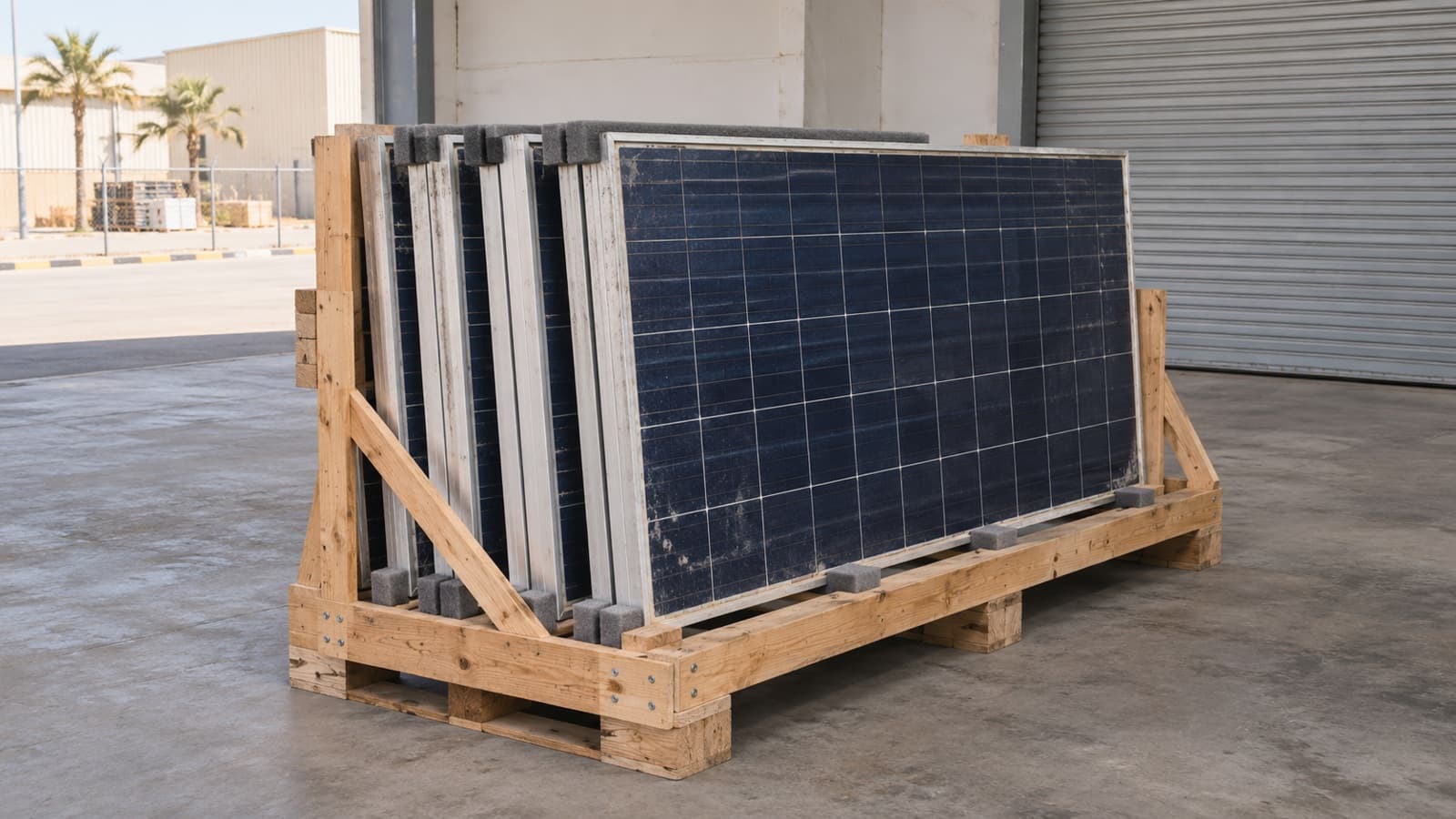
Discarded for recycling, treatment or disposal: establish the applicable waste classification, authorised carrier and receiving facility before removal starts.
These are planning distinctions, not legal exemptions. Dubai's waste definition is broad, and the intended legal status should be confirmed with the competent authority where uncertain. A warranty expiry date alone is not an instruction to throw panels away.
What Dubai's waste rules mean for the owner
Dubai Law No. 18 of 2024 on waste management applies throughout the emirate, including free zones and special development zones. It requires permits for waste-management activities, authorised vehicles for waste transport and approved disposal arrangements. A solar contractor's electrical enrolment is not, by itself, evidence of permission to transport or treat waste.
The law distinguishes hazardous and non-hazardous waste through the applicable classification rules. This guide does not establish a universal Dubai waste code for photovoltaic modules or classify every panel as hazardous or non-hazardous. Require a written classification basis for the actual equipment and its condition, with authority clarification where needed. A panel's appearance, glass content or sales brochure is not that assessment.
For hazardous waste, Article 10 prohibits delivery to an unauthorised person and placement in containers designated for non-hazardous waste. Do not assume the building's ordinary mixed-waste collection covers discarded solar equipment. Ask the waste specialist what authorisation, packaging, storage and documentation apply to this specific collection.
The current 2026 implementing bylaw adds practical detail. Its register provisions identify hazardous-waste producers and people with operational control over residential and commercial complexes, hotels and industrial establishments, among other categories. The register records waste type, daily quantity, relevant processes, and approved carriers and disposal sites. The law specifies retention of at least two years for non-hazardous waste and five for hazardous waste.
Article 3 of the bylaw also specifies daily transport to approved disposal sites for the categories it covers, using a licensed carrier or an authorised own vehicle. Do not build a programme around leaving discarded panels in a warehouse corner for months. Have the responsible specialist confirm the applicable collection timing and any permitted arrangements before the work is booked. These are general waste provisions, not a published solar-specific collection package.
Separate electrical removal from the waste journey
DEWA's Shams Dubai customer guidance says only enrolled Electrical and DRRG Solar PV consultants and contractors are authorised to install, operate and maintain the solar system. It warns owners not to interact with its components and notes that arrays create electrical energy when exposed to light. Leave electrical isolation, disconnection and system work to qualified personnel, not the waste collection crew or the owner.
Name one coordinator, but keep the work packages visible. The enrolled solar contractor should establish the project-specific DEWA notification, design-change, decommissioning or return-to-service requirements as applicable. The waste specialist should establish the authorised route for the discarded equipment. Neither approval should be assumed to settle the other.
Work package | What to ask the bidder to name | What you should receive |
|---|---|---|
Solar system work | Responsible enrolled contractor; retained versus removed equipment; applicable utility process | Removal inventory, relevant electrical records and confirmation of the remaining system's status |
Building and access | Lifting, operational protection, roof interfaces and reinstatement responsibility | Defined scope, condition record and acceptance of completed reinstatement |
Waste collection and destination | Classification basis, authorised carrier/vehicle, receiving facility and acceptance of the actual modules | Collection and receipt records identifying the material, quantity and destination |
Owner records and budget | Equipment ownership, payer, record custodian and any conditional recovery credit | Updated asset records, relevant waste-register information and a reconciled final account |
This is a procurement responsibility matrix, not four authority-defined approval stages. Include inverters, cables, mounting materials and any batteries as separately described items; do not assume one acceptance letter covers every material in the installation.
Price the complete exit, not a speculative scrap credit
Add an end-of-use schedule to the itemised solar quote comparison. Request separate lines for assessment and records, electrical removal, lifting and access, packaging and permitted holding arrangements, authorised transport, receiving-facility charges, roof reinstatement, and any required tests or authority-related work.
State what is fixed, provisional or excluded. Ask what changes the price: quantity, condition, collection route, access restrictions, classification evidence or the receiving facility's actual acceptance terms. There is no verified standard Dubai per-panel recycling price in this guide. A small collection and a full commercial array need their own scopes.
For the investment model, show gross end-of-use costs first. Deduct a recovery or take-back credit only on the terms actually evidenced, and show a separate zero-credit case. A promised future material value is not cash available today. If the work is distant, label any allowance with its pricing date and assumptions, then refresh it rather than presenting today's estimate as a fixed future bill.
Keep replacement investment separate from retiring the old equipment, and avoid counting the same crane visit or removal cost twice across roof works, an installer package and a waste quote. Our warehouse roof renewal comparison explains the broader building-versus-solar cost boundary.
Ask what “take-back” actually promises
If a manufacturer, installer or asset owner offers to take the panels back, request the written undertaking applicable to the exact model, UAE supply route and project. Ask who is obliged to act, when the offer applies, what condition or quantity limits exist, who pays collection and treatment charges, and what happens if the original supplier no longer provides the service.
A warranty remedy and an end-of-use collection service should not be treated as interchangeable. Check the actual wording; the separate manufacturer remedy versus local repair-cost guide explains why the equipment promise and surrounding work need separate scrutiny. No universal free take-back entitlement is established here.
For a PPA, lease or third-party-owned system, identify the equipment owner and read the actual expiry, removal and buyout terms. A private allocation of cost does not establish that the waste route is authorised. Get both the commercial promise and the operational evidence.
Evidence to request before closing the job
A reconciled inventory identifying what was retained, returned, transferred or discarded, with module identities where practicable and quantities recorded consistently.
The classification basis and confirmation that the named carrier, vehicle and receiving facility are authorised for the applicable waste and activity.
Written acceptance from the actual receiving facility for these modules and their stated condition, not merely a general claim to handle electronics.
Dated collection, quantity or weight records as appropriate, and receiving-facility acknowledgement linked to the job.
If recycling is claimed, a record explaining the treatment outcome and its scope. A collection receipt alone does not establish a particular material-recovery percentage.
Electrical and roof completion records, updated asset information and the relevant waste-register entries retained by the responsible party.
These are recommended procurement checks alongside the applicable legal records, not a claim that Dubai prescribes one document called a “solar recycling certificate”. This guide does not verify or recommend a particular recycler, collection price or recovery rate.
A brief to send with commercial solar enquiries
Please separate the new solar installation from its end-of-use obligations. Identify equipment ownership, the party responsible for future removal and roof reinstatement, and whether any take-back service is contractually included. For equipment being discarded now, provide the classification basis, authorised collection and receiving-facility arrangements, applicable timing, itemised costs, conditional credits and records we will receive. Keep retained-for-refit and warranty-return equipment distinct. State the utility and building requirements applicable to the actual works.
Decision takeaway: do not reject a sound solar investment because its eventual exit needs planning, and do not approve it on the assumption that someone else will collect everything for free. Compare a documented gross-cost exit with any evidenced take-back offer, then keep that responsibility in the contract and asset file.
If you are evaluating a new commercial installation or replacement project, request comparable commercial solar proposals through SolarQuote with your location, ownership authority, bills and existing-equipment details. SolarQuote is an installer-matching and comparison platform, not a waste carrier or recycler. Matching is subject to project suitability and installer availability. For an immediate equipment fault or waste collection, start with your existing enrolled contractor and an appropriately authorised waste specialist.
Primary documents checked on 2 November 2026. This is an owner procurement guide, not legal advice, a waste classification or permission to carry out electrical or waste-management work. The legislation portal's English texts state that the original Arabic prevails. Confirm current project-specific requirements and applicable implementation arrangements with the competent authorities.