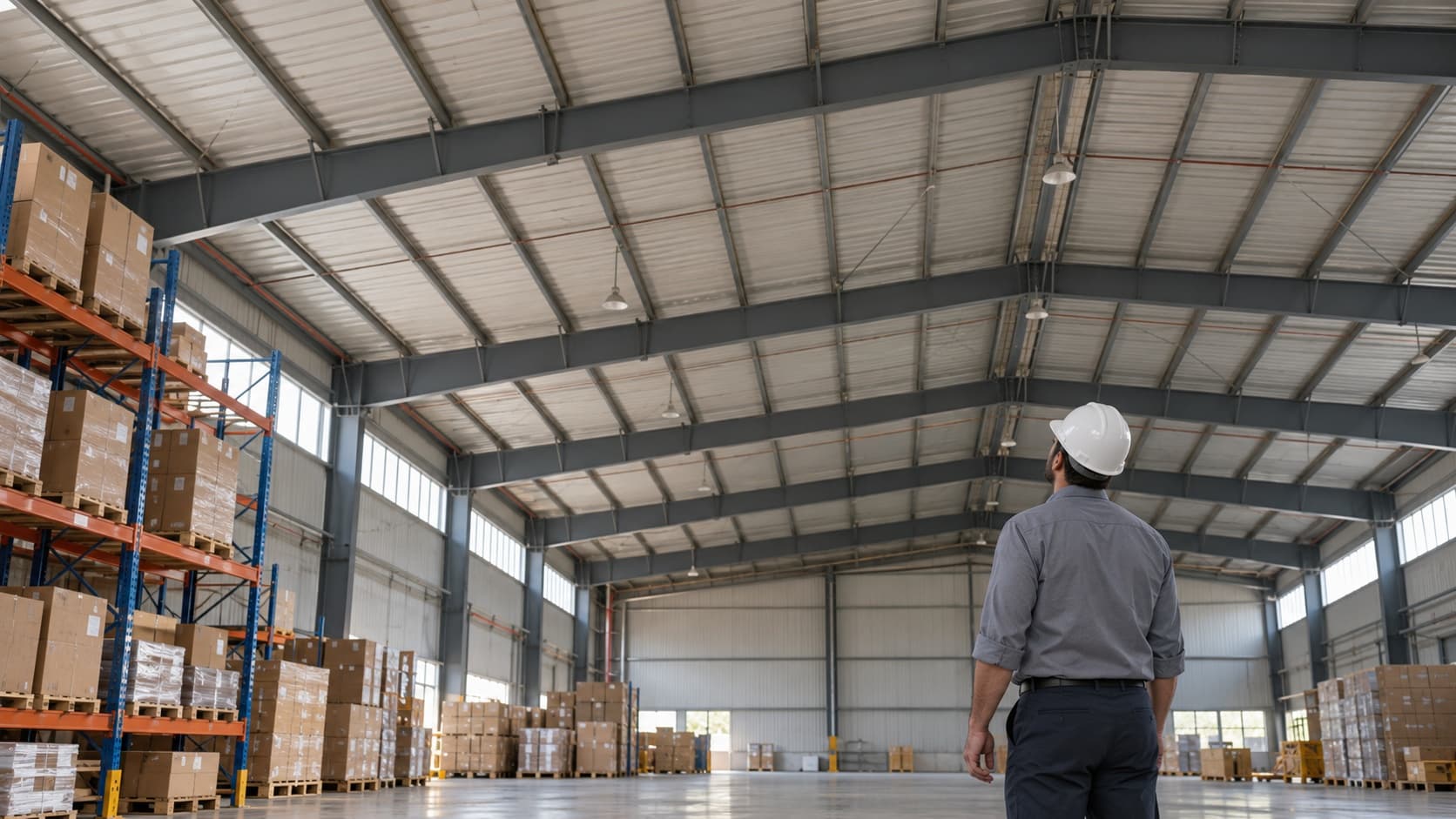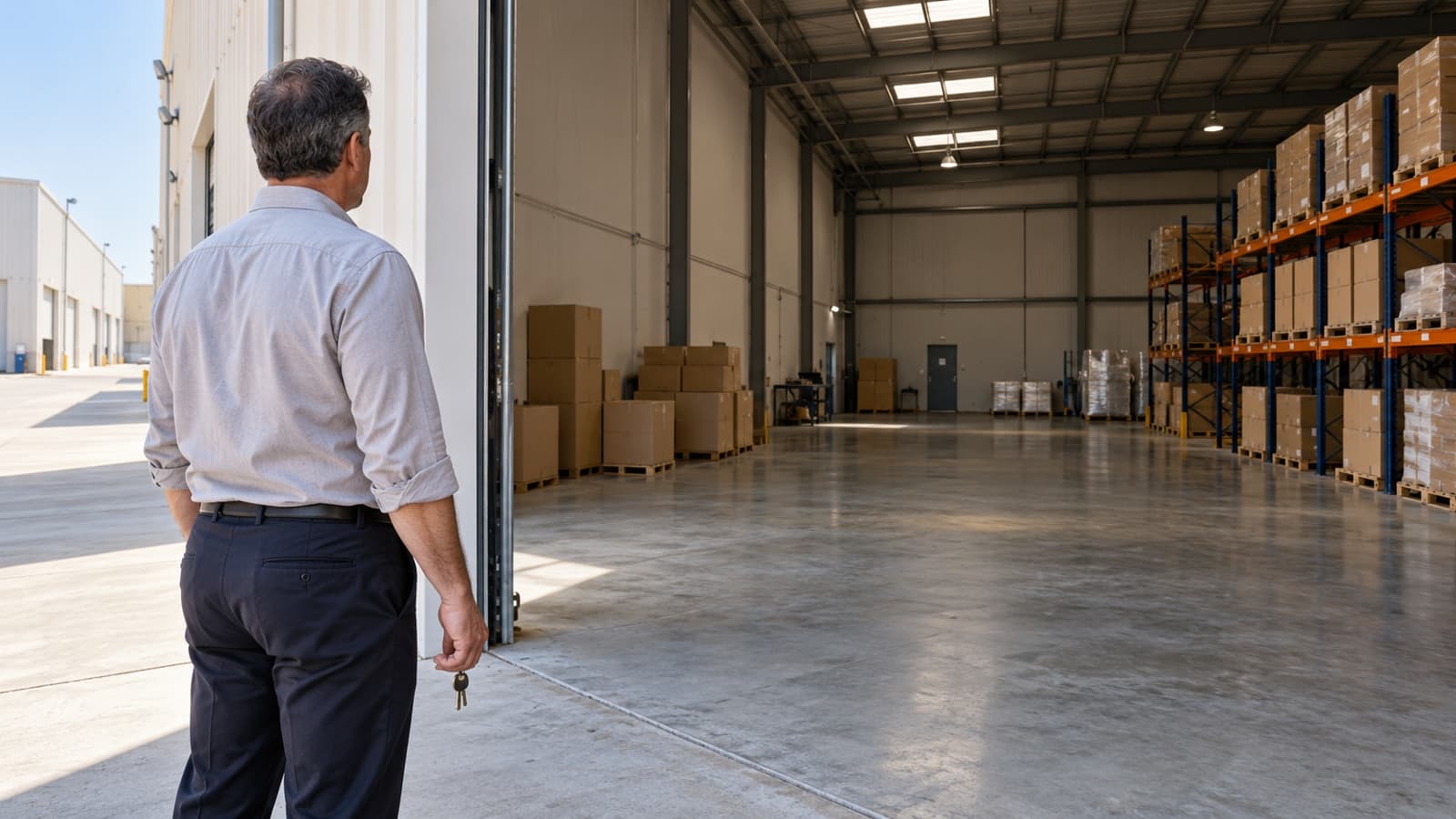
A rented Dubai warehouse can be a candidate for solar, but the investment must work within the period your business can actually use the premises. A long equipment warranty does not extend your property lease. Before comparing installation prices, ask for a financial case ending at your confirmed departure date, with the cost of leaving the system, transferring it or removing it shown separately.
This guide is for warehouse owners and authorised business tenants considering a new, tenant-funded installation under Shams Dubai. It is not a solar lease sales pitch or a legal assessment of your tenancy. The key decision is whether to proceed with a site-specific proposal now, settle the occupation and exit arrangements first, or defer the investment.
Start with three dates, not the panel lifespan
Put these dates on the first page of the quotation brief:
Expected operational start: when an approved, connected installation is expected to begin delivering a usable bill benefit, not the date you pay a deposit.
Confirmed occupation end: the point at which your documented right to occupy or use the roof ends, accounting for relevant break provisions and conditions with your adviser.
Any proposed extension: a separate scenario until its terms and enforceability have been checked. An expectation of renewal is not the same as a secured additional operating period.
The financial horizon is the usable operating time between the first two dates. If approvals or building works move the start, rerun the forecast; do not quietly move the tenancy end as well. Where an early break is relevant, test that date too.
There is no universal minimum warehouse lease length established by this guide. A decision depends on actual installation costs, usable savings, occupation rights and exit obligations. Ask your property adviser to confirm the horizon rather than accepting an installer's generic payback headline.
Separate permission, ownership and the electricity account
A landlord's agreement to consider solar does not answer every commercial question. Obtain a written project-specific position covering the roof area, equipment ownership, service access, future roof works and what happens at departure. Have the relevant parties and advisers settle these matters before a binding installation or funding commitment.
Use a simple responsibility register: property owner; party buying or financing the equipment; business holding the electricity account; and party responsible for maintenance. These roles may differ. Do not assume that paying for panels creates a right to remove them later, or that an electricity-account change transfers a private equipment contract.
DEWA's official Shams Dubai FAQ directs customers towards enrolled consultants or contractors and places system maintenance responsibility on the customer, including an operation and maintenance contract. A private allocation of costs should therefore be checked against the actual utility arrangement, not treated as a substitute for it.
The warehouse roof and operating-load feasibility checks still apply. A sufficiently long lease does not establish structural suitability, usable roof area or an approved connection capacity.
Price the end of occupation before calculating the return
Ask bidders and the property owner to consider the following exit paths. They are options to investigate, not rights this article says you already have.
Possible exit path | Evidence needed before relying on it | What the financial model should show |
|---|---|---|
Leave the system with the landlord or next occupier | Written agreement on ownership, any payment, condition, remaining obligations and required third-party consent; a separate utility transfer plan. | Only an evidenced receipt or liability. Do not insert an assumed resale value because the equipment still works. |
Remove it and reinstate the warehouse | Confirmed contractual position; qualified removal scope; access arrangements; roof reinstatement specification; required utility and authority actions. | Disconnection and professional removal, lifting/access, roof works, waste handling where applicable and any business disruption, with exclusions stated. |
Relocate usable equipment to another property | Permission at both sites; assessment of equipment condition and suitability; a new site's design, approval and connection requirements; warranty/provider confirmation where relevant. | Removal plus transport, storage, new design, installation and connection costs. Any recoverable equipment value must not also be counted as a cash sale. |
Request separate prices or an explicit method for items that cannot yet be fixed. Record who is paying and what could change the amount. An unpriced exit is an uncertainty, not a zero-cost exit.
Roof obligations deserve their own line. Agree who inspects and accepts reinstatement, the standard of repair and how pre-existing defects will be recorded. If the roof needs substantial work during the proposed occupation, compare the repair-versus-replacement sequence before solar, rather than assuming the array can remain untouched.
Banked Shams Dubai credits are not a departure payment
The current linked DEWA Connection Conditions, version 4.1, section 2.4 distinguish the generator from accumulated surplus electricity. A joint request can be made to transfer the generator to a new tenant's or owner's account. The accumulated surplus does not transfer to that account and is forfeited when the hosting account closes, without a payment obligation for DEWA.
The same conditions prohibit moving surplus offsets to the producer's consumption accounts on a different plot. Do not model banked credits as cash that funds your next warehouse, or as a benefit the incoming tenant automatically buys from you.
Ask for a month-by-month forecast through departure, showing expected consumption, generation, usable offsets and the remaining credit balance. Reduced activity during a move-out period belongs in that forecast. The same-plot, same-account-holder credit-transfer rules are a separate question from changing the tenant. Confirm your actual accounts with DEWA and the enrolled consultant.
A simple payback can match the lease and still leave a shortfall
For a purchased system, request this screening calculation alongside the longer lifetime forecast:
Cash outcome by departure = bill savings actually usable during occupation, minus operating and other project costs paid during that period, minus initial investment, minus exit costs, plus documented net exit proceeds.
Use one consistent VAT treatment and avoid counting loan principal and the full purchase price twice. Ask your finance team to extend the screening to dated cash flows, financing, tax, discounting, declining output and uncertain future costs as appropriate. A simple calculation is not an investment valuation.
Hypothetical arithmetic only, not a UAE price, savings forecast or typical payback: suppose an investment costs AED 300,000 and produces a constant AED 75,000 a year in usable savings after operating costs. Its simple payback is four years. With exactly four full operating years, no exit receipt and AED 30,000 of departure costs, the outcome is AED 30,000 below the original investment. Matching the headline payback has not covered the exit.
With six full operating years and those same deliberately simplified assumptions, the outcome would instead be AED 120,000 above the initial investment after the exit cost. That comparison explains why an additional occupation period matters; it is not evidence that your lease can be extended or that a real project will earn either result. Keep unconfirmed renewal and speculative sale proceeds outside the base case.
A funded solar offer does not extend the warehouse lease
If you compare a purchase with third-party-funded solar, request the payment and termination schedule over the same occupation horizon. Ask what happens if the property lease ends first, whether another party can take over, whose consent is needed, and what buyout, removal or continuing-payment obligations would remain.
Do not assume that the landlord or next tenant must accept the arrangement. The business solar lease and PPA comparison covers the wider funding question; here the task is narrower: make each offer answer the same warehouse departure scenario.
A brief to send the landlord and prospective installers
We are assessing solar for an occupied Dubai warehouse. Please assess the roof and actual electricity account arrangement, and base the first financial case on our confirmed remaining occupation from the expected operational start. Show any lease extension separately. Please identify equipment ownership, ongoing access and maintenance responsibilities, and provide separate leave-in-place, removal/reinstatement and relocation options where feasible. State the required consents, unpriced items, utility actions and any continuing funding obligations. Do not assume a sale payment or transfer of banked solar credits.
Decision rule: progress when the actual roof and load are suitable, the parties can document the necessary rights, and the occupation-limited case remains acceptable after realistic exit obligations. If the proposal works only by assuming renewal or a buyer for the panels, resolve that dependency before committing.
Ready to test the options? Request comparable commercial solar quotations and include the emirate, warehouse use, whether you are the owner or an authorised tenant, the remaining lease horizon and available roof and electricity information. SolarQuote is a comparison and installer-matching platform; responses depend on project suitability and installer availability. Share sensitive lease and account documents privately with the selected professional, not in a public comment.
Official utility material checked on 1 November 2026. The currently linked Connection Conditions are version 4.1, November 2025, not a new rule announced today. The checklists and financial scenarios are editorial procurement guidance, not legal, tax or personalised investment advice. Property and funding agreements need project-specific professional review.